Comment
Nigel Farage is conducting a culture war over Henry Nowak's grave
With his call for 'pure cold rage' in response to the murder of student Henry Nowak, the Reform UK leader is playing an incendiary game – starting with a conclusion about two-tier policing and searching for a case to fit it, says Festus Akinbusoye
Tuesday 02 June 2026 13:48 BST
Moment police dismiss Henry Nowak's stabbing claim
Henry Nowak deserved better. In December, the 18-year-old student was stabbed multiple times while on his way home from a night out in Southampton. As he lay bleeding on the pavement, he pleaded 'I can't breathe' repeatedly to the attending police officers, who, instead of administering aid, put him in handcuffs and arrested him. The last thing he heard before he died was being read his rights. His assailant had made false claims that Nowak had racially abused him, punched him and knocked off his turban. A judge has now dismissed 23-year-old Vickrum Digwa's suggestion that Nowak had racially or physically abused him, calling the claims a 'wicked lie'. In fact, Digwa had stabbed Nowak five times with a 21cm blade he said he carried as part of his Sikh faith. He has now been sentenced to life to serve a minimum of 21 years for Nowak's murder. From all this, there are serious and urgent, racially charged questions for the police complaints watchdog, the Independent Office for Police Conduct, to answer. As the first Black police and crime commissioner, I support every effort to ensure they are answered quickly.
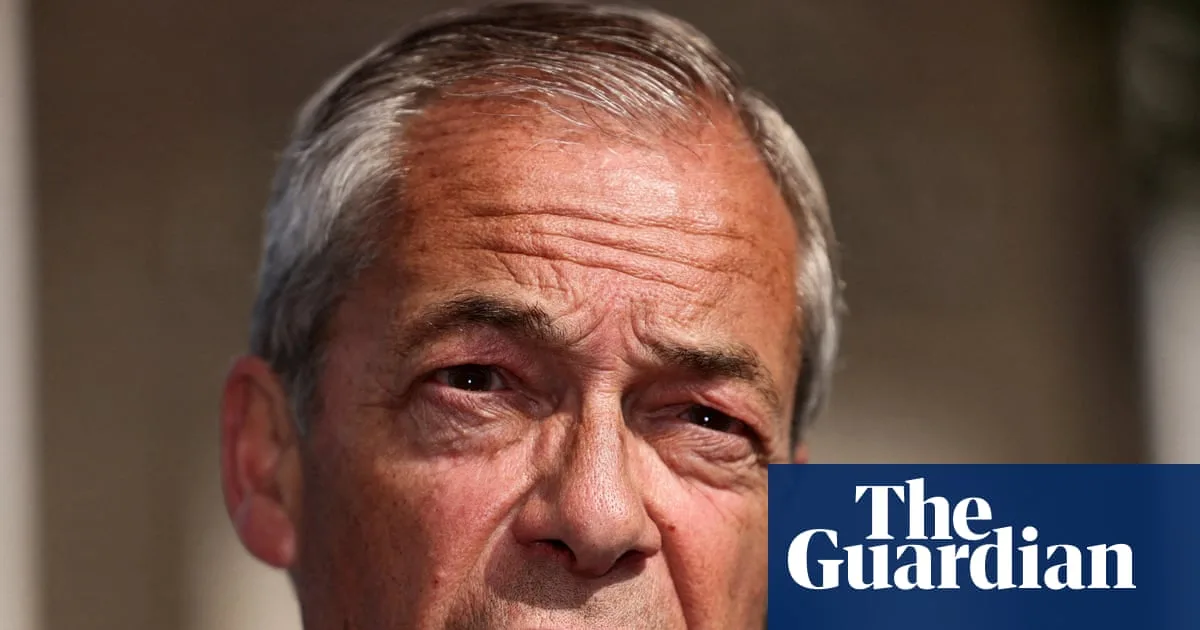
But I also believe Henry Nowak deserves better than the criticism now being levelled at the police by Nigel Farage. When the Reform UK leader this morning 'addressed the nation' in an 'emergency' YouTube video, he called for 'pure cold rage' in response to the tragedy. What Farage is doing with this tragedy is not advocacy, but manipulation. He has taken a young man's murder, stripped it of its complexity and dressed it in a pre-existing political costume. The result is not illuminating. It is dangerous.
Farage presents the Nowak case – and the bodycam footage of his arrest – as proof of 'two-tier policing'. But a single tragedy can never prove a national system. If it could, then every historic miscarriage of justice involving a Black victim would prove that Britain operates a permanent anti-Black policing regime. Serious people do not reason that way. They examine patterns, evidence and data. They do not begin with a conclusion and search for a case to fit it, as Farage has done.
Let me be clear about where I stand. As well as being a former police and crime commissioner, I am also a special constable. I have been stopped and searched six times, including once while sitting in my car in a suit, returning from a meeting as a business owner employing 70 members of staff. Between the ages of 18 and 28, I was stopped at a rate approximately 17 times higher than the national average for young men my age.
I say this not for sympathy, but for context: I know what it feels like when policing goes wrong. And precisely because of that, I will not allow poor policing to be weaponised for a political agenda that would make things worse, not better.
Farage's central claim about Nowak's murder is that DEI culture and hate speech law have created a system in which white victims are afforded less protection than ethnic minorities, and that officers are now specifically trained to respond differently based on the ethnicity of the suspect. This is not just wrong. It is ludicrous.
His thesis assumes a golden age of impartial British policing that simply never existed – certainly not for Black men like me, stopped at 17 times the national average.
That said, I share one of his underlying concerns. It is true, and genuinely serious, that some officers have become so fearful of accusations of racism that they would rather be assaulted than face a misconduct investigation. I have said this publicly before. It is a real problem, born partly from institutional risk-aversion and partly from processes that leave officers suspended for months on allegations that may prove entirely false. That deserves a proper, evidence-based response and fix. What it does not deserve is Farage treating it as proof of a coordinated conspiracy to deprioritise white lives, demanding an end to 'anti-white prejudice' and a recognition that 'white lives matter just as much as Black lives'.
The full facts of the Nowak case matter. The assailant weaponised a false claim of racial abuse to misdirect the police response. That is a deeply serious matter in its own right. It does not exonerate the officers who failed Henry Nowak, but it is part of the truth. But truth is precisely what Farage's narrative is not interested in.
My heart aches for Henry Nowak's family. No one should go through what he went through. I am glad his murderer will serve a long sentence. But the correct response to this tragedy is accountability, not a culture war conducted over a young man's grave.
The public want one thing from policing: that officers do their job without fear or favour. That means acting on evidence, applying the law consistently, and treating every victim, regardless of colour, with equal urgency and equal humanity.
That standard was not met for Henry Nowak. It has not always been met for people who look like me. The answer to both failures is the same: better, consistent policing.
Serious people know that. Nigel Farage, however, is not interested in it.
Festus Akinbusoye is a former police and crime commissioner for Bedfordshire