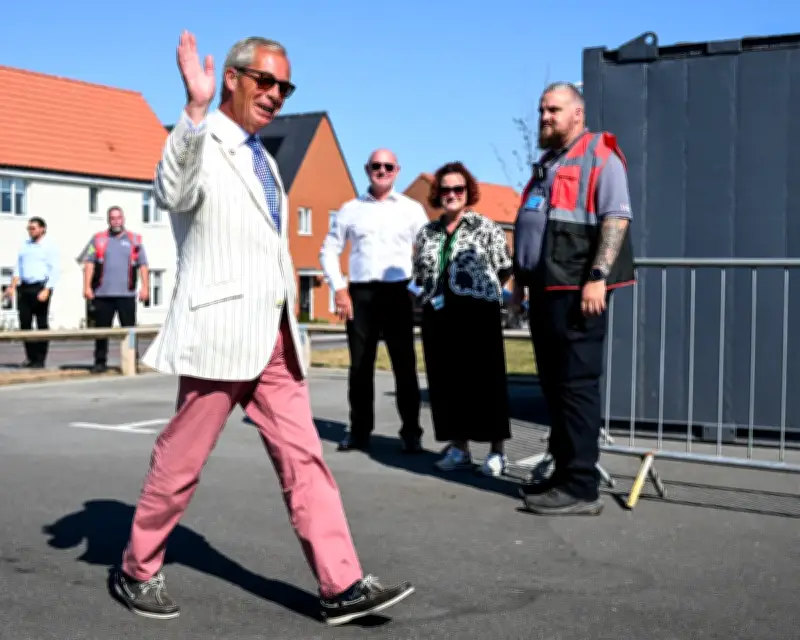
Nigel Farage was absent from the count of the byelection he forced upon Clacton, instead celebrating his victory with supporters at a 'Farage Fest' filmed by a friendly TV channel. For a politician claiming to speak for the people, he preferred an audience of believers.
Farage's win amid a boycotted contest
Mr Farage won because his toughest opponent on the campaign trail was a comedian in a jumpsuit with a bin on his head. Count Binface's 27% vote share highlighted the absurdity of a contest boycotted by the main parties as a Faragist stunt. Reform UK's leader aimed to turn scrutiny of his finances into a 'fight' with the 'establishment', but the result only determined who represents the Essex seat, not whether he broke parliamentary or electoral rules.
Despite facing no significant competition, 37% of votes were cast against him, showing that even in Clacton, a substantial anti-Reform protest vote can emerge when main parties stand aside.
Investigation resumes after re-election
The parliamentary commissioner for standards suspended its investigation when Mr Farage stopped being an MP; his re-election has led to its resumption. The inquiry covers millions from Thailand-based crypto magnate Christopher Harborne and alleged undeclared support from convicted fraudster George Cottrell.
A mandate is not an acquittal. If the commissioner finds a serious breach and Mr Farage is suspended for 10 or more Commons sitting days, a recall petition in Clacton would follow. If 10% of electors signed it, another byelection would be triggered, with the anti-Farage vote possibly coalescing behind one serious challenger.
Reform's intimidatory tactics
A disturbing pattern is emerging around Reform's intimidatory tactics. Questions about funding are answered by attacking those asking, with a parliamentary watchdog called a 'kangaroo court', Richard Tice's lawyers seeking sources behind the Guardian's investigation, and a Farage ally reportedly hiring private investigators to examine a Sunday Times journalist.
This is likely to backfire. After Mr Farage announced the byelection in July, Reform's national polling dropped from 27% to 24%, squeezed by a resurgent Labour, recovering Conservatives, and Restore Britain's more extreme policies. As even supporters such as Tim Montgomerie acknowledge, a party built on voters' grievances is now preoccupied with its own grievances about the media and investigations, appearing inward-looking, defensive, and sleazy. This may damage the party more than its angry, divisive nationalism.