

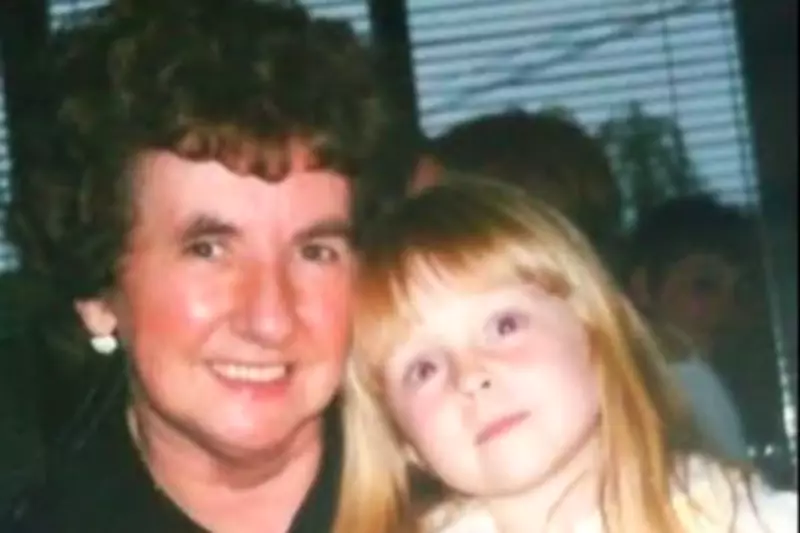
The memory of the final weeks of her mother's life remains vivid for Deb Hazeldine, now 56. Ellen Linstead, aged 67 and in remission from bone cancer, was admitted to Mid Stafford Hospital in September 2006 for physiotherapy after a fall at home.
"I was not even on the ward yet, I was in the corridor, and I heard mum screaming, and I dropped my bag and ran to her," Deb recalls. "I got into her room, she was half on the floor and half on the commode, and she grabbed hold of my hand, and said, 'Please, Deb, don't let me die in here.'"
Weeks later, Ellen died in heartbreaking conditions at Mid Staffordshire Hospital in December 2006. Her death sparked a seven-year battle alongside a small group of bereaved families to uncover the truth about neglect and poor care that led to hundreds of patient deaths. Their determination exposed one of the biggest NHS scandals in England and prompted systemic changes.

However, for almost a decade before their concerns were vindicated, calls for a deeper investigation were repeatedly rejected by Labour government ministers, including Andy Burnham, now a contender for the party's leadership.
As the 20th anniversary of her mother's avoidable death approaches, Burnham's campaign to become Labour's next leader reminds Deb of her darkest chapter. "The only thing I would say is, when I think of Andy Burnham, the King of the North, could I just ask him: was my mum not northern enough? Was Staffordshire not north enough for him? That's how it felt. It just felt like we people in the Midlands got completely forgotten."
During those terrible years seeking justice, Burnham "point-blank refused" to meet families, she said. "My mum's memory was not worth a second of his time, and I don't know why."
The Mid Staffordshire Hospital Scandal
The Mid Staffordshire hospital scandal remains one of the worst care failures in NHS history. It centred on Mid Staffordshire NHS Foundation Trust, particularly Stafford Hospital, between 2005 and 2009. Hundreds of patients suffered horrific neglect and poor treatment, with estimates of between 400 and 1,200 more deaths than expected, though the exact figure remains disputed.
A subsequent inquiry found appalling conditions: patients left in soiled bedding for hours, long treatment delays, ignored cries for help, and prolonged periods without food or water due to severe nursing shortages and a culture that discouraged staff from speaking out.
Over four months in hospital, Ellen Linstead contracted Clostridium difficile and MRSA, suffered two falls breaking her spine, and was left unfed and screaming in pain in dirty sheets. She died in December 2006, but it took four years for the trust to admit her cause of death was C difficile.
Andy Burnham was health secretary from June 2009 to May 2010 during the later stages of the scandal. Following a critical Healthcare Commission report in 2009, he announced an independent inquiry by Sir Robert Francis, but reportedly refused 81 requests for a statutory public inquiry. It wasn't until after Labour lost power in 2010 that his successor, Andrew Lansley, converted it into the full statutory public inquiry known as the Francis Inquiry, which produced over 200 recommendations for systemic change.
Families' Struggle for Justice
Recalling the fight after her mother's death, Hazeldine told The Independent: "The thing with Andy Burnham that still hurts to this day is that my mum's death was not worth his time. He would never meet with the relatives."
"I just wish they'd [politicians] spent one second on a ward like I had, to know what that was like to be terrified of leaving your mum, to be worried, to not want to leave her on her own. Every day, getting more desperate, knowing she wasn't going to come home because she wasn't going to survive that poor care."
For Deb, the refusal to meet families was "soul-destroying". "It was so disrespectful to my mum's memory, and the reason I did the campaign is that I knew I would never be able to put my head on a pillow and rest again if I had not tried to ensure just one mum went home because my mum didn't."

The initial independent inquiry ordered by Burnham was never enough. "We called it the 'secret inquiry' because nobody was subpoenaed, nobody knew what evidence had been given," she said. "I'd always say: 'Would that have been good enough for his mum?' Because if not, why should it be good enough for mine?"
Aftermath and Legacy
It took years for Deb to learn the full truth. "I didn't have the full picture until seven years later, the best part of a decade," she recalls. "It always felt to me personally that mum died in a time of no bad news allowed. That's how it felt, and it was, 'No, we won't highlight that, we won't deep dive into it, don't look into it.'"
In 2010, under the Conservative government, health secretary Andrew Lansley finally granted the public inquiry the families had sought. Chaired again by Sir Robert Francis, it concluded in 2013 with 290 recommendations, leading to new legislation requiring providers to notify patients and families when things go wrong, and an overhaul of the Care Quality Commission's inspection regime. A review of trusts with high mortality rates placed 14 NHS trusts into special measures.
In the 20 years since, Ellen missed seeing her granddaughter grow up, birthdays and Christmases. In 2018, Deb was awarded an MBE for services to patient safety. Four years earlier, Burnham defended his position, saying the government thought a public inquiry might cause the hospital to focus on "defending reputations". However, Deb, who helped form Cure the NHS, believes the hospital's reputation would have recovered quicker had a public inquiry been granted sooner.
"And out of those 290 recommendations, just which one of them does [Andy Burnham] think that we didn't need?" she added.
Political Implications
Deb felt the public inquiry was not granted because of "a tendency to want to cover up the failures of what could have happened under the Labour government... I think it would have shone a light on the whole of the NHS and they [Labour] tend to like to hold that up as theirs, don't they?"
If Burnham makes it to Westminster, he will face new calls for a public inquiry from families harmed by NHS maternity failures. Campaigning families in Leeds, Sussex and Nottingham have urged the former health secretary, Wes Streeting, to launch a single public inquiry rather than multiple independent inquiries. Streeting resisted those calls and is no longer in a position to see them through. If Burnham becomes prime minister, families will watch closely to see if history repeats itself or if lessons have been learned.
Andy Burnham was approached for comment.





