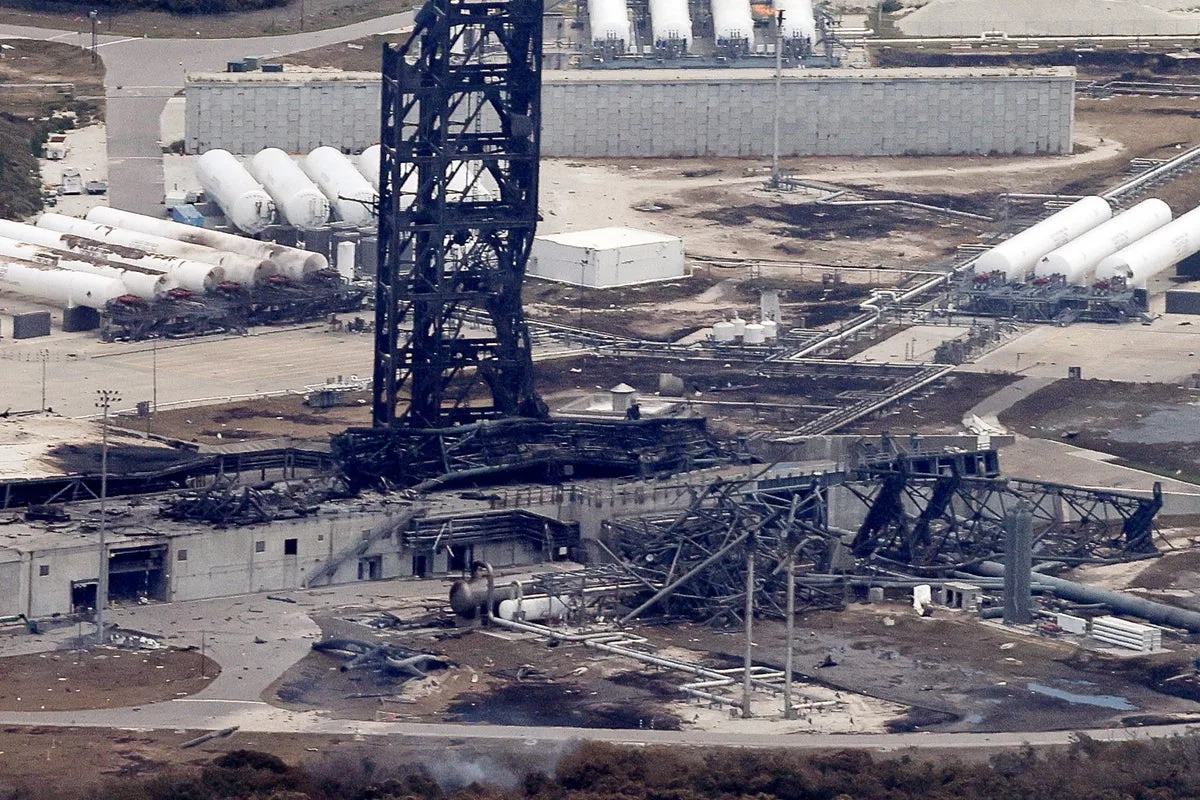
The public has been warned to avoid any debris from Blue Origin's New Glenn rocket that may wash ashore after a catastrophic explosion during a test firing at Cape Canaveral. The blast, which occurred on Thursday night, destroyed a portion of the launch infrastructure and sent a massive orange fireball visible for miles.
No injuries were reported, but aerial assessments on Friday revealed crumpled wreckage with only a single tower and water tank remaining intact. Emergency services urged anyone spotting debris to contact 911 immediately.
The explosion is a significant setback for Blue Origin, coming just weeks after the entire New Glenn fleet was grounded due to an upper-stage engine malfunction. The rocket, named after John Glenn, is central to the company's ambitions for NASA's Artemis programme, which aims to return astronauts to the moon by 2028.

Blue Origin had secured a new contract worth hundreds of millions of dollars from NASA earlier this week. The New Glenn rocket, one of the largest designed to reach orbit, uses liquid oxygen and liquefied natural gas. None of the 48 Amazon Leo satellites assigned to future missions were on board during the blast.
In contrast, within 12 hours of the explosion, SpaceX successfully launched more Starlink satellites from a separate pad at Cape Canaveral. Blue Origin's single Florida pad, Launch Complex 36, has a history dating back to the 1960s and was rebuilt by the company for over $1 billion.
All Blue Origin operations are now on hold pending an investigation. NASA Administrator Jared Isaacman said the agency would assess near-term impacts on the Artemis programme, which includes plans for a Blue Origin lunar lander prototype launch this fall.