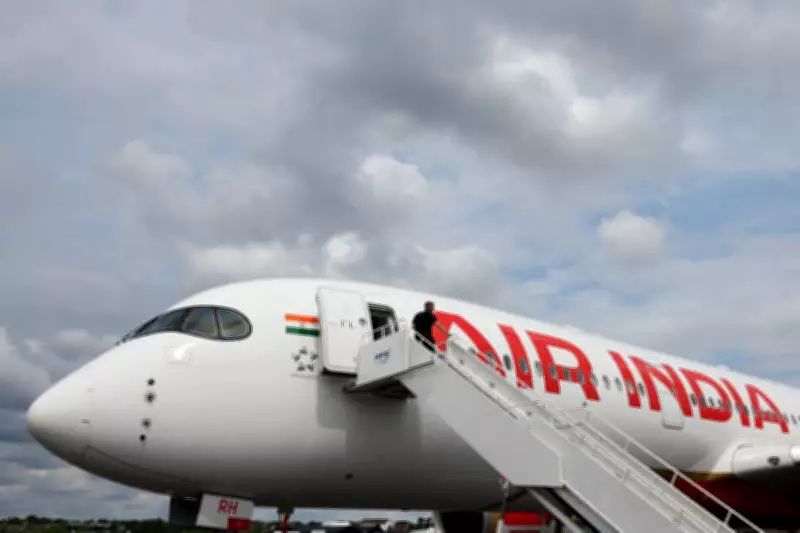
Air India has confirmed it is investigating an engine fire that forced a flight to make an emergency landing in Delhi, marking the second safety incident involving its aircraft in a single day.
Incident Details
The Thursday night flight from Bengaluru in southern India declared a "full emergency" after cockpit crew received an alert indicating a possible engine fire as the aircraft approached Delhi. Flight AI2802, an Airbus A320 carrying 171 passengers, eventually landed safely at Delhi airport, the airline stated.
Air India said the fire warning was later confirmed as genuine, and the crew carried out an emergency landing in line with standard operating procedures. The fire was extinguished after the plane landed at around 9:30 pm, and the aircraft was later towed away from the runway. All passengers disembarked safely.

Investigation Launched
"Air India is immediately initiating a full investigation into the cause of the incident in coordination with the relevant regulatory authorities," the airline said in a statement.
Earlier Tailstrike Incident
The incident came hours after another Air India aircraft was grounded following a tailstrike at Bengaluru airport. An airline spokesperson said the aircraft, an Airbus A321 arriving from Delhi, "experienced a tailstrike during landing" but came to a stop safely, and all passengers and crew members disembarked normally.
A tailstrike occurs when the rear underside of an aircraft makes contact with the runway during takeoff or landing. In the wake of such incidents, aircraft are inspected for possible structural damage.
According to NDTV, a Boeing 747 had taken off shortly before the Air India flight landed, creating strong turbulence. The Air India flight's pilots likely encountered unstable landing conditions and attempted a go-around, a standard procedure to abort a landing and try again. The tailstrike could have occurred during this process.
Ongoing Challenges for Air India
Air India, owned by the Tata Group, is going through turbulent times. The carrier has been facing mounting losses as well as legal and regulatory troubles since one of its Boeing 787 Dreamliners crashed last June, killing 241 of the 242 people on board and 19 on the ground in western India.
It has since been reprimanded by aviation regulators for a series of safety failings, including flying an aircraft eight times without an airworthiness certificate and operating planes without checking their emergency equipment. In December 2025, the airline acknowledged a "need for urgent improvements in process discipline, communication, and compliance culture."