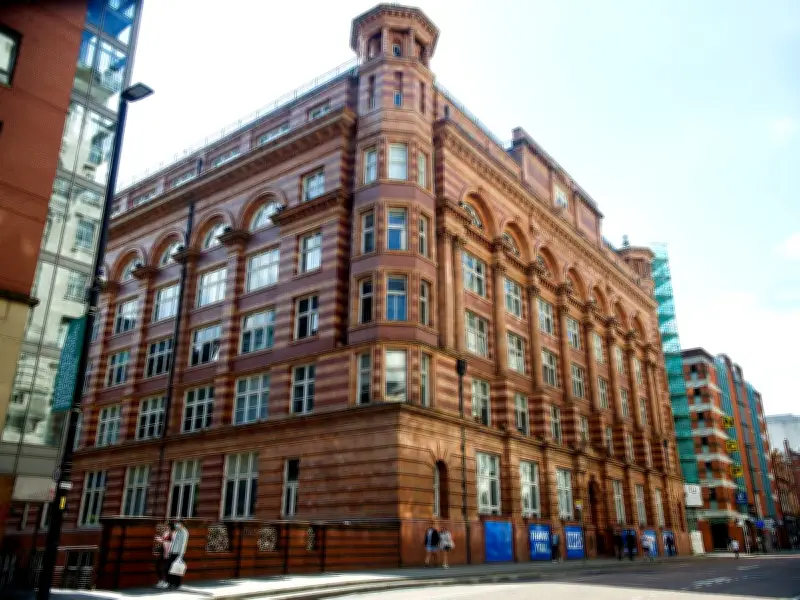
The Greater Manchester mayoral election takes place tomorrow, Thursday, 30 July. With Andy Burnham now serving as Prime Minister after taking office last week, attention shifts to the vacant seat at the Tootal Buildings on Oxford Road, home to the Greater Manchester Combined Authority (GMCA).
History and creation of the role
Burnham became the first mayor of Greater Manchester in 2017 after securing 63% of the vote, winning majorities in all ten boroughs. The position was created under devolution legislation introduced by the Conservatives after they took power in 2010.
The GMCA was formed in 2011 by the ten councils that make up Greater Manchester: Bolton, Bury, Manchester, Oldham, Rochdale, Salford, Stockport, Tameside, Trafford and Wigan. Each council holds one seat on the GMCA, typically held by the council leader. The mayor is the eleventh member and chairs the GMCA.

Powers and responsibilities
The Greater Manchester mayor has one of the broadest regional remits in the UK, also serving as the police and crime commissioner (PCC) for the area. This means the mayor acts as "the public’s voice on policing matters" and has a statutory duty to hold the Chief Constable and Greater Manchester Police (GMP) accountable, according to the GMCA. PCC duties include appointing the Chief Constable, setting the policing budget, and agreeing priorities through the Police and Crime Plan.
Other powers include responsibility for the fire and rescue service, setting its budget and strategic priorities, while the Chief Fire Officer handles operational matters.
The mayor oversees the Local Transport Plan, which outlines short, medium and long-term transport priorities. They decide capital funding for new transport infrastructure, such as tram lines or roads, and are responsible for running the Bee Network alongside Transport for Greater Manchester (TfGM), which sets bus routes, timetables and fares.
Land-related powers include the ability to buy land to enable development. The mayor also has some control over skills and adult education, including funding and shaping technical education to help local people access jobs. Additionally, the mayor oversees governance for several local health commissioning budgets.
According to the GMCA, the mayor "helps lead the city region and works with local councils, businesses and public services to improve life for people across Greater Manchester" and "represents Greater Manchester at a national and international level, speaking for the city region, helping build relationships with government and attracting trade and investment." The mayor is also a member of the Mayoral Council for England and the Council of the Nations and Regions.
Candidates and election details
Tomorrow's election features seven candidates, with an annual salary of around £118,000 available for the role. This is higher than other comparable mayors due to including the PCC element and is significantly more than an MP's salary of £98,599.
The candidates are: Sian Astley (Reform UK), Geraldine Coggins (The Green Party), Bev Craig (Labour and Co-operative Party), Phil Eckersley (The Conservative Party Candidate), Marcus Farmer (Independent), Richard Kilpatrick (Liberal Democrats), and Marlon West (Restore Britain).
To vote, individuals must be on the electoral register and present valid photo ID at polling stations. Acceptable ID includes a passport, driving licence, certain bus passes, or a proof of age card. The ID must be the original (not a photocopy or screenshot). Expired ID is still valid if the photo remains recognisable.