

USL's Ambitious Growth Meets Harsh Realities
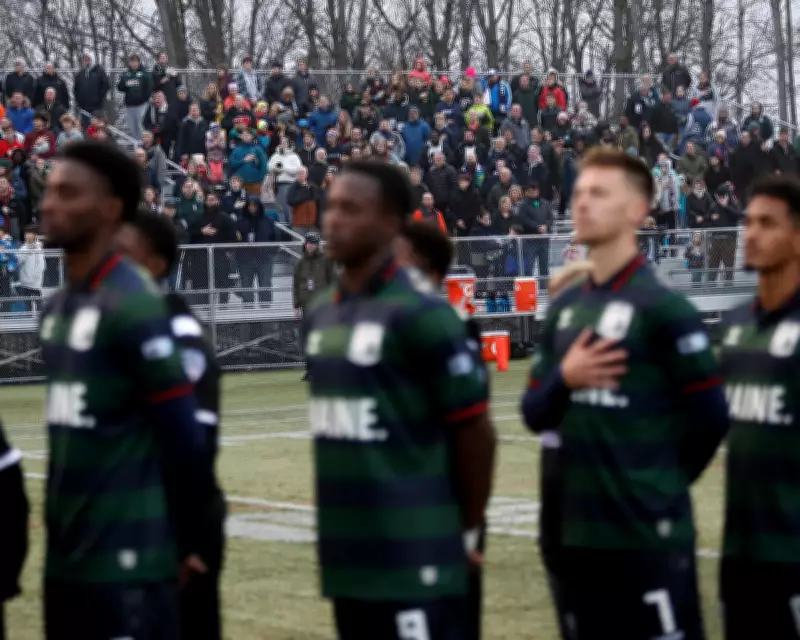
Portland Hearts of Pine have emerged as one of the more successful recent entrants in USL League One, highlighting the league's ongoing expansion efforts. However, this growth comes against a backdrop of significant challenges, including team closures, labor disputes, and financial instability. The organization overseeing much of lower-league soccer in the United States is aggressively pursuing expansion ahead of the 2026 World Cup, but critics question whether this push is sustainable given current operational strains.
Financial Struggles and Revenue Sharing Gaps
Dan Egner, former technical director of Real Salt Lake, recalls the 2019 USL Championship win with affiliate Real Monarchs, which, despite its glory, was financially unprofitable. "It literally cost us money to win the championship," Egner told the Guardian, noting that travel expenses outweighed home game revenue due to a lack of prize money. This issue is not isolated; many USL clubs face similar financial pressures, exacerbated by the league's absence of meaningful revenue sharing.
Unlike MLS and other major leagues, the USL does not distribute income from media rights or national sponsors to its clubs. Instead, teams rely on matchday sales, merchandise, and player transfers, often yielding modest returns. Sean Mann, co-owner of Detroit City FC, revealed that "losing $4m a year puts us in the top quartile of most profitable teams in the league," underscoring the precarious financial landscape. Despite this, expansion continues, with new owners drawn to the USL's flexible structure, though expansion fees—around $20 million for the Championship and over $5 million for League One—flow directly to league headquarters, not shared among existing clubs.

High Costs and Club Instability
Operating a USL team involves substantial expenses, with first-year Championship clubs estimated to spend $24-29.5 million annually. Travel costs are particularly burdensome, as the league remains national in scope without regionalization to reduce distances. Clubs like South Georgia Tormenta FC illustrate the risks; after opening a $30 million stadium, attendance plummeted, leading to a hiatus just weeks before the 2026 season. This pattern of instability is common, with 20 teams folding since 2015 across the Championship and League One.
Public records show additional financial strains, such as Orange County SC spending over $300,000 on TV and radio costs in 2024, and teams paying annual dues exceeding $300,000. The USL also collects $1.50 from every ticket sold, further draining club resources. Egner notes, "I don't see how we can talk about pro/rel when you have clubs fold every year," emphasizing the need for sustainable finances before implementing promotion and relegation.
Expansion and Ownership Vetting
The USL's expansion strategy includes launching a new Division I league, USL Premier, with plans for promotion and relegation by 2028. However, details remain scarce, and the league's rapid growth has not improved club stability. Since 2018, 25 independent clubs have joined League One, with five folding within three years. The responsibility for vetting owners falls to the league office, led by CEO Alec Papadakis and his son Justin, but the high attrition rate raises concerns about oversight.
Egner, now an agent, expresses caution when placing clients in USL clubs, noting the uncertainty compared to MLS's stability. "With the USL, hopefully this club isn't the one that folds this year," he said, highlighting the personal impact on players affected by multiple team closures.
Labor Disputes and Player Protests
Labor tensions have escalated as the Championship's collective bargaining agreement expired in December 2025. The USL Players Association voted to authorize a strike in February 2026, with 90% of players rejecting the league's offer. In response, the USL emailed players guidance on crossing picket lines and resigning union membership, sparking silent protests during opening weekend matches.

Despite these conflicts, US Soccer honored Alec Papadakis with the Werner Fricker Builder Award, recognizing his role in expanding soccer access. Yet, as the USL experiments with top-division ambitions, clubs and players grapple with immediate survival challenges, casting doubt on the league's long-term vision.





