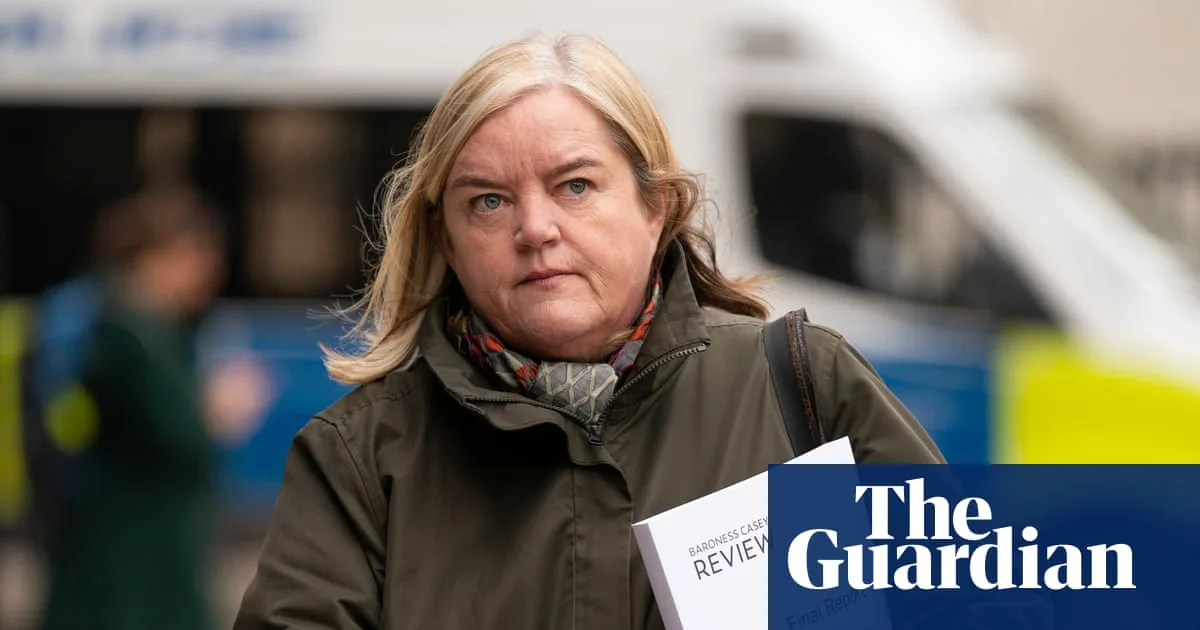
Millions of unpaid carers in the UK are “living an agony” while propping up an outdated and fragmented social care system, Louise Casey, the head of the government’s adult social care commission, has said.
Speaking at a Carers UK conference in London on Thursday, Lady Casey criticised a system that “still behaves as if we are living in 1948 and not 2026” by relying on predominantly female unpaid carers and poorly paid care workers to hold it together until crisis point. She warned that this approach was no longer sustainable, with women “expected to absorb risk, stress and responsibility so the system doesn’t have to”.
Casey described how the system made things “far harder than it needs to be”, citing elderly parents in their 70s still carrying their 40-year-old disabled son upstairs every night, worried that asking for help would worsen their situation. She said carers frequently had to “fight every step of the way” for state support, spending more time sorting out problems with health and social care than with their loved ones. Many felt like “unpaid project managers”, trying to navigate a confusing system and figure out “what the bloody hell is going on most of the time”.
There are an estimated 5.8 million unpaid carers in the UK, with 1.7 million providing 50 or more hours of care a week. The economic value of unpaid care is roughly £184bn, and about 60% of unpaid carers are women.
Casey, who was commissioned by the government in January 2025 to lead a two-stage review of adult social care in England, said carers had told her the experience was “tiring, uncomfortable, repetitive, distressing and downright frustrating”. She argued that the system should take the “agony out of care”. The first report from her review is expected this year.