

Tennis Stars Confront Stalking Threats and Online Abuse in Troubling Trend
Before the commencement of last year's Dubai Open, Emma Raducanu's 2025 season had already encountered numerous setbacks. The British number one, aiming to complete her first full year on tour following multiple surgeries in 2023, had advanced to the third round at the Australian Open. She secured victories against seeded opponents Ekaterina Alexandrova and Amanda Anisimova before being eliminated by world number two Iga Swiatek.
A series of first-round exits in Singapore, Abu Dhabi, and Qatar ensued before Raducanu returned to the United Arab Emirates for her sixth tournament of the season. After an opening-round win against Maria Sakkari, optimism surrounded her upcoming second-round match against talented Czech star Karolina Muchova.
Disturbing Incident in Dubai
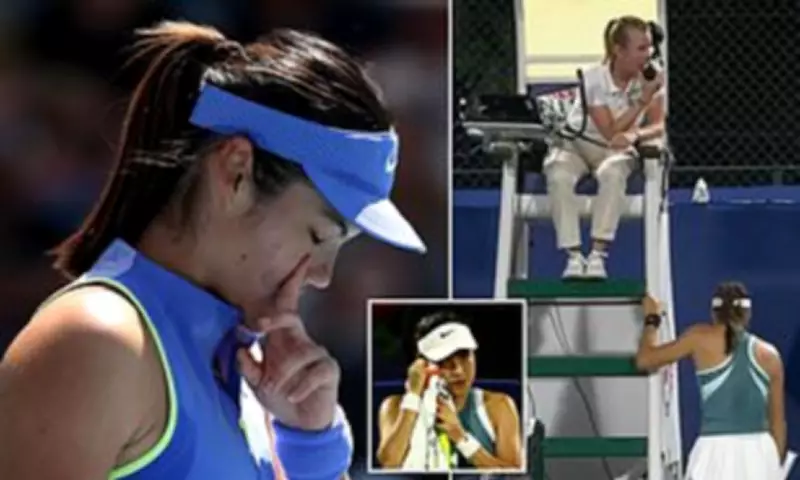
However, her defeat to the fourteenth seed carried far graver consequences. During the match, Raducanu became visibly distressed upon noticing a man in the stands who had exhibited fixated behaviour. This individual had previously handed a letter to Raducanu outside tournament grounds after her victory over Sakkari.

The man was believed to have followed Raducanu to four tournaments since the beginning of that year and was later issued a restraining order. One year ago this week, Raducanu was targeted by this individual displaying fixated behaviour at the Dubai Open. The British number one was compelled to hide behind umpire Miriam Bley's chair after the man appeared in the stands.
For Raducanu, this painful incident felt depressingly familiar. A UK-based stalker had previously received a five-year restraining order against the 2021 US Open champion a year after her triumph at Flushing Meadows. More instances of tennis stars feeling threatened have emerged in the subsequent year, serving as a terrifying reminder that stalking and abusive contact both on and off the court in women's tennis persists.
Increased Security Measures
Following the incident, Raducanu was offered enhanced protection at her next major tournament, Indian Wells, through additional security guards. Yet even these extra provisions proved insufficient to alleviate the player's wariness, as she noted in her first in-depth interview since Dubai in June.
It was difficult, she told BBC Sport. It was emphasised by the fact I didn't necessarily feel certain or comfortable in my own set-up and team so it just added to the anxious feeling. I'm obviously wary when I go out. I try not to be careless about it because you only realise how much of a problem it is when you're in that situation and I don't necessarily want to be in that situation again.
Off the court right now, I feel good, I feel pretty settled. I feel like I have good people around me and anything that was negative, I kind of brush it off as much as I can.
Swiatek Faces Abuse in Miami
While Raducanu was rebuilding, Swiatek, a former world number one and one of the biggest names in the game, endured threatening circumstances at another Masters tournament. The Pole saw her preparations for her round-of-32 match against Elise Mertens disrupted when a forty-year-old man launched a primitive and vulgar attack against her.
In Swiatek's case, a man known to the star perpetrated the attack, shouting jibes about her mother and her psychologist Daria Abramowicz during her training drills. Only a handful of venues on the tour feature private practice courts for players, such as Aorangi Park at Wimbledon. Almost everywhere else, practice sessions remain open to ticket holders, presenting another opportunity for fans to observe their favourite players.
Similar to Raducanu, Swiatek received additional security after her team reported the incident to tournament directors and the WTA. A security guard stood in her box, and another accompanied her during her on-court interview.
Wimbledon Incidents Highlight Ongoing Issues
While enhanced security is available for players with legitimate safety concerns, others have not been as fortunate. At Wimbledon, Kazakh star Yulia Putintseva was reduced to tears and called for security to remove a fan she perceived as crazy and dangerous during her 6-0, 6-0 defeat to Amanda Anisimova.

The man in question was believed to be targeting Russian players over perceived support of the war in Ukraine. Putintseva revealed post-match that she was simply relieved that no one was hurt and that unpleasant interactions remain disturbingly commonplace on tour.
It was just an idiot, like saying something, and I was not afraid, Putintseva said, attributing her tears largely to a disappointing performance. But I was feeling uncomfortable, because there is too many idiots right now in the world.
Wimbledon also served as a grim reminder of Raducanu's own issues with fixated individuals. The man issued the restraining order in Dubai attempted to obtain tickets to the Championships despite being banned from attending tour events. The All England Club's security system identified his name and blocked his attempt to enter the public ballot for tickets.
News of his attempt to gain entry into SW19 emerged just under two weeks before the tournament's start while Raducanu was preparing for her biggest tournament of the year. Wimbledon and everyone did an amazing job, Raducanu said a week later. I got a notification, the police contacted me, and told me everything was going to be OK. I know that I am not the first athlete to go through this, and I probably won't be the last - not just as an athlete, but females in general.
Muchova's Distressing Experience at US Open
Less than three months later, another female star encountered similar distress. At the US Open, Karolina Muchova was left disturbed by a man she described as her ex-boyfriend appearing in the stands during her second-round match against Sorana Cirstea.
The Czech star became visibly agitated after noticing him and appeared to wipe tears from her eyes as she attempted to regain composure to complete the match. After winning, Muchova explained: Opposite my bench, my ex-boyfriend sat down. He sometimes shows up at places where he shouldn't be. That startled me a bit. I told him to leave, but he didn't, but later he did go. It was hard to focus in that moment.
Muchova is not thought to have requested that her ex-partner be blacklisted by the United States Tennis Association or the WTA, which would have denied him entry. This incident underscores the threat tennis players face when stepping onto the court. Tennis stars, unlike other athletes, maintain a unique closeness to their audience, allowing for greater scrutiny. Unwelcome spectators rarely go unnoticed in the stands.
Social Media Abuse and Gambling Threats
Beyond physical threats, abuse on social media presents another significant challenge. Stars are encouraged to spend considerable time cultivating their brands online. As Coco Gauff's private emotional moment at the Australian Open demonstrated, tennis's social media presence leaves few places for players to hide from constant public appetite.
While staying offline is not a viable option, there are few benefits to being online. In June, the ITF and WTA published an inaugural 2024 season report tracking abuse of tennis players across various platforms. Forty percent of this abuse originates from gamblers who have placed bets on matches.
Using data from Signify Group's Threat Matrix service between January and December, the report confirmed that nearly 8,000 posts and comments from 4,200 accounts could be deemed abusive, violent, or threatening. The worst accounts are subsequently flagged to Tour events, prompting bans. In fifteen separate instances, the threat level was elevated, with the FBI involved in three cases deemed particularly severe.
Predictably, WTA players bear the brunt of abusive posts, although gamblers attacking players also target ATP stars. Five women's stars received over a quarter (26 percent) of all tracked abuse.
Eva Lys Details Harrowing Online Abuse
Rising star Eva Lys, who has cultivated a personable social media presence since breaking into the top fifty last year, detailed her experience with violent abuse from bettors in an interview with Die Welt in November. Accounts sent her messages insulting her family, issuing death threats, and even describing in detail how (she would be) raped.
After every defeat, Lys confirmed, after previously sharing some messages on her social media account. A thousand times the hate straight into my inbox. Without exception. Some are particularly brazen. If a match is close, goes to a third set, and I'm behind, I later find nasty messages that must have been written at that moment. If I then win, the same guy writes that I should forget the previous message, that he's sorry. He's now won 5,000 euros.
Some people write that they'll find me and then do this or that to me. That makes me uneasy. I've also recently had to deal with stalkers who got hold of the addresses of training facilities, hotels, and even room numbers. Was it related to lost bets? I don't know. They were clearly obsessed with me. That crossed all boundaries.
Together with the association, the Women's Tennis Association (WTA), we've made sure to at least keep these people away from the tournaments and the courts. But even these security measures have their limits.
Efforts to Improve Safety
Attempts to enhance safety both online and on-court are underway. Lys praised an innovation at last year's French Open that allowed players to filter comments through AI. The WTA remains committed to making player safety its top priority, as the organisation emphasised in June.
Meanwhile, players must navigate ongoing unease as associations and the Tour work to improve protections for player welfare. By December, Raducanu shared that she had moved on from the Dubai incident, aided by an extended off-season spent in her childhood bedroom in Bromley.
I have my hood up, or whatever, but they're just so focused and absorbed in their own world, Raducanu said of commuting in and out of central London. It's all so crazy. It's like everyone's on a mission. You have to get the elbows out, just to get through. If people recognise me, if people see me, and they want to come up to me, then that's great, but I don't necessarily feel like I'm hiding from anything any more.





