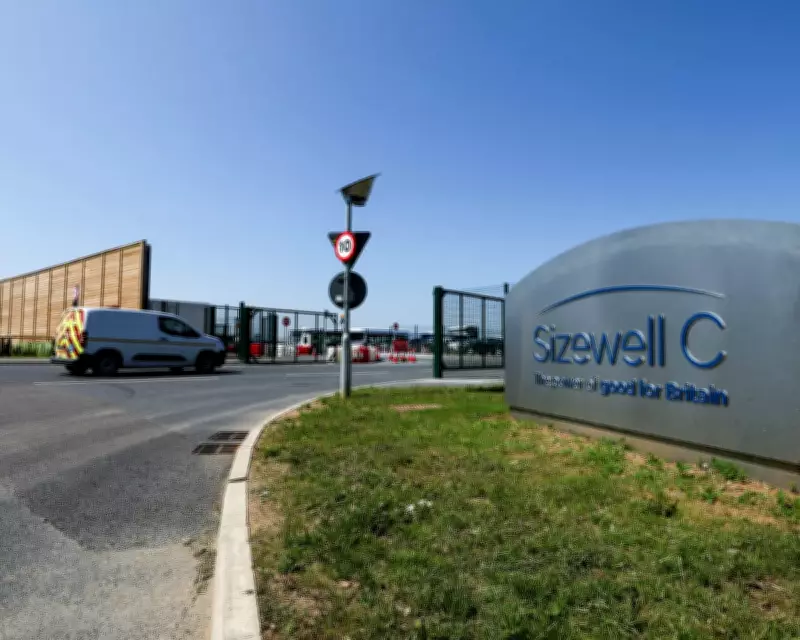
The National Audit Office (NAO) has issued a stark warning regarding the government's £38 billion Sizewell C nuclear plant in Suffolk, stating that the project's costs are subject to significant uncertainty and may not deliver net benefits to UK households until at least 2064. According to the spending watchdog, while the potential benefits of the plant are considerable, they remain uncertain, whereas the risks are immediate, substantial, and borne by the public.
Cost-Benefit Analysis Raises Concerns
The government asserts that the nuclear reactor, expected to generate enough low-carbon electricity to power 6 million homes when operational in the late 2030s, could save approximately £2 billion annually from the electricity system compared to other low-carbon technologies. However, the NAO warns that for households, the overall savings could be outstripped by the cost of supporting its construction until nearly halfway through its 60-year operational life. The project may take even longer to break even if cost overruns or delays occur.
Sir Geoffrey Clifton-Brown, chair of the public accounts committee, emphasized the exceptional scale, complexity, and significance of Sizewell C for taxpayers. He noted that experience from comparable nuclear projects in the UK and overseas highlights their vulnerability to delays and cost overruns.

Project Stakeholders and Financial Model
Sizewell C is being developed by French state nuclear company EDF as a successor to the Hinkley Point C reactor in Somerset. EDF has invested £1.1 billion for a 12.5% stake, while the UK government is the majority stakeholder with £14.2 billion invested. British Gas's parent company Centrica owns 15%, Canadian pension fund La Caisse holds 20%, and investment fund Amber Infrastructure owns 7.6%.
Nigel Cann, chief executive of Sizewell C, defended the project, stating that the costs on household bills represent an investment in lower long-term electricity costs that will deliver value to consumers and the country for the rest of this century. He highlighted that the project is already creating thousands of jobs and boosting businesses across the UK, with nearly £5 billion spent and 70% of construction value sourced from UK suppliers.
Government and Critic Responses
A government spokesperson argued that investing in large-scale nuclear power is the only way to escape the volatility of global gas markets. Households began paying for Sizewell C via energy bills at the start of 2024 under a regulated asset base model, a shift from the Hinkley Point deal where revenues start only once generation begins.
Critics, including the Stop Sizewell C campaign group, warn that construction delays could leave bill payers supporting the project without receiving power for longer than expected, while the government assumes financial risk. They claim the funding model ensures investors cannot lose, potentially turning Sizewell C into a financial disaster.
NAO Recommendations
The NAO has urged the government to mitigate risks through close monitoring, greater transparency to parliament, and securing value for money from significant public and private investment.