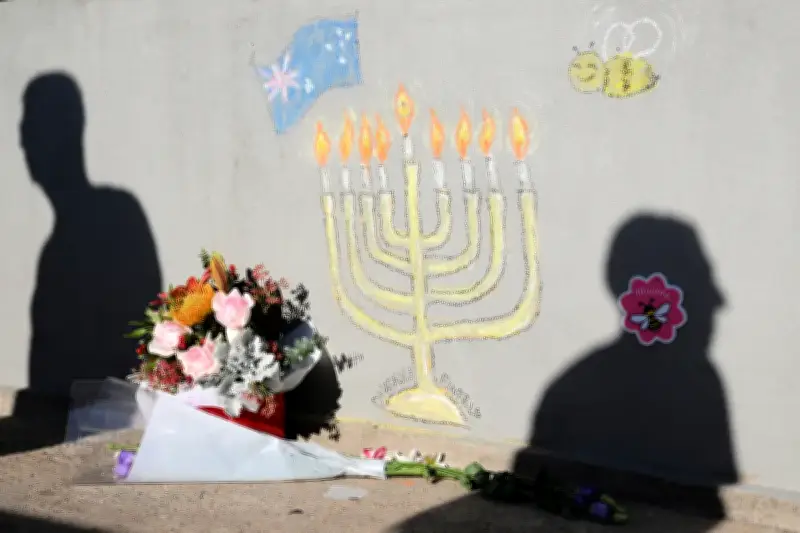
The royal commission into antisemitism and social cohesion concluded its public hearings this week after four months, hearing testimony from more than 300 witnesses. The inquiry began amid the grief and anger felt by Jewish Australians following the Bondi terror attack, when 15 people were killed during a Hanukah celebration.
Witness accounts of fear and grief
Liat, a 22-year-old university student who spoke publicly under her first name only due to safety concerns, told the commission about the “pervasive fear” that emerged on campus after Hamas’s October 7 attack and Israel’s subsequent war on Gaza. She said she was labelled a “baby killer” and genocide supporter. After being excused from the witness stand, she said, “It was certainly very cathartic for me … having gone through the majority of my university life in a state of fear.”
Alex Ryvchin, co-chair of the Executive Council of Australian Jewry, said the public hearings laid bare the anguish and safety fears of community members. “You’ve had people who don’t ordinarily have a platform, ordinary members of the community, who’ve been called and who have given heart-rending, harrowing accounts of what it’s like every single day for an ordinary Jewish Australian,” he said. “To me, that’s really the most important thing – for the royal commission and also for the country to hear that.”

Calls to extend the inquiry
The final week of hearings was dominated by calls from the federal opposition and some Jewish community leaders to extend the inquiry’s timeframe to hear from more witnesses. The calls were resisted by the commissioner, Virginia Bell SC, who has requested a short extension of the reporting deadline so the release of the final report does not coincide with the first anniversary of the Bondi attack.
Opposition frontbencher Julian Leeser, a Jewish MP, named Anthony Albanese and senior cabinet ministers including the attorney general, Michelle Rowland, among a cohort of people he said should appear before the inquiry to explain “what went wrong from the very top”. Ryvchin is “sceptical” about what calling senior political figures would have achieved, saying “we hear enough from them”. He said the commission has “ample” evidence to draw the “correct conclusions about what has caused this crisis, what led to Bondi and what remedies we need to improve as a country”.
Criticism of the commission’s approach
Dr Max Kaiser, a Jewish historian who sits on the advisory committee of the Jewish Council of Australia (JCA), said there were gaps in who the commission heard from. Speaking in a personal capacity, he said the commission heard limited public testimony from Jewish Australians who have participated in pro-Palestine protests, including those charged under Queensland’s hate speech crackdown. “They view that expression of solidarity with Palestinians as very much part of their Jewish values and very much about saying never again for anyone,” he said.
Sarah Schwartz, the JCA’s executive officer, told the commission she had been called a traitor and “Hitler’s Jew” because of her advocacy for Palestinians, in online harassment from pro-Israel and neo-Nazi groups. Jewish leaders have also raised concerns about witnesses at the commission being subjected to online abuse after testifying. In June, the Australian federal police charged a man with allegedly harassing a royal commission witness by sending three emails. The man was found in possession of neo-Nazi material and leaflets for the National Socialist Network – now proscribed as a hate group under Australian laws.
Looking forward
Kaiser criticised the lack of experts who could challenge the commission’s use of the International Holocaust Remembrance Alliance definition of antisemitism as a guiding framework during the inquiry. Ryvchin said the commission’s recommendations will reveal whether it has gotten to the core of how antisemitism operates in Australia.

In her closing address this week, Bell acknowledged there may be frustration that much of the evidence about the Bondi attack was heard behind closed doors but stressed the need to not prejudice the ongoing criminal proceedings. The commission’s interim report in April found that Sydney’s Jewish community had told police of a “high” threat of an attack at the Chanukah by the Sea festival at Bondi, but that New South Wales police appeared not to have completed a comprehensive risk assessment for the event.
Nomi Kaltmann, a Jewish Australian lawyer and journalist based in Melbourne, said she hopes the necessary security protocol changes are swiftly implemented after the final report is handed down. “No community in Australia should endure the grief and anguish that my Jewish community has endured over the past eight months,” she said.
The Sydney-based Rabbi Jacqueline Ninio leads the congregation at Woollahra’s Emanuel Synagogue – about a 10-minute drive from where the Bondi attack occurred. She said the Jewish community is still in a “deep process of grief and mourning”. “We’re holding on to hope and belief that this royal commission can really make a difference and help us to go back to the Australia that we love,” she said.