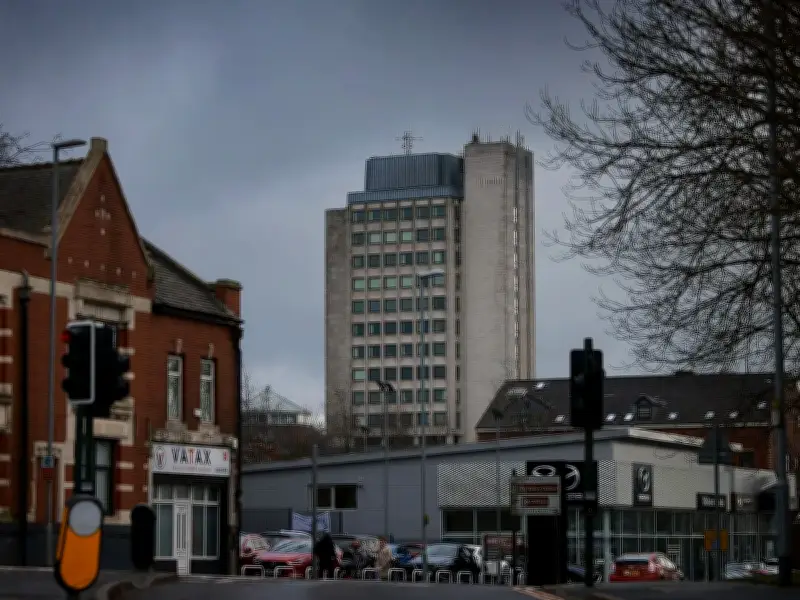
Oldham Council's most senior officers believe the local authority is breaking the law because it has been without a political leader since the May 2026 elections, leaving the council in a state of paralysis.
The borough has been locked in political deadlock since the public went to the polls, with Labour losing multiple seats and Reform making major gains. However, no party holds even a third of the seats in the council chamber, making it difficult for anyone to achieve a majority, further complicated by political divisions.
Councillors shout over each other and blame one another for the inability to work together, with little trust between them. Some say Oldham has not been operating normally for a long time and is now seen as a pariah by some in other parts of Greater Manchester.

No clear political direction
The 2026 elections left no easy path as to who will run a major organisation with a revenue budget of £368m. In the meantime, officers have been using emergency powers just to keep the lights on, but their role is not to make political decisions. In the words of one councillor, the borough has been left rudderless with no clear political direction over its future.
The council's constitution, which sets out how it is run, says it must have a cabinet and a leader at the top, and this is required by UK law. The local authority is also required to have an elected member overseeing children's services. The absence of this and the length of time the council has had no one in charge is what has led officers to make the highly unusual declaration that the council is breaking the law.
Unprecedented situation
Stuart Wilks-Heeg, Professor of Politics at the University of Liverpool, says he has never seen anything like it. There is hope next year's elections in May 2027 or an all-out poll with every seat up for grabs would resolve things. However, Prof Wilks-Heeg said: “You never know what the electorate is going to do. It could produce something which makes the maths more viable but I do not think there are enough seats in play for any party to get a majority and you never know how voters are going to behave.”
On the ground, people appear to not yet be feeling the consequences of what is happening, but that does not mean there are none. The borough currently has no representatives on the Greater Manchester Combined Authority, meaning with no seat at the table, millions of pounds of regional funding could go elsewhere. Difficult decisions that may need to be made around finances could be avoided in the future because officers do not want to be in the firing line for making them.
Impact on services and scrutiny
Political consensus has been found on things like £7m more for the Coliseum theatre, but that is no guarantee if things get difficult. Lengthy meetings are held with party leaders on a regular basis, but these are private. There has been less public scrutiny of council business with 24 cancelled or postponed meetings since May, two officer decisions published in that time, key posts not appointed, and the ratings of adult and children's services are potentially at risk.
Many councils have been in Oldham's situation in the past – Wirral and Bristol in 2003, Burnley in 2004, and Sefton in 2008. However, Oldham's deadlock is now at the point they are asking the government to intervene. Prof Wilks-Heeg said: “As far as I can tell this is completely unprecedented. I am very cautious about using that word in British politics but I can’t think of another case where it has gone on this long. This is twice the length it has been anywhere else.”
Government intervention possible
Government officials will be meeting with the council in the coming weeks and the Local Government Association is continuing to support the local authority. There will be regular communication back and forth and more support to make sure the council is operating as effectively as it can. If the government does intervene, Prof Wilks-Heeg said ‘we haven’t been in this situation before’ and what that could involve is hard to work out at this stage.

Under the Local Government Act 1999, councils must deliver ‘best value’ for their residents and show they are continuously improving services. These reforms were brought in at a time when UK politics was less divided and councils were largely run by Labour, Conservatives, and the Liberal Democrats. Newer parties like the Oldham Group and Reform UK did not exist. If a council is deemed to not be providing best value, that is when the government will look at intervening and take over the running of council services. This likely means instead of someone elected by the people of Oldham making decisions, it is appointed commissioners – often former public officials – who would be.
There has been speculation on social media about what minister would be making that decision because Chadderton MP and former council leader Jim McMahon is in charge of local government. However, the Manchester Evening News understands Mr McMahon will not be involved and any potential intervention decision will be made by Baroness Sharon Taylor.
The starting gun that would also trigger this process has not been fired yet. It's understood the council's budget is relatively in line with what the former Labour leadership approved earlier this year and finances are under control. However, unexpected things can happen and next year's budget for 2027 could become a sticking point too especially if no one can agree on how to close a predicted £12.4m budget gap. If this does not happen, that would have major financial and legal consequences.
This could possibly see commissioners brought in with the bill paid for by Oldham taxpayers, though other options could be other oversight or even officials from a nearby council. If it is commissioners, the UK government states lead commissioners are paid £1,200 a day while any others below them are paid £1,100 a day. They then get expenses paid for on top. Across the three years commissioners oversaw Liverpool council, nearly £2.5m was set aside to cover the costs. Birmingham, where an intervention team is still in place, has had to fork out around £2.7m so far.
Often brought in where councils ‘are deemed to be failing and something has gone wrong with that service’, Prof Wilks-Heeg said there appears to have never been a case like Oldham's. With no politicians in charge, he said it would be likely multiple commissioners would have to be appointed to oversee different service areas. Prof Wilks-Heeg said: “This would quite quickly run into the millions if you had those kinds of numbers. It could potentially be more because there are more service areas.”
He told the Manchester Evening News: “I do not possibly know where it is going because it is so out of the ordinary and it’s a particular set of factors that have given rise to this. If the committee system was available, that would be the solution but it’s not available. Whether this becomes the case that leads to wider thinking about local government arrangements, I do not know. It might be seen as an aberration not to be repeated. The risk is other places might be in the same situation because of the fragmentation of our politics. It’s worth paying attention to and learning the lessons from once we know what the lessons are.”
He added: “Given that whatever the government does here and once they decide what they are going to do, that is going to set something as precedent for the future. They are going to be keen to get this right and I am not sure there is a right answer. I do think there is going to be a keen awareness that whatever route they go down here, it will be looked at for cases like it in the future.”