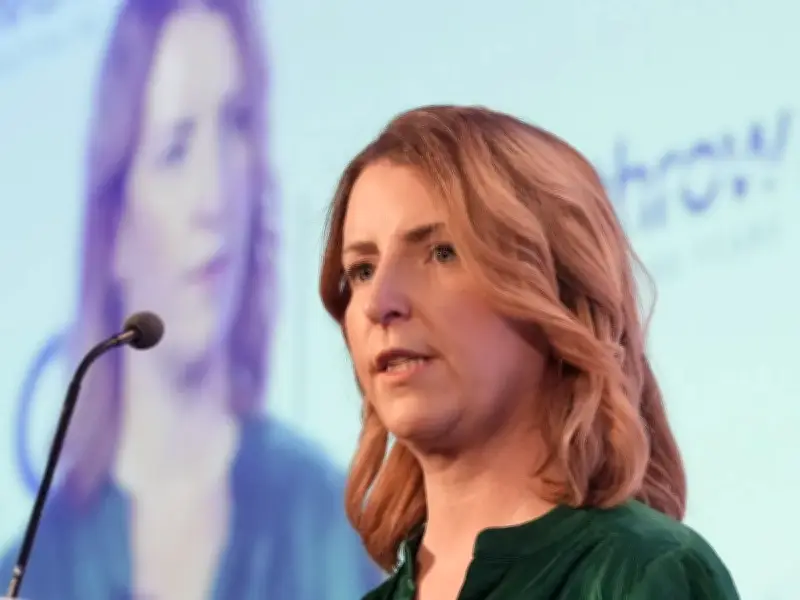
Louise Haigh has ruled out “full fat nationalisation” of the water industry in a major speech, signalling that private companies will continue to run water suppliers despite the government’s vow to regain “control”.
Addressing business leaders at the CBI’s annual conference in London, the First Secretary of State said: “Public control should not alarm anyone in this room.” Instead, she insisted it would create “stability and certainty.”
Public-private partnership approach
PM Andy Burnham will set out what greater public control will look like when the government publishes a 10-year plan for the country’s priorities next month.
“It’s certainly not about full fat nationalisation,” Ms Haigh told CBI delegates. “It is about a public, private partnership.” She said reforms of the sector would allow for “private operators that are committed to serving customers and the environment.”
Criticism of privatised water industry
Critics of the water industry, privatised by Tory PM Margaret Thatcher at the end of the 1980s, hold it up as one of the worst examples of privatisation. They point to a sewage scandal caused by decades of underinvestment, while private owners have extracted tens of billions in dividends and loaded utilities with massive debts, all while households have seen bills surge.
Thames Water could be returned to a form of temporary renationalisation if a latest rescue plan to be put forward by creditors is rejected by regulator Ofwat. Ms Haigh refused to be drawn on the likely outcome for Britain’s biggest water company, but suggested it should not be seen as a template for other suppliers under the greater public control drive.
Bill rises and other sectors
The likely continued involvement of private operators in the water industry will likely dismay those who say the only way to fully address the widespread failures of the industry is to take back full control.
Ms Haigh said the current status quo - not just in water but in other sectors where a monopoly exists - must change. She pointed out that household water bills are set to leap by an average 36% between 2025 and 2030 under the current price review. “Without intervention, we risk even larger rises at the next review,” she said.
Ms Haigh used her speech to also single out power grid operators which, she said, were dragging their feet in connecting developers of big projects to the electricity needed to power them. Highlighting how nationalisation still allowed for private firms, Ms Haigh said the creation of Great British Railways - and the return of franchises to public control - still meant “open access” operators could compete.