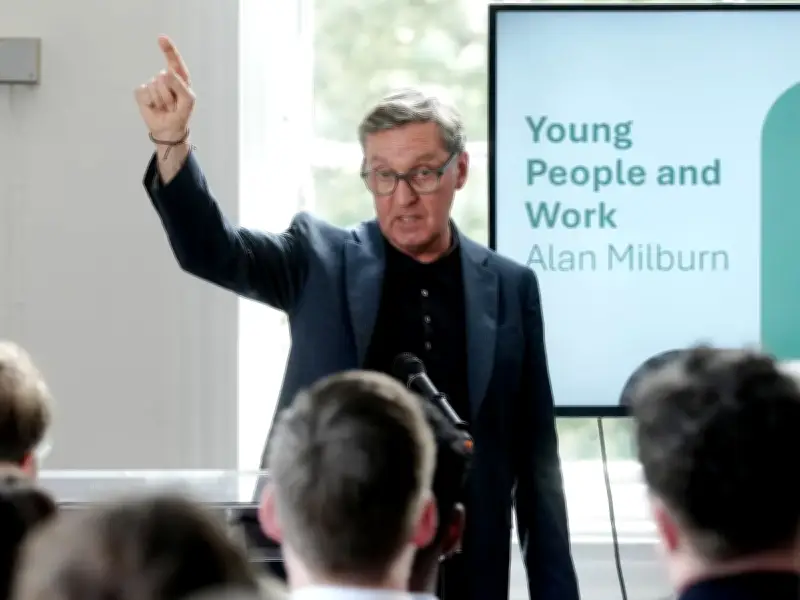
A year-long review led by Alan Milburn will warn on Tuesday that over a million young people in Britain could be out of work or education if there is no major intervention from the state. The report, titled “From a Welfare State to a Working State: A new settlement for the next generation”, suggests the number of 16 to 24-year-olds classified as NEET (Not in Education, Employment, or Training) could rise to 1.25 million by 2031 if no action is taken.
A ‘complete system reset’ call
Mr Milburn has vowed to turn a “lost generation” into a “work generation”, suggesting under half a million young people could be helped into jobs by 2036 under major reforms aimed at making “work not welfare the future for the next generation”. The review aims to be a blueprint for tackling the plight of young people in Britain, as well as a complete rewrite of how public services support them.
He said: “Britain has had a youth NEET problem for 25 years and never a plan to end it. We are at a fork in the road and half measures will not do. A complete system reset is needed. A lost generation is not inevitable. A work generation is possible. This is not simply a cause for young people. It is a cause for the country. We have to make the next generation a national priority. Youth participation has to run through public policy like a stick of rock.”
Current NEET figures and costs
There are 981,000 people aged 16 to 24 in the UK who are considered NEETs, costing the UK around £125 billion a year. Six in ten people aged 16 to 24 have never had a job. Across Europe, only Romania had a higher NEET rate than the UK in 2025.
Mr Milburn believes tackling the issue should be a national priority, with a target of reducing the NEET rate from 13 per cent to around five per cent in 10 years. The UK rate has never been lower than 9.7 per cent since data began in 2001.
Proposed reforms and benefits overhaul
The former health secretary’s recommendations, covering early years and schools, apprenticeships, and health and welfare support, would result in 600,000 more young people in education, employment or training each year – around 440,000 of whom would be in sustained work – by 2036.
Mr Milburn has called for a major overhaul of the benefits system for under-25s, replacing it with a new “youth allowance”, which would stop them receiving the disability benefit Personal Independence Payment (PIP) and the health element of Universal Credit (UC). In 2024 to 2025, for every £25 spent on youth benefits only £1 went on helping young people into work or education. The report aims to rebalance that to £2 to £1. Mr Milburn has made it clear that crude benefit cuts will not work and that reform will need upfront investment.
National insurance paid by businesses on workers aged under 25 should be gradually cut to get more young people into jobs, Mr Milburn is expected to say. The NI rate, which was increased from 13.8 per cent to 15 per cent in Rachel Reeves’s first Budget in October 2024, is considered to be a contributing factor in fewer young people being hired.
Youth Opportunity Service and apprenticeships
Mr Milburn has also proposed a new “Youth Opportunity Service” in every part of England, with the aim of ensuring employment, careers, health and practical support are available to a young person, with a personalised participation plan and a named adviser. Strategic authorities and mayors would be accountable for delivering it, with a YOS in every area by 2029.
The report will propose doubling the number of young people achieving an apprenticeship over the decade, so that apprenticeships rival university as a mainstream route for school leavers. It says the school curriculum needs to be rebalanced towards employment skills. Mr Milburn has also suggested instant access for young people with mental health difficulties, saying they should not have to wait too long for a diagnosis.
Political reaction
At a press conference on Tuesday, Mr Milburn is expected to say: “A lost generation is not a fact of life. It is a choice. And I believe it is the wrong one. Not just because it is a fiscal crisis or an economic crisis. But because it is a moral one. We are failing as a nation to gift the next generation the opportunities they need to succeed. It is time for a new settlement that makes work not welfare the future for the next generation. Demographic change makes getting young people into work a necessity. Britain’s future relies on us backing young people.”
Prime Minister Andy Burnham has already said the “status quo clearly isn’t working” and that his Government is “ready to grasp the nettle here and make a better system for young people”.
However, Reform UK has branded the recommendations of the Milburn Review a “glaring admission Labour’s jobs tax has failed”, claiming it is a “missed opportunity” for young people. In August, the party outlined its plan to introduce the “Apprenticeship Wage Credit” to double apprenticeships for young people.
Suella Braverman, Reform’s education spokesperson, said: “Alan Milburn’s call to cut the cost of hiring for employers is a glaring admission Labour’s jobs tax has failed. It destroyed opportunities for workers, and particularly youngsters. Huge amounts of damage could have been avoided if Labour listened to the warnings. Waiting ten years to fix the youth jobs crisis is a huge missed opportunity. We would be consigning another generation to the scrap heap.”
Kemi Badenoch, Conservative Party leader, said her government would reduce employers’ National Insurance from 15 per cent to 7.5 per cent for staff aged 21 to 24.