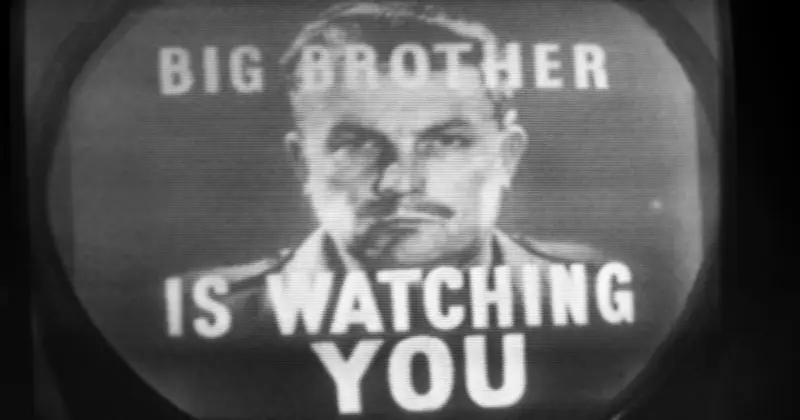
Labour's plan to give prominence to 'trustworthy' news providers on social media platforms has been criticised as having Orwellian undertones, with questions raised over how such a system would be defined and enforced.
The government's media Green Paper sets out proposals to identify 'trustworthy' news providers and give them prominence on social media and video-sharing platforms. While the BBC remains the most used news provider, more people are increasingly getting news from platforms such as YouTube and Facebook, with more than half of adults in the UK now listing social media as one of the ways they get updates.
Defining 'trustworthy' news
Nigel Huddleston MP argues the approach moves into dangerous territory for media, editorial freedoms and freedom of expression, posing significant questions about future media regulation. He highlights the difficulty in defining what constitutes trustworthy news, noting that when he asked Ofcom's CEO this question in Parliament, she could not provide a clear-cut answer.
Recent Ofcom figures show that GB News is more highly trusted by its viewers than the major public service broadcasters (PSBs) - BBC, ITV or Channel 4 - are by their respective viewers, demonstrating the subjective nature of the issue. The government's own policy paper also fails to offer a clear guide, with one suggestion being that PSBs are most trustworthy, which would omit major broadcasters like Sky News. A second suggestion follows a definition of news provider used in the Online Safety Act, which would draw in a much wider set of media outlets.
Who would regulate the regime?
Huddleston raises the question of who would regulate this regime and how. If it is Ofcom, this would be a considerable expansion of its remit. At a recent select committee, he asked its CEO if she was worried about it, and she accepted it would be a "very big responsibility".
The alternative is the government regulating itself from Whitehall, assigning itself the role of arbiter of which media outlets are credible and trusted. This risks placing pressure on editors to toe an invisible line of what is trustworthy content to secure prominent placing on social media feeds.
Enforcement concerns
Huddleston notes recent reports of civil servants embedded and working as fact checkers for the BBC, ITV and Channel 4, including at election time, with some credited as members of BBC Verify. He questions whether this is the future, where government mandarins roam newsrooms checking that work is trustworthy and meets government standards, risking a system of government-approved media.
On enforcement, he argues Ofcom is not set up to do it, being under significant pressure to administer the Online Safety Act and having admitted it has so far failed to collect most of the fines incurred from breaches of the Act. Despite its headcount almost doubling to around 1,700 employees in less than a decade, it is still asking for greater resources. He also notes Ofcom has still not revoked the licence of LuaLua TV, a London-based channel accused of acting as a propaganda arm of Iran's Revolutionary Guard.
Huddleston concludes there is a role for media regulation and for government in this debate, but individuals, parents, educators, the media and private sector businesses have a role too. He argues the aim should be tackling malicious disinformation as an issue of national security, with a targeted focus on hostile actors, rather than limiting the freedoms of choice and expression that underpin democracy.