Iranian Women Footballers' Silent Protest Leads to Asylum in Australia
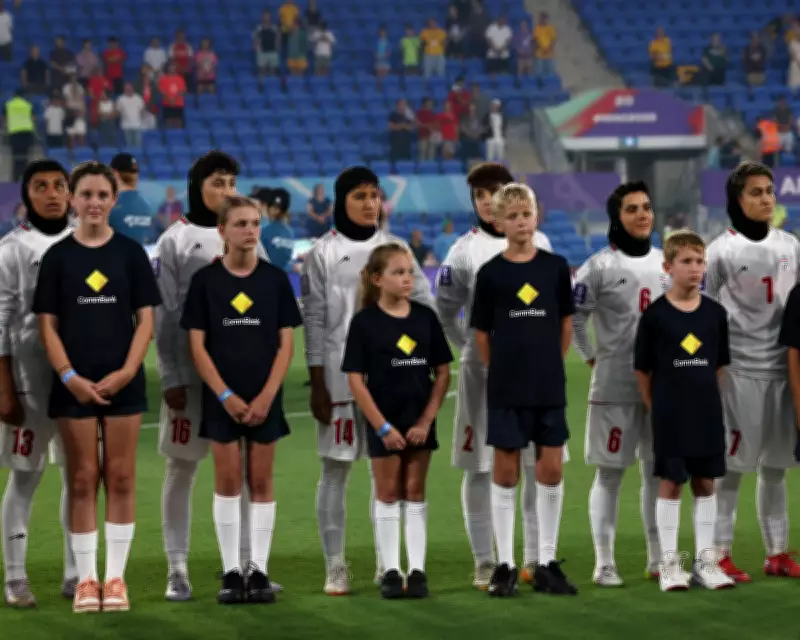
In a bold act of defiance, the Iranian women's national football team refused to sing their national anthem during their opening match at the Asian Cup, igniting a chain of events that culminated in five players seeking asylum in Australia. This dramatic episode underscores the intense pressures faced by athletes under Iran's repressive regime, where women's rights are severely restricted.
The Anthem Protest and Immediate Backlash
The controversy began when the Iranian team faced South Korea in their first group stage game. As the national anthem played, the players stood in resolute silence, a powerful gesture against a government that has violently suppressed protests for women's freedom. This act was broadcast on state-run television, where host Mohammad Reza Shahbazi denounced the team as "wartime traitors," warning of severe consequences upon their return to Iran.
Under tight surveillance by security personnel, believed to be from Iran's Revolutionary Guard Corps, the team was sequestered in their hotel, with movements and communications closely monitored. The pressure intensified ahead of their next match against Australia, where every player saluted and sang the anthem, highlighting the coercive environment they endured.

Tournament Exit and Asylum Plans
Iran's final group match against the Philippines ended in a 2-0 defeat, eliminating them from the tournament. Amid heavy rain on the Gold Coast, the loss sealed their fate, prompting immediate concerns for their safety back home. As their bus departed the stadium, protesters chanted "save our girls," and some players were seen making international hand signals for help.
Over the following days, Australian Home Affairs Minister Tony Burke travelled to Queensland to engage with team members about their situation. Advocates from the Iranian diaspora raised alarms, citing "serious concerns" that regime officials were intimidating the players. Australian federal police intervened, offering private consultations to inform the players of their rights, effectively removing the minders' influence.
Humanitarian Visas and Political Drama
The Australian government extended temporary humanitarian visas, subclass 449, to team members fearing persecution in Iran. These visas, previously granted to refugees from Ukraine and Afghanistan, provide temporary protection with a pathway to permanency. Five players—captain Zahra Ghanbari, Fatemeh Pasandideh, Zahra Sarbali, Atefeh Ramezanizadeh, and Mona Hamoudi—accepted the offer and were relocated to a secure location by federal police.
The situation attracted international attention when former US President Donald Trump took to social media, urging Australia to grant asylum and offering US resettlement. In a late-night phone call, Australian Prime Minister Anthony Albanese assured Trump that five players had already been assisted, with support available for others. Trump later praised Albanese's handling of the "delicate situation."
Ongoing Uncertainty and Potential Further Defections
While five players have chosen to stay, the remaining team members departed for Sydney under continued surveillance. Speculation abounds that more defections may follow, as sources close to the group anticipate additional players or staff seeking asylum. The team's planned return route via Dubai was altered due to Iranian missile strikes, with transit now expected through Malaysia and Turkey.
At Sydney airport, supporters gathered with torches and recordings from players' families, hoping to communicate messages urging them to stay. However, tight security prevented direct contact, leaving many anxious about the fate of those returning to Iran. Australian academic Kylie Moore-Gilbert, a former detainee in Iran, called for further intervention to protect the women from coercion.
This episode highlights the broader struggle for women's rights in Iran, encapsulated by the "woman life freedom" movement. As the players navigate their new lives in Australia, their courage serves as a testament to the ongoing fight against oppression, with the world watching closely for further developments.