

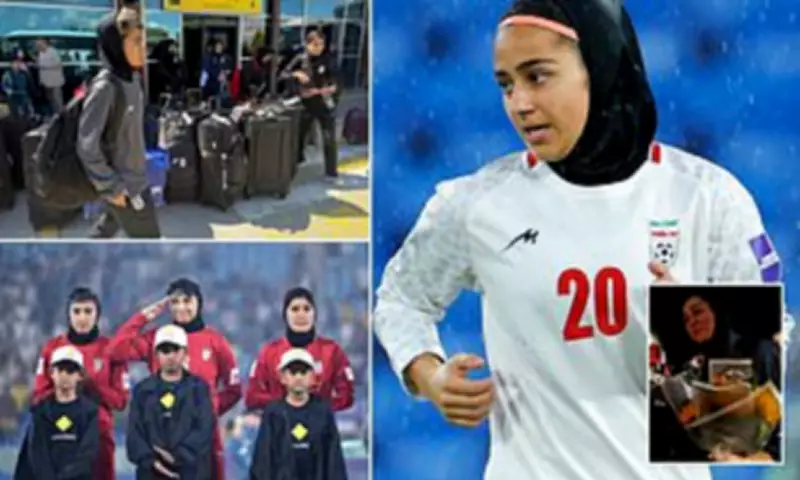
The Iranian women's football team, which traveled to Australia to compete in the AFC Asian Cup, has now returned to their homeland, but not without controversy and dramatic claims surrounding their stay. One prominent player has made significant allegations about interactions with local Australian police, adding a complex layer to an already tense situation.
Extraordinary Pressure and Silent Protest
The team arrived in Australia under extraordinary circumstances, following strikes in Iran that resulted in the death of Supreme Leader Khamenei. This backdrop of political turmoil cast a long shadow over their participation. In a bold act of silent protest, the players stood silent during the national anthem, an action that led to them being labelled as 'wartime traitors' by critics back home. This defiance came with severe potential consequences, heightening the stakes for everyone involved.
Asylum Seeks and Sudden Unraveling
Initially, several players expressed intentions to seek asylum in Australia, hoping to escape the fraught environment in Iran. However, the situation quickly unravelled when a reported tip-off exposed their location, forcing an urgent and disruptive relocation. This sudden change plunged the players into further uncertainty and fear.

In the aftermath, the majority of the team members decided to return to Iran. This reversal came amid claims that their families back home had been threatened, a powerful deterrent that influenced their decisions. Notably, reports suggest that captain Zahra Ghanbari returned after specific threats were allegedly made against her family, including concerns for her mother's safety.
Hero's Welcome and Allegations of Pressure
Upon their return, Iranian state media celebrated the players as heroes, broadcasting footage of them being welcomed on stage with flowers. This portrayal stood in stark contrast to the earlier accusations of treachery. Meanwhile, midfielder Fatemeh Shaban appeared on the state network to make a huge claim: that Australian police had pressured teammates to stay in the country.
Shaban's Detailed Account
Shaban provided a detailed account of her experience, translated from Persian. She described being separated during passport checks, taken into a room with a police officer, and initially feeling scared. "At first, when they took my hand and led me away, I was a bit scared, but I told myself it's okay," she recalled. The situation escalated as she was led through several doors into a room where a security agent made a phone call.
Shaban alleged that the agent asked a series of strange questions, seemingly aimed at discouraging her return. "They were asking a bunch of very strange questions, hoping I might say, 'No, I don't know. I am not sure of returning,'" she stated. The agent even offered her the chance to contact her family immediately to decide whether to stay, but Shaban firmly rejected this. "As soon as he said that, I told the lady (the translator), 'Tell him I don't want to stay,'" she emphasized, adding that she insisted on returning to Iran despite feeling a bad sensation in her heart.
Official Denials and Mixed Reactions
In response to these allegations, Australian Home Affairs Minister Tony Burke firmly denied any coercion. "Australia's objective here was not to force people to make a particular decision, we're not that sort of nation," he asserted, clarifying that authorities did not pressure players into staying. Online reactions to the state media footage were deeply divided, with some users dismissing it as propaganda, while others speculated that the players might have been coerced into returning against their will.
The Two Who Stayed Behind
Amidst this turmoil, two Iranian footballers, Fatemeh Pasandideh and Atefeh Ramezanisadeh, chose to remain in Australia. They are the only two of the seven initial asylum seekers to stay, while their teammates rejoined the squad and returned home. The pair have now begun training with Brisbane Roar in the A-League Women’s competition, appearing without hijabs and smiling as they integrate into the club.

Brisbane Roar has committed to supporting Pasandideh and Ramezanisadeh, and the Australian government confirmed they have been moved to a safe location and are receiving appropriate assistance. Football officials noted that they had not received direct complaints from players about returning home, despite widespread fears over possible retaliation in Iran.
This saga highlights the intense pressures faced by athletes in politically charged environments, blending sports, asylum, and international relations into a compelling narrative of courage and controversy.





