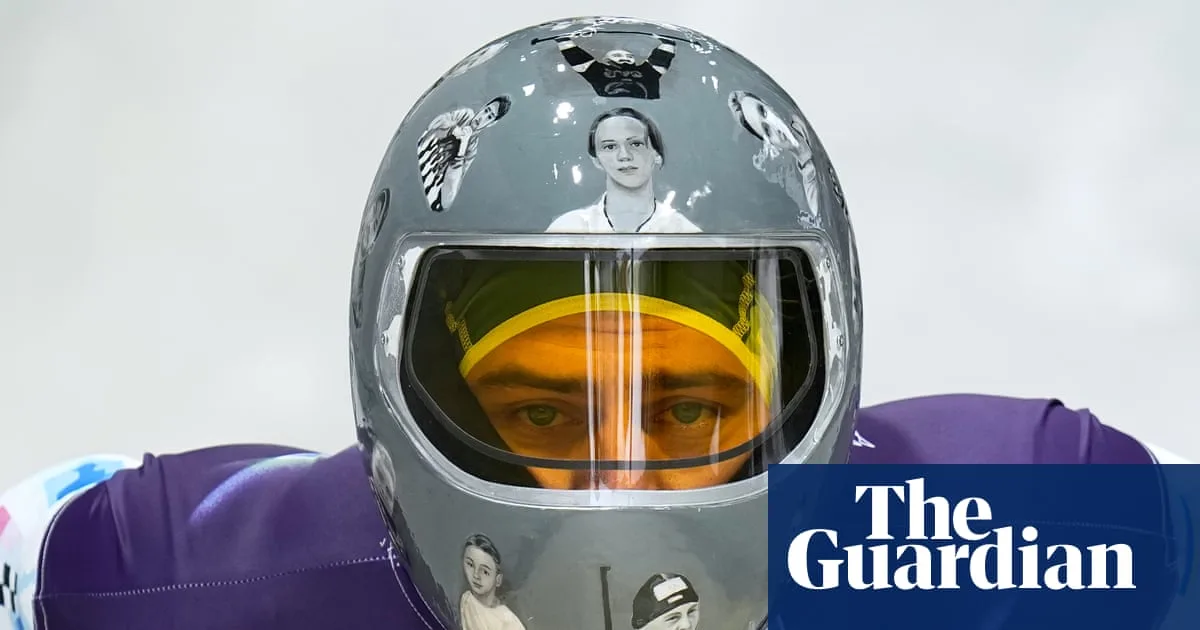
Vladyslav Heraskevych, the Ukrainian skeleton racer, says he is prepared to be disqualified rather than remove his “helmet of memory” during competition in Cortina on Thursday. The helmet bears 20 images of athletes and children killed since Russia’s full-scale invasion, and Heraskevych has vowed to wear it despite an International Olympic Committee ban.
Speaking after finishing first on the final day of practice, Heraskevych said he would not betray those commemorated on the helmet. “These athletes sacrificed their lives and because of this sacrifice I am able to be here so I will not betray them,” he said. The IOC banned the helmet on Monday, citing Article 50 of the Olympic Charter, which prohibits political statements during competition. The Ukrainian delegation argues the helmet is an act of remembrance and does not breach any rules.
Heraskevych acknowledged that an Olympic medal had been a childhood dream, but said some things mattered more. “In this time of full-scale war some things are really more important than medals,” he said. “At this point, I would say a medal is worthless in comparison to people’s lives and, I believe, in comparison to the memory of these athletes.” He described the IOC’s position as “a theatre of the absurd”, insisting the helmet does not violate any IOC rules.
IOC spokesperson Mark Adams said Heraskevych could express grief through a black armband or by speaking to the press, but not wear the helmet in competition. “It’s not the message, it’s the place that counts,” Adams said. He noted that there are 130 conflicts going on in the world and the field of play must remain sacrosanct. Asked what would happen if Heraskevych defied the ban, Adams said the rules would ultimately be enforced.
Adams also pointed to American skater Maxim Naumov, who honoured his parents after they died in the Potomac air collision by showing a photograph following his competition on Tuesday. Adams called that a “very emotional, very human, spontaneous gesture” and said the Ukrainian athlete could do the same, adding: “We have loosened the rules – we are offering him to wear a black armband to commemorate his friends and colleagues who’ve lost their lives.”