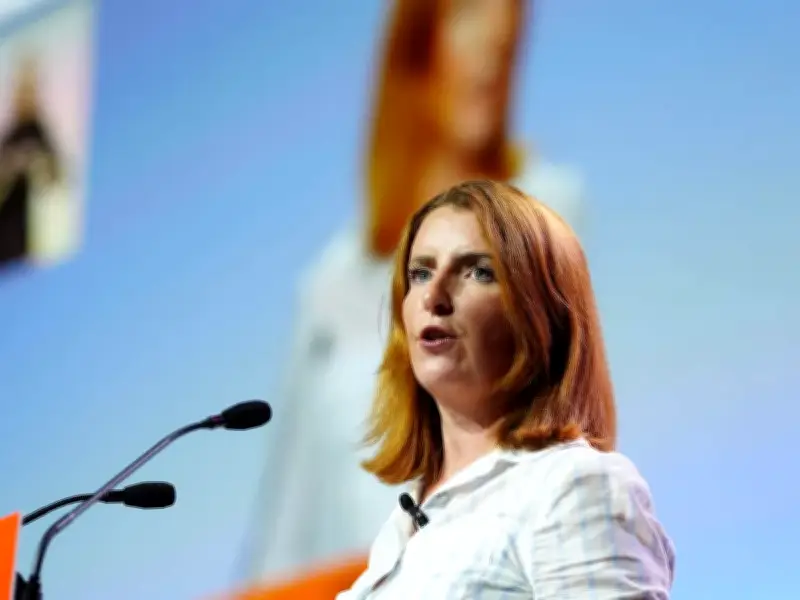
First Secretary of State Louise Haigh will today argue that greater public control of water and energy is not anti-business, insisting that Britain's privatised utilities have let down businesses and citizens alike.
In an address to the Confederation of British Industry (CBI) annual conference, Ms Haigh, who serves as Andy Burnham's de facto deputy, will maintain that public stewardship "is not anti-business".
Government's Vision for Essential Services
She will argue that spiralling energy bills, delays connecting businesses to the electricity grid and water pollution have stifled economic growth, while suggesting Britain stands apart internationally in its approach to essential services.
Acknowledging that public control need not equate to wholesale nationalisation, Ms Haigh will outline the Government's vision for "a new partnership with private capital built on clear rules, clear expectations and a fair return on investment".
The Prime Minister took office in July pledging stronger public control of key services. He has criticised Margaret Thatcher's "ideological ban on public ownership of water companies" and described the water industry as a "symbol of what has gone wrong with Britain" in which "shareholders never lose and the public never win, from which some have syphoned out easy money while the public picked up the bill for the sewage in our seas".
Criticism and Response
The Conservatives accused Labour of treating nationalisation as a "magic wand for every industry and every problem", warning that taxpayers would be left footing the bill. In her Monday address, Ms Haigh is expected to say: "This Government will put pragmatism and public interest ahead of failed political ideology. Public control is not anti-business – it's about getting the foundations right, so that private enterprise can do what it does best."
She will highlight that foreign governments hold "significant stakes in our water, electricity and gas networks with returns paid to their taxpayers", and that essential services functioning as effective monopolies have led to an absence of genuine competition. "The status quo is not the neutral, pragmatic centre ground. It's the outlier. An exception that no other nation is trying to emulate."
Ms Haigh will also pledge enhanced support from central government to assist businesses in investing and expanding, while emphasising that "accountability is a two-way street". She is expected to accuse successive governments of "ducking difficult decisions" and "outsourcing responsibility to a sprawling web of regulators and arm's-length bodies".
Political Reactions
Tory shadow chancellor Andrew Griffith accused Labour of pursuing expensive measures. "Labour think nationalisation is a magic wand for every industry and every problem. The only trick they know is splurging ever more taxpayers' money."
He said: "If Labour were really serious about getting bills down and Britain building, they would ditch their net zero obsession, give Rosebank the green light for cheap and reliable energy and get spades in the ground at Heathrow. Instead they are writing a blank cheque to be paid for through taxes and borrowing."
Oliver Lewis, chairman of the Stay Out campaign opposing a return to the European Union, argued that the Government's aspirations for greater public ownership were at odds with its drive to strengthen ties with the bloc. He said: "This speech looks set to be a contradiction from start to finish. Louise Haigh is promising public control of energy and water on behalf of a Prime Minister whose fervent wish is to rejoin the EU."