Andy Burnham has invited opposition leaders for urgent talks to fix the crisis-hit social care sector and accused politicians of a 'shameful' response to the issue.
Carers share their stories
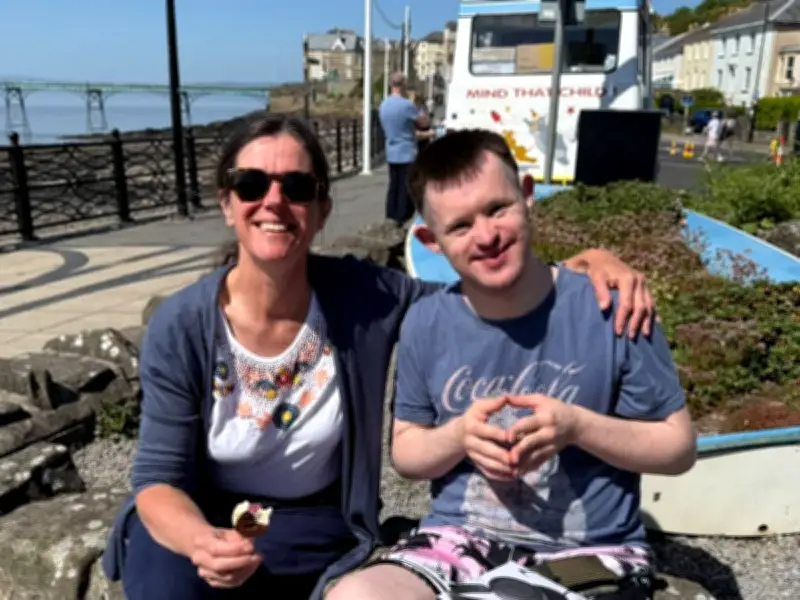
Annabel Tall, 58, from Yatton, North Somerset, mum of 27-year-old Fred who has Down syndrome, autism and deafness, says council care charges are leaving her son with little more than £10,000 a year to live on after deductions from his disability benefits. She said: “It was disappointing that the speech only had one short mention of disabled working aged adults who rely on social care and who have never had an opportunity to save for their care. It is nearly half of the issue.
“While it is excellent that dementia care is leading the conversation, my son’s problems are far more immediate than my mother’s. He is currently charged £147 a week from the council for his care from his benefits. His care is very good with his support staff working very hard in difficult circumstances. But, he is about to exhaust his small savings, mainly from his childhood birthday money.

“We now face either reducing his spending which will reduce his dignity and quality of life or I’ll need to start paying from my own savings for my old age. I am lucky that I can, very many can’t and others I know are being plunged into debt and poverty. To give us breathing space I would like to see at least a fair cap applied to the charges Local Authorities can impose on those on benefits as happens in Wales.
“This is a watershed, where all of the political parties are going to have to put their differences to one side. They really need to work together to find a solution as the current situation is completely unsustainable.”
Calls for a National Care Agency
David, in his 90s, lives with various disabilities and severely limited mobility. He lives alone in sheltered accommodation in the South Midlands and has professional carers visit four times a day. As his care package is insufficient, he is forced to pay for additional supplementary personal care and extra domestic support for two hours a week, leaving him with just a few pounds each month after care costs and bills.
He said: “I thought it was very good and constructive. One thing I enjoyed is that all of the main three-party parties have got to get together. This is not a political issue, it’s been made a political issue, but it’s a matter of life.
“I have had a number of care agencies over the years, I had a very serious stroke with no diagnosis and therefore no prognosis and it pushes me in a very difficult situation. I find that the local council can't take this on board and don't want to.”
David called for a National Care Agency, like the NHS. He said: “It's got to be moved away from local councils, because if it’s not there's still going to be trouble. It's got to be run by an organisation, the National Care Agency, the same as the National Health Service, and it will relieve pressure on the NHS by people not having to go to hospital.”
A national approach needed
Ann Smith, in her 70s, cares for her husband who has early onset dementia and her son who has learning disabilities and complex mental health issues. She lives in Uxbridge and often has to help her son in assisted living as the support he needs is not available.
Pointing out that some local authorities can do more than others, she called for a national approach. She said: "I speak to other carers, and I sometimes sit there and think, why can they get that support, and I can't? I try to be positive, but sometimes it is very difficult.
"I think the willingness is there, but the demands on the system are too great and with a limited budget, most local authorities haven't got any spare capacity to improve, and it just makes it frustrating all the way around.
"As unpaid carers, we feel that we're so far behind everybody else. It's good that he's identified that it is broken and something needs to be done, but until he comes up with a nationwide strategy…we should all have access to the same level of support."

She added: "The sadness of all of this is, carers generally put everything else on hold, because that is their life. Ideally would like to sort of say to somebody could you come and sit with my husband, you don't have to do anything, just sit with him just to make sure that he’s safe so I could go out and do what other people do, go for a cup of coffee or see my friends. You have to put on a front that everything is OK. He would hate to think that he's a burden."