

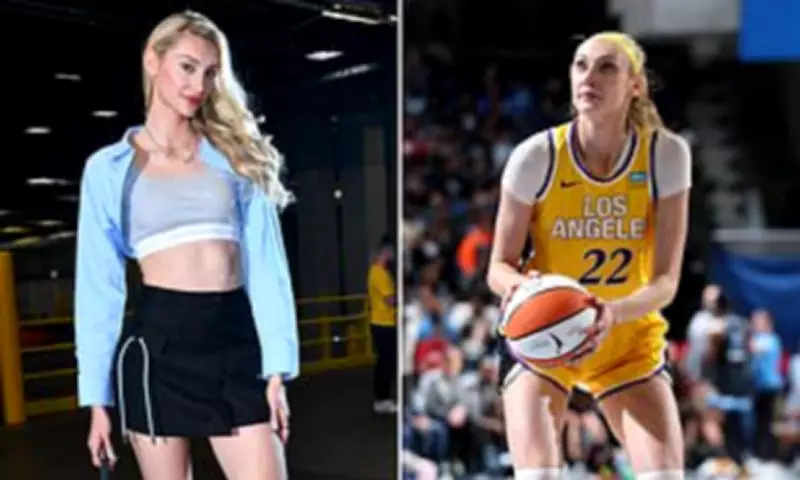
WNBA star Cameron Brink recently received a stark reality check after briefly hiring a personal chef for herself and her fiancé, Ben Felter. The Los Angeles Sparks forward recounted the experience on her podcast, Straight to Cam, admitting she was unaware of the financial implications when she first brought the chef on board.
An Embarrassing Financial Revelation
Brink explained that she only realized the cost after the hire, leading to a slightly awkward conversation. She recalled asking the chef, "What's your salary?" upon learning the details. The response was a staggering $7,000 per month, prompting Brink to quickly end the arrangement with a polite, "OK, well, thank you for your time."
Salary Disparity in the WNBA
Discussing the incident with co-host Sydel Curry-Lee, the younger sister of NBA star Stephen Curry, Brink highlighted the financial mismatch. With a salary of $78,000 from the LA Sparks, she emphasized, "We cannot be doing that. That is more than my salary." This moment underscores the ongoing issue of WNBA player salaries, which often pale in comparison to their NBA counterparts.

However, Brink's financial situation is more complex than it appears. As one of the most visible players in the league, she benefits from multiple lucrative endorsement deals, including a partnership with New Balance. During her time at Stanford, she reportedly earned $200,000 annually from name, image, and likeness (NIL) agreements, and Forbes estimates her current net worth at around $2 million.
Additional Revenue Streams
Beyond the WNBA, Brink has diversified her income. She plays in the 3-on-3 Unrivaled league under a multi-year contract, further boosting her earnings. This pattern is not unique to Brink; other WNBA stars like Chicago Sky's Angel Reese have also admitted that expenses such as rent exceed their league salaries, but they compensate with off-court revenue.
Broader Context: WNBA Labor Negotiations
Brink's experience comes amid broader discussions about WNBA finances. The league and its players' union are currently negotiating a new labor deal, with a deadline set for Tuesday to ensure the upcoming season starts on time in May. Failure to reach an agreement could result in a shorter season in 2026.
The league also faces logistical challenges, including conducting an expansion draft for new franchises in Portland and Toronto during the first week of April. These developments highlight the growing pains of the WNBA as it seeks to expand and improve player conditions.
In summary, Cameron Brink's personal chef anecdote sheds light on the financial realities of WNBA players, where league salaries often require supplementation through endorsements and other ventures. As the league evolves, such stories may fuel calls for better compensation and support for its athletes.






