Burnham's Vision for a Transformed Britain
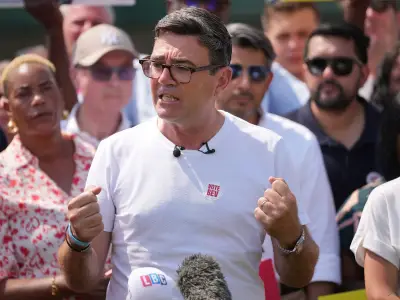
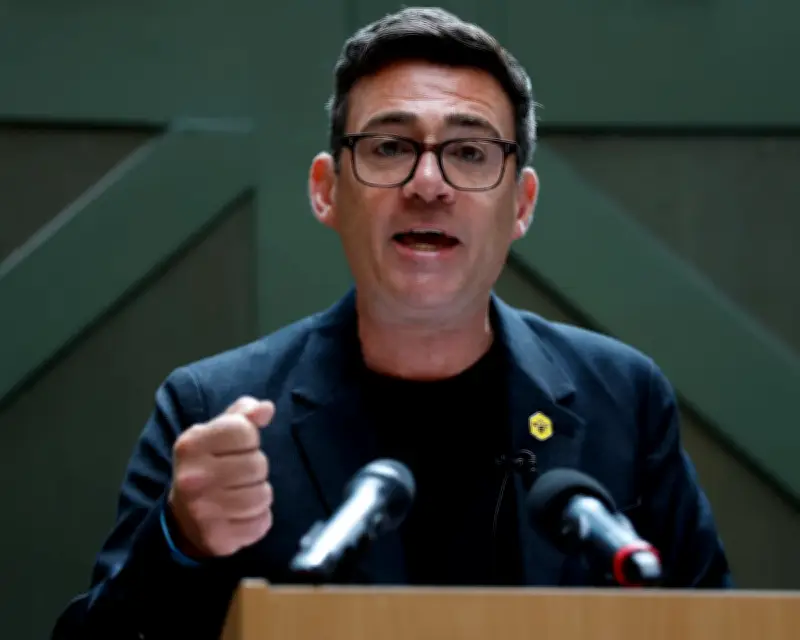
Andy Burnham, the Greater Manchester mayor widely seen as a future prime minister, delivered a landmark speech at the People's History Museum in Manchester on Monday, setting out his economic and political blueprint for Britain. He promised "good growth in every postcode" through a significant transfer of power from Whitehall to local communities and a new economic vision that rejects trickle-down economics.
Devolution: Power to the Regions
Burnham argued that Britain is the most centralised G7 country for tax and spending policy and among the most economically unequal in the developed world. He proposed a new hub for No 10 in the north, based in Manchester, to redistribute power across regions. Rather than local areas applying to Whitehall for powers, sweeping new powers on tax, skills, and industry would be devolved by default. He also floated the idea of a German-style Basic Law to guarantee equal living standards, a concept he has previously outlined in his book Head North.
Reform of Westminster and Whitehall
Burnham, who has spent less than three days in Westminster since his re-election, described the atmosphere in Parliament as "a more fragmented, disjointed place than the one I left, and, frankly, unhappier." He contrasted his approach with that of Keir Starmer, whose strict whip system has created resentment among Labour MPs. Burnham promised to empower backbenchers and end the adversarial system in the civil service, particularly between departments and the Treasury. He and his ally Louise Haigh have previously expressed interest in splitting up the Treasury.

End of Trickle-Down Economics
Burnham said his vision for growth was founded on a "rejection of the old trickle-down model" pursued since the 1980s. This analysis aligns with Rachel Reeves' 2024 party conference speech, where she declared the era of "trickle-down, trickle-out economics is over." However, Burnham may diverge from the chancellor in the breadth of his vision, promising an expanded role for the state in essential services, housing, and industrial strategy.
Public Ownership of Utilities
Burnham pledged to ensure all parts of the UK can take greater public control of essential services like water, housing, energy, and transport. He cited the transformation of the Greater Manchester bus network, brought back under public control from private operators, as a model. The future of Thames Water is seen as an early test case, with ministers set to decide on its fate.
Social Housing: Biggest Council House Building Since Postwar
Burnham promised the "biggest council house building programme since the postwar period," noting that Britain has lost almost 1.5 million council homes since the 1980s, roughly the same number of people now on housing waiting lists. He linked high housing costs to a "ruinous impact" on government finances, with record taxpayer support flowing to private landlords. Under Starmer, Labour pledged £39 billion to social and affordable homes and a target of 1.5 million new homes, but the government may struggle to meet it.
High Streets and Business Rates Reform
Burnham called for reformed business rates to support pubs and high street businesses that bring social benefits. He said, "Shouldn't we make our high streets the symbols of Britain's renaissance?" However, he did not address the role of technology, online shopping, or artificial intelligence in reshaping the economy.
Reindustrialisation and Sovereign Manufacturing
Burnham pledged to "safeguard sovereign manufacturing and production capability across the country in critical sectors like steel, defence, energy, food and farming." This agenda targets issues seized on by Reform UK leader Nigel Farage, who called for steel nationalisation. Burnham aims to reclaim the agenda with a focus on domestic manufacturing amid geopolitical tensions.

Education and Employment: Rethinking Support for Young People
Burnham said the days of a school system configured entirely around the university route must end, calling for greater parity between technical and academic education. Highlighting a recent report by Alan Milburn that found more than a million young people are not in education, employment, or training, he called for a "complete rethink." This includes mental health support in work and more devolved powers for mayors over employment support.
Cost of Living and Fiscal Discipline
Burnham acknowledged constrained fiscal circumstances but said he would "seek to give Britain some breathing space as soon as I can." He hinted at tax cuts and noted the possibility of an energy intervention depending on the fallout from the Iran war. He pledged that his agenda would be "backed with sound public finances and the discipline of our current fiscal rules," retaining the self-imposed borrowing and debt constraints drawn up by Reeves to avoid a market backlash. UK borrowing costs have risen sharply due to the Covid pandemic and wars in Ukraine and Iran, but bond markets were little moved after his speech.