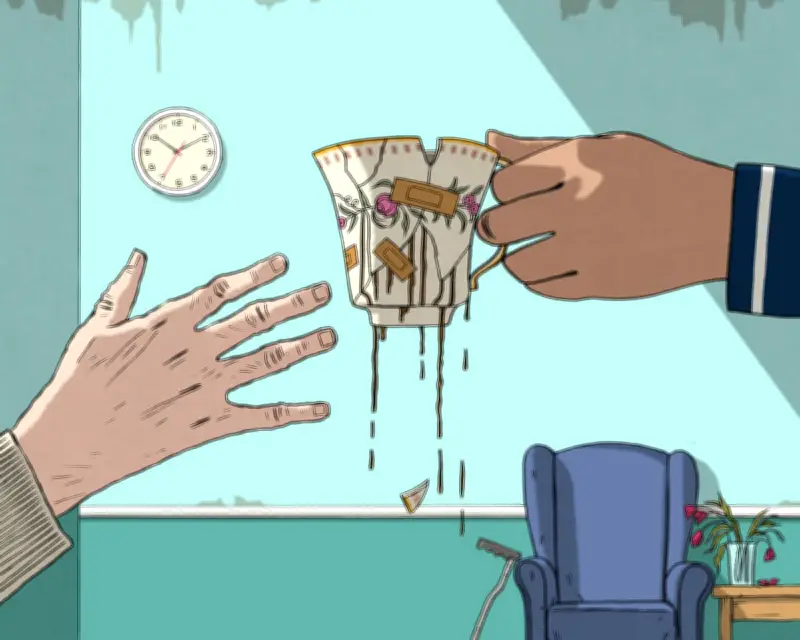
Andy Burnham has chosen social care reform as his first major challenge, a “remarkable act of bravery” given the policy’s history of 22 major reviews over three decades. The prime minister faces immediate opposition, with the Mail labelling his proposals an £18bn “death tax”. But Burnham, who said “I do have some of the scars”, has already fought on this battleground.
The scale of the crisis
In a speech from a north London care home, Burnham spoke of his father’s dementia and the struggle for families to get help, poor quality care, astronomical costs, and profiteering by private equity firms. He said: “You can’t create scare stories when people are already scared by what they’re seeing anyway through their own eyes in their own homes or in care homes.” His challenge is to make people care about care.
A survey last year found 33% of people in England believed care was free at the point of need, like the NHS, and another 18% did not know. Many get a shock when they find they must pay if savings exceed £23,250. Only 4% listed social care as a top priority. In England, care uses 78% of local council funds, squeezing visible services.

Public ignorance and the need for education
Burnham described the UK system as “equally unfair as the US health system: it bankrupts some”. One in three people will get dementia; one in seven will pay over £100,000 for care. Research by the Health Foundation found public support for funding reform “once people understand the current system”. Louise Casey’s Big Conversation on care must first educate people.
The for-profit care sector is lower quality than voluntary or local authority-run services, according to the Blavatnik School of Government. There are 16,500 care homes, 85% for profit. The system stems from a 1988 report by Roy Griffiths, after which Margaret Thatcher effectively ordered councils to outsource care to the private sector and closed NHS geriatric wards.
Funding reforms and political hurdles
Burnham warned the NHS could collapse without social care repair. Last month 13,600 beds were occupied by people lacking care elsewhere, costing the NHS £2.7bn in delayed discharges. He proposes integrating NHS and social care with aligned pay and career progression. Currently, a starter NHS healthcare assistant is paid more than a care assistant.
When Boris Johnson proposed a care levy adding 1.25% to national insurance, it was surprisingly popular but abolished by Kwasi Kwarteng. That plan taxed workers, not pensioners, and no extra tax on dividends. Burnham must ensure not a penny more is paid by the young for the old, who generally have more wealth and property.
The politics are fraught, but Burnham said we need “a different kind of politics: problem-solving, not point-scoring”. He may strike a chord with a public hostile to politics. Kemi Badenoch’s impossible conditions for consensus are seen as cynical. Burnham has grasped the nettle; the question is whether society, politics, and the media will follow.