Tax and Social Care
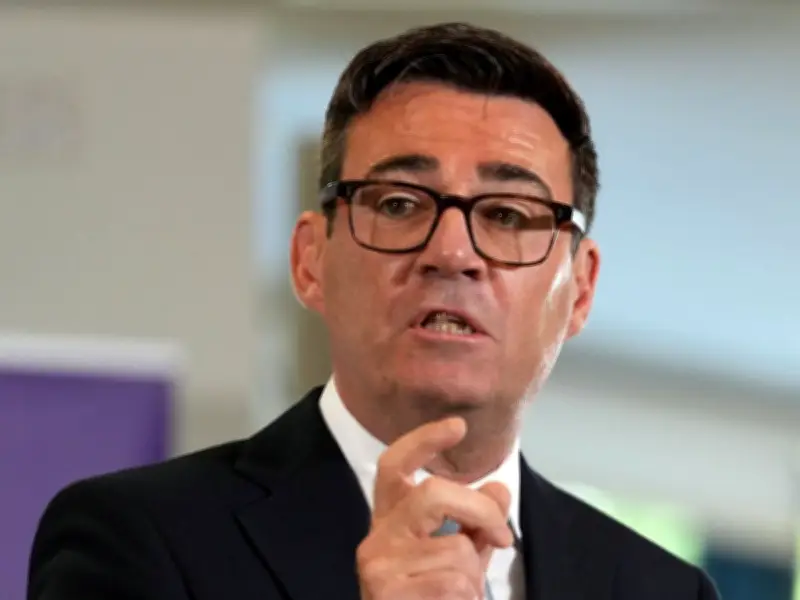
Prime Minister Andy Burnham has admitted 'difficult decisions' might have to be made on tax as part of his reforms on social care reforms, but vowed to 'be honest with people' and 'do more' within existing resources first.
Speaking after a speech at Jewish Care in Enfield, north London, Mr Burnham said adult social care practice was a 'question of standards' when pressed on tax rises. He said changes could be met within current costs and that good practice was happening in some care providers today.
He said: “Before we talk about tax rises we need to look the public in the eye and say, are we doing everything we can do with what we've got?” Asked whether the Government can transform the system without raising taxes, he said: “I would start by saying this is a question of standards within organisations, and we’re in one today that meets the highest standards, but we also know that care is variable across different organisations. There’s good in all sectors, I said that at the start, but there’s profiteering in this sector as well, and there is unnecessary and dangerous cost cutting at times on the backs of vulnerable people, and that is fundamentally unacceptable.”

He added: “I think more is possible from within existing resources, and the things that I’ve talked about today, particularly around the workforce, will be fully funded. So I think, firstly, you have to do more with what you’ve got. But I think Louise (Casey) indicated some of what we would want to do in the fullest sense will require difficult, difficult decisions. But we will be honest with people about those. We will put them before the country at the right time, and we will hopefully proceed with people’s consent.”
Manifesto Commitment and Past Proposals
Mr Burnham said he would stick to Labour’s 2024 manifesto when asked about potential tax rises to fund any changes. He first proposed a universal system of social care in England in 2009 as health secretary, pursuing a compulsory levy. Asked if he would propose the same today, he said: “Life has moved on from when I was first looking at social care in 2010. We are in a difficult world from a financial point of view.” He added: “If I want to persuade others and get a cross-party consensus, you don’t just go in and say it’s got to be my way and that’s it. Because how do you persuade people? I think there are kind of ways of looking at this that could include a more voluntary approach initially, or could include a road map to a reformed social care system.”
On tax rises, he said: “To come back to the tax point, I will stick to the manifesto. That is important. There is a manifesto. There are commitments there on tax, and I will stick to those commitments.”
Home Sales and Care Funding
The Prime Minister said selling homes to pay for care is 'horrendous' for elderly people and their children. He said: “In an ideal world I wouldn’t want anybody to have to sell their home to pay for care. I think it’s a really awful process for those who live through it, the whole thing of children taking power of attorney, and then dealing with parents’ finances. I think the whole thing is horrendous for those who live through it, and they see everything that their parents have worked for just whittled away in front of them, paying for care that often isn’t good enough care in terms of what you would want for your mum and dad. I think the system isn’t right, and in an ideal world, no I wouldn’t want to see that.”
In England, people qualify for local authority financial support in a residential care home if all assets – including the home – are worth less than £23,250. Mr Burnham called this 'as unfair as American healthcare', adding: “We have to be sure there isn’t profiteering.”

Independent Review and Cross-Party Talks
Mr Burnham revealed he asked Baroness Casey to ‘expedite’ her independent social care review by a year, originally due by 2028. He said: “So, working with Yvette [Cooper] and with Angela [Rayner] and other colleagues, we want to expedite that review. We ideally want to do it even sooner, but we’ve got to be realistic. But if we say a year from now that we have that independent review, then I think we can rise to this challenge with the urgency it requires.” Baroness Casey launched her ‘Big Conversation on Care’ to seek public opinion on what a social care system should look like, including who should get care, when the state should step in, and how to pay for it.
Mr Burnham also announced a review into social workers' pay and career progression, aiming to create a ‘bigger reform’ so carers are paid more in line with NHS workers. He said: “We already have a situation where the Government has agreed a fair pay agreement for social care staff to come in the financial year 2028-29, and that is a major step forward. And I pay tribute to Keir Starmer, the prime minister as was, when that was brought forward. That is a massive building block of a national care service.” He said the government would look into how the fair pay agreement could be ‘lifted closer to NHS standards’.
The Prime Minister also said he would launch cross-party talks with the Conservatives and Liberal Democrats. He invited Kemi Badenoch and Ed Davey to the speech. Sir Ed said he could not join in person but would speak later on a Zoom call. Mrs Badenoch – who wrote to the Prime Minister challenging him to rule out tax rises or increased borrowing – was unable to attend. The Shadow Health Secretary Stuart Andrew will meet with Burnham in her place, with a Conservative spokesperson criticising the short notice.
Mr Burnham said: “Yes, I have been here before, and yes, I do have some of the scars of that, but it’s the right thing to do. I stood on the steps of Downing Street just a few days ago, and I said I wanted to create a new way of doing politics in this country, more problem solving, less point scoring, and this is the first big test of that, and I mean what I say. We won’t fix this through politics as usual.” He said parties would need to find ‘common ground’ to get a ‘lasting solution’ and that ‘that process starts today’.
Personal Reflections and Assisted Dying
Mr Burnham was asked why it would be different now compared with 2009. He admitted he’d ‘left it too late in that parliament, it was too close to a General Election’. He said the solution was to bring forward such proposals, adding: “It’s better to do it sooner and further away from an election.”
On assisted dying, Mr Burnham said Britain needed to ‘fix’ palliative care first. His predecessor Sir Keir Starmer personally supported legalising assisted dying for terminally ill adults. Asked for his position, Mr Burnham said: “I take the view that that debate – and I don’t say that there shouldn’t be a debate at some point about those issues – personally, I think there’s something that needs to happen first. That is the fixing of the funding of palliative care and social care. I think it is very challenging to introduce that wider debate in a context of people not receiving that care and having the peace of mind about that care.”
The Prime Minister ended on an emotional note, referencing his father who has Alzheimer’s. His voice was slightly shaky when he spoke about his health and the care he was receiving. “Why am I going to do this? For my dad and millions of people like him up and down the country,” he said. Thanking the people who provide the support, he added: “I am talking because many people from other countries have been caring for my dad. I want those carers to know we appreciate you.”