

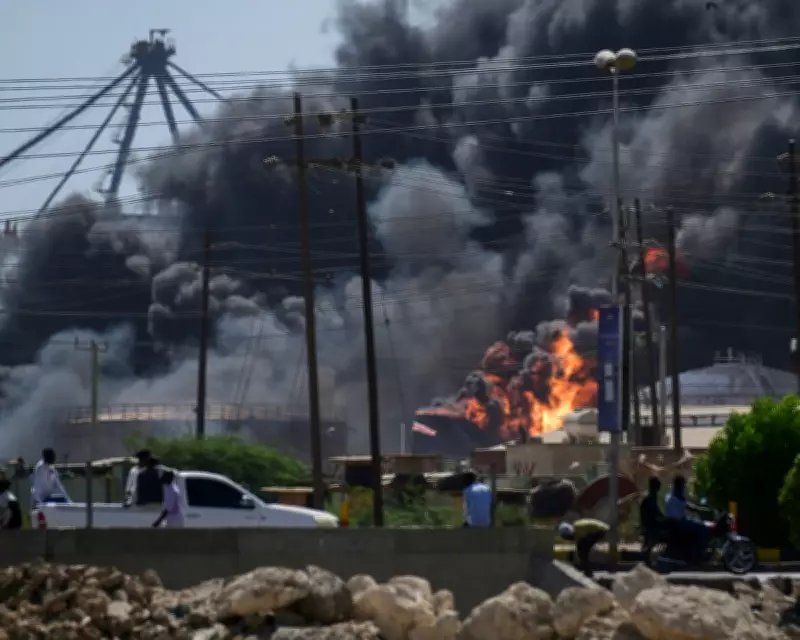
The United Arab Emirates, long seen as a pristine global hub, is increasingly under fire for its alleged complicity in Sudan's devastating civil war. Evidence mounts that the UAE has been arming the Rapid Support Forces (RSF), a paramilitary group accused of ethnic cleansing and sexual violence since the conflict erupted in 2023. A UN fact-finding mission has described the RSF's assault on non-Arab populations as bearing 'the hallmarks of genocide.'
Mounting Evidence and Denials
Reports indicate the UAE has supplied weapons, drones, and even Colombian mercenaries to the RSF via Chad. Despite these findings, the UAE maintains its neutrality, a stance increasingly seen as disingenuous. However, recent developments suggest the tide may be turning against the Gulf state.
Legal and Political Challenges
Last week, human rights group FairSquare called on the UK's Foreign Office to investigate Sheikh Mansour bin Zayed Al Nahyan, the UAE's deputy prime minister and owner of Manchester City, over his alleged role in backing the RSF. The complaint argues that sanctions could disqualify him from Premier League club ownership. Meanwhile, two US congressmen have urged major American companies like Disney, the NBA, and the NFL to sever ties with the UAE over its role in 'abetting genocide.'

These actions highlight the UAE's deep integration into Western economies and entertainment, making reputational damage a significant concern. The UAE has shown sensitivity to such criticism, previously canceling ministerial meetings with the UK over a Sudanese accusation at a UN meeting.
Geopolitical Ambitions
Beyond Sudan, the UAE has been a destabilizing force in the region, backing separatists in Yemen and General Khalifa Haftar in Libya. Its goal appears to be installing friendly leaders and securing strategic assets, such as Sudan's Red Sea ports and gold reserves, much of which ends up in Dubai. The UAE's rivalry with Saudi Arabia and its normalization with Israel further underscore its independent foreign policy.
Western Complicity
The US and UK have sanctioned RSF leaders and UAE-based companies but avoided directly naming the UAE as a sponsor. This reluctance is tied to deep financial ties, including a multibillion-pound investment partnership and a $500bn deal with the Trump family's cryptocurrency venture. As criticism intensifies, pressure mounts on these governments to acknowledge the UAE's role in one of the world's worst humanitarian crises.






