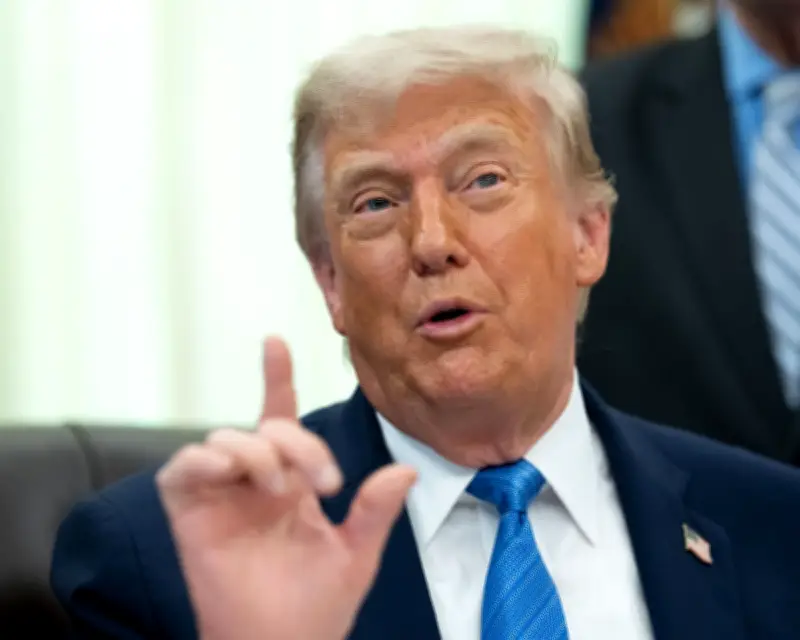
By now, it is as predictable as the tides: a Democrat wins an election, and Donald Trump declares it rigged. No evidence is needed; indeed, there never is. Trump will say it anyway, rallying the rightwing media ecosystem to spread the lie and convincing his followers to believe it. That this has become a repetitive spectacle, devoid of suspense, does not mean it is not dangerous.
Targeting California
This time, his target is California, where the state's unique election rules and staunchly Democratic electorate mean results from last week's primaries are still incomplete and unlikely to favor Trump. The state uses an open primary system where candidates from all parties compete on the same ballot, with the top two advancing to the November general election.
One of Trump's preferred candidates appears to eke out only a narrow victory, if at all, in the governor's race. Democrat Xavier Becerra leads and seems likely to face Trump-endorsed Republican Steve Hinton, who narrowly edged out another Democrat, Tom Steyer, for the second spot. In the Los Angeles mayor race, Trump's pick, reality TV star Spencer Pratt, was defeated by progressive Democrat Nithya Raman, who will now face incumbent Democrat Karen Bass.

Trump's Reaction
As has become his habit, Trump claimed the election was unfair when it became clear he might not get his way. On Truth Social, he wrote: "The Dumocrats are at it again! They are trying to STEAL THE GOVERNOR OF CALIFORNIA PRIMARY, AND THE MAYOR OF LOS ANGELES, PRIMARY, AWAY FROM TWO GREAT REPUBLICAN CANDIDATES. Here we go with the very late and massive numbers of MAIL IN BALLOTS." He doubled down on the false claim, walking out of an interview with Meet the Press after NBC's Kristen Welker pushed back.
These comments preview what is likely in November, when Republicans appear poised to lose seats in Congress amid backlash to high prices, civil rights violations, and rightwing culture-war excesses. Every election with a Democratic victor, especially close ones, will be declared invalid, fraudulent, and null. Victorious Democrats may face tedious legal battles to be seated. The only fair elections, it seems, are those Republicans win.
Predictable Pattern
Trump's lies about California were not just predictable; they were predicted. The Golden State is notoriously slow to tally votes due to policies designed to make voting easier but that delay final outcomes. All voters receive mail ballots, which take longer to count. About a quarter of respondents mail them on election day, further delaying results. Republicans' fearmongering about mail-in voting means Democrats are more likely to vote by mail, while Republicans vote in person, creating a partisan split. As votes are counted, initial Republican leads are often erased by Democratic-leaning mail ballots, fueling conspiracy theories.
This pattern has orderly, non-conspiratorial explanations, but Democrats and state officials have long worried that the slow count creates an opening for Trump's lies. Governor Gavin Newsom urged election officials to speed up the process, but a more efficient count might not prevent Trump's false claims. His objections are not grounded in facts, and more evidence is unlikely to dissuade him.
What Trump Calls 'Fraud'
What Trump and his acolytes call "fraud" in California's elections is less about vote casting and counting and more about what they see as fraudulent claims to government by those who disagree with them. The "fraud" in the governor's race is not that Tom Steyer ran a robust campaign, but that he was allowed to run at all. In the LA mayor contest, it is not that Nithya Raman did not get votes, but that younger, progressive voters—who attract her—are granted the same rights as white grievance voters who back Trump.
The "fraud" is the very idea of progressive governance. It is pointless to note that Trump only claims "fraud" in elections he loses. The fraud he sees is in democracy itself—the idea that people who disagree with him might have a say.