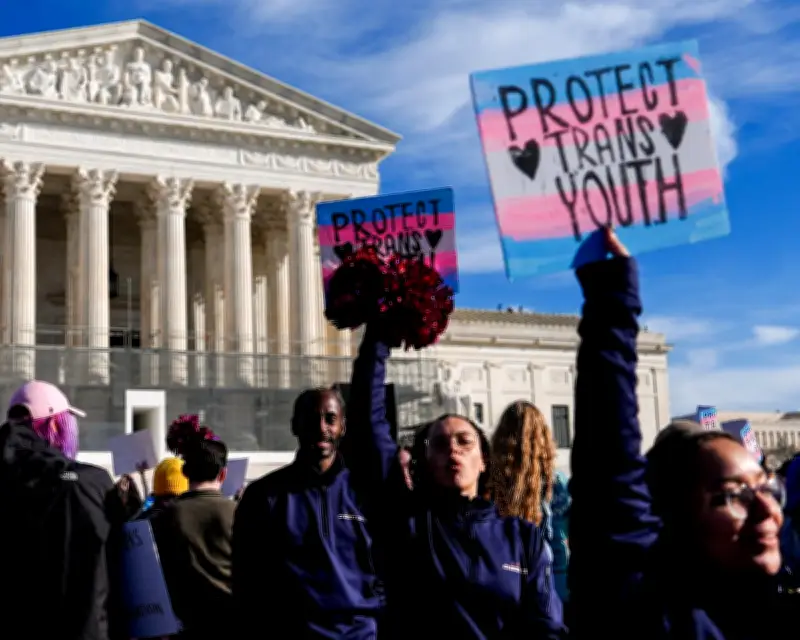
The US Supreme Court has upheld laws in two conservative states that exclude transgender girls and women from competing in female sports, a far-reaching ruling that is certain to impact transgender rights across the United States.
Court Overturns Lower Court Rulings
The nine justices voted to overturn previous judgments issued by lower courts that had favored two transgender students who sued after being barred from competing in West Virginia and Idaho. The ruling centered on the cases of Lindsay Hecox, a college student in Idaho, and Becky Pepper-Jackson, a 15-year-old high school student from West Virginia.
Wider Impact Across 25 States
The impact of the decision is likely to have wider resonance because Idaho and West Virginia's prohibitions against transgender athletes are already replicated in at least 25 other states. The outcome was prefigured by a session to hear oral arguments in January, when some conservative justices displayed sympathy for the view that transgender competitors were undermining fairness in women's sports on the grounds that their birth sex gave them a competitive advantage.

Political Context
The ruling represents yet another decision favorable to Donald Trump, who has consistently and vehemently railed against what he has called 'men in women's sports,' support for which he has tried to pin on the Democrats. Trump used the Democrats' perceived sympathies as a campaign issue in the 2024 presidential election, airing a television and digital advert that proclaimed 'Kamala is for they/them, President Trump is for you.'
Administration Actions
His administration has cracked down on the use of gender-neutral pronouns, refusing to answer correspondence that uses them while also barring them from passports. It has also taken steps to limit access to gender transition surgery.
Details of the Cases
Hecox, a college student, had originally sued Idaho in an attempt to overturn its 2020 first-in-the-nation law banning transgender women and girls from female sports teams. She later tried to have the case dismissed, saying she was no longer pursuing female sports and feared being harassed, but the court insisted on hearing it. Pepper-Jackson challenged West Virginia's law on the grounds that she had undergone gender-affirming treatment at a young age, did not experience male puberty, and thus enjoyed no unfair advantage.