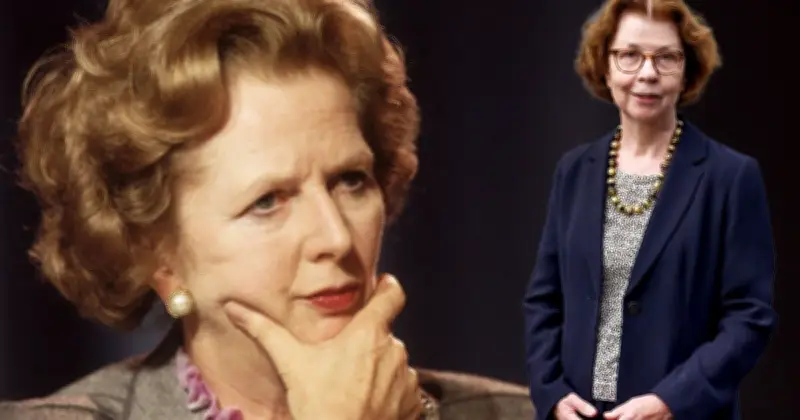
Caroline Slocock, who served as Margaret Thatcher's private secretary during the final 18 months of her premiership, believes Andy Burnham could learn from the Iron Lady's approach to leadership. Ms Slocock, the first woman to hold the role of a PM's private secretary, argues that Mr Burnham, who casts himself as the anti-Thatcher, could benefit from studying the former Conservative leader's methods.
Thatcher's grip on government
Ms Slocock highlights that Margaret Thatcher served as Prime Minister for 11 years, making her the seventh longest-serving premier on record. She describes Thatcher as a PM who “really did get a grip,” mastering details “when there was a big strategic thing that she wanted to deal with” and mobilising the civil service to deliver her goals.
One of Mr Burnham's first acts was to launch Number 10 North, a move Ms Slocock views with caution. She warns that Downing Street has “ballooned” under successive prime ministers and that the Government machine becomes slow and sclerotic when a PM micro-manages. “What the Prime Minister needs to do is really set the clear priorities for government… My worry for him is that Number 10 North will drag him into a lot of detail,” she says.
A personal view of Thatcher
Ms Slocock, who came from a working-class background and did not attend Oxbridge, was initially told that Margaret Thatcher would not have a female private secretary. However, she was appointed and found the PM went out of her way to put her at ease, even bringing her blue hyacinths on her first day.
During her time in Downing Street, Ms Slocock witnessed Thatcher's “own strengths become her own weaknesses.” The PM's determination to push through the poll tax and her soured relationship with former Chancellor Geoffrey Howe contributed to her downfall. Ms Slocock recalls, “I think they probably both hated each other… I think she really, really distrusted him.”
She also saw Thatcher's resignation statement delivered to the Cabinet, a moment she describes as “extraordinarily difficult to witness.” Thatcher's voice kept breaking as she read the statement, and she had to read it twice. Ms Slocock remembers cabinet ministers weeping and her own tears.
Lessons for today's leaders
Ms Slocock, now director of the Civil Exchange think-tank and author of Bad Government (And How to Make It Better), argues that the civil service is the “critical lever” for getting things done. She says, “There are half a million people there who are at your service… The important thing to do is to build a relationship of trust and provide a very clear sense of purpose about what needs to be done.”
She also praises Thatcher's ability to take on global causes, such as her UN speech on global warming, and her decisive action during the Falklands crisis. Part of the “secret of her success” was the effort she put into preparation: “She said to me, ‘Caroline, it takes 12 hours of work to prepare a speech.’”
Ms Slocock suggests that today's challenges require collaborative leadership, noting that taking early action is the “only sustainable way” to reduce the welfare bill and NHS costs. When asked who in the Commons today reminds her of Thatcher, she points to Angela Rayner: “I just think that Angela Rayner has an extraordinary authenticity… she says it straight, she speaks human.”