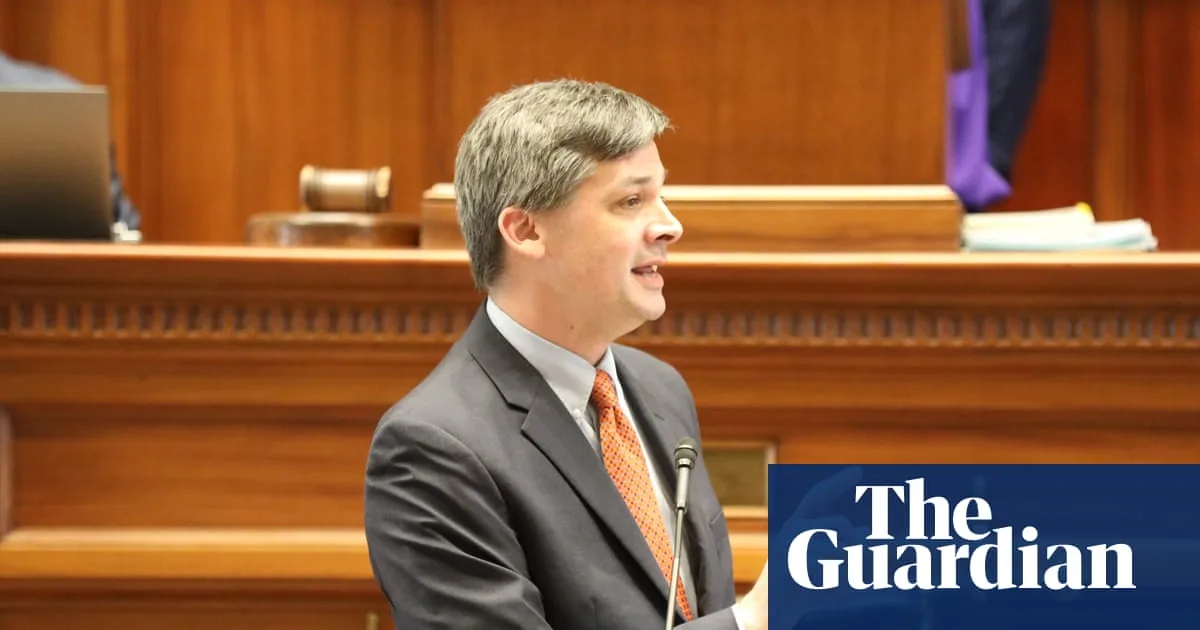
South Carolina's state senate majority leader, Shane Massey, delivered a carefully crafted 45-minute address on Tuesday rejecting President Donald Trump's demands to redraw the state's congressional map. The speech, which targeted three audiences—his colleagues, Republican voters, and the president himself—aimed to balance loyalty to Trump with practical objections to the proposed redistricting.
Massey began by praising his recent phone call with Trump, calling it a privilege and noting that the president said, 'I understand you got to do what you’re comfortable with, you got to do what you think is right.' He agreed with Trump's characterization of Democrats as 'crazy' and 'hateful,' but then pivoted to a plain-language analysis of legal and technical issues with the last-minute redistricting drive.
The proposed map would dismantle the only Democratic-held congressional district in South Carolina, represented by James Clyburn. Massey argued that the state is already as gerrymandered by party as possible without creating vulnerabilities for Republicans. He framed his opposition not as protecting a Democratic seat, but as preserving the electability of fellow Republicans in districts that would absorb Democratic voters.

Massey also criticized the proposal for breaking up 'communities of interest,' a term often used by Black voters in legal arguments against redistricting. He applied it to conservative counties along the coast, asserting that the map's drafters failed to consider the concerns of South Carolinians. By blaming a faceless 'Washington,' Massey avoided directly criticizing Trump or GOP leaders pushing the plan.
While Massey expressed support for Republican goals and Trump's agenda, he concluded that the redistricting proposal was flawed on practical grounds. His nuanced approach allowed him to defy the president without triggering a social media backlash or endangering his political career.