

Archaeologists May Have Uncovered the Remains of the Real D'Artagnan
Archaeologists believe that a skeleton discovered during repair work at a church in the Dutch city of Maastricht may belong to the 17th-century French soldier who inspired the legendary literary character d'Artagnan from Alexandre Dumas' classic novel The Three Musketeers. The potential discovery has sparked significant excitement in both historical and archaeological circles, offering a tantalising glimpse into the final resting place of a figure immortalised in popular culture.
Discovery During Church Repairs in Maastricht
Workers repairing a collapsed section of the floor at the Church of St Peter and St Paul in Maastricht's Wolder district unearthed a skeleton that could be that of Charles de Batz-Castelmore, the Gascon nobleman better known as d'Artagnan. The real-life d'Artagnan served as a spy and musketeer for King Louis XIV and died during the siege of Maastricht in 1673, over three-and-a-half centuries ago.
Deacon Jos Valke, who was present at the site, immediately contacted retired archaeologist Wim Dijkman, who has dedicated 28 years to searching for the musketeer's burial location. "A section of the floor in the church had subsided, and during the repair work, we discovered a skeleton," Valke explained to local broadcaster L1 Nieuws. "I called Wim because he has been working on d'Artagnan for more than 20 years."

Compelling Clues Point to Musketeer Identity
Several key indicators suggest the skeleton might indeed be that of the famous musketeer. The remains were found buried under the altar in consecrated ground, accompanied by a French coin from the relevant period. Most notably, a musket ball was discovered at chest level, aligning with historical accounts of d'Artagnan's death from a shot to the throat during the siege.
"The indications are very strong," Valke emphasised, highlighting the convergence of archaeological evidence with documented history. The skeleton has since been removed from the church and is currently housed at an archaeological institute in Deventer for further analysis.
Scientific Verification Through DNA Testing
To confirm the identity, a DNA sample was extracted from the skeleton on 13 March and is being analysed at a laboratory in Munich. This sample will be compared against DNA provided by descendants of d'Artagnan's father to establish a potential familial match.
Wim Dijkman, while acknowledging the compelling nature of the discovery, maintains a cautious scientific approach. "It is an incredibly exciting story, after all," he stated. "This is about the most famous and well-known person linked to Maastricht. But I'm always very cautious; I'm a scientist."
The investigation has attracted international attention, with Dijkman noting that "all kinds of analyses and investigations are under way both domestically and abroad. It has truly turned into a top-level investigation. We want to be absolutely certain that it is d'Artagnan."
From Historical Figure to Cultural Icon
Charles de Batz-Castelmore achieved posthumous fame following the publication of Dumas' The Three Musketeers in 1844. Dumas drew inspiration from an earlier work, Mémoires de M. d'Artagnan, written in 1700 by French soldier and writer Gatien de Courtilz de Sandras.
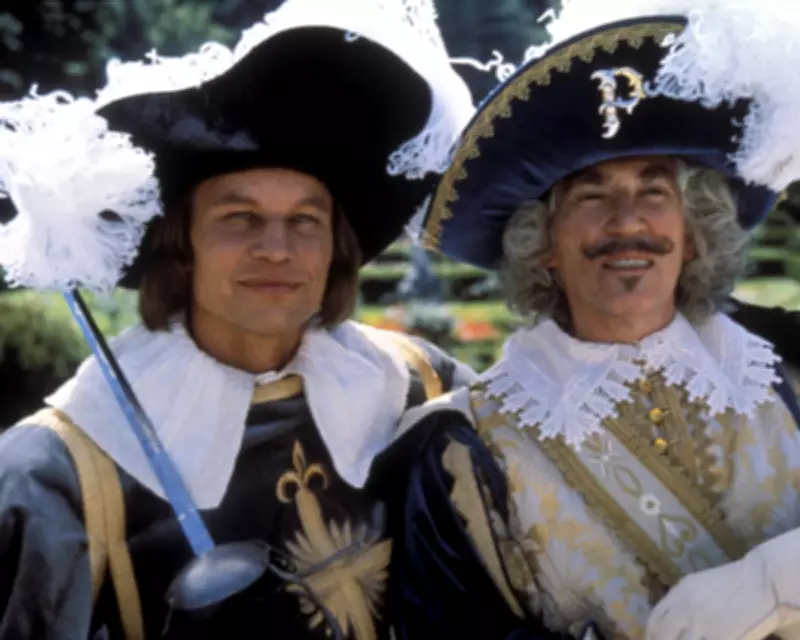
Over the past century, Dumas' novel has been adapted for the screen numerous times, with actors such as Douglas Fairbanks, Michael York, Chris O'Donnell, Logan Lerman, and François Civil portraying d'Artagnan. The character even inspired the animated series Dogtanian and the Three Muskehounds in the early 1980s, featuring a sword-wielding beagle as the eponymous hero.
This potential archaeological discovery not only sheds light on a historical mystery but also reconnects the legendary literary figure with his real-world origins, bridging the gap between fact and fiction in a captivating narrative that continues to resonate across generations.






