Most Americans do not support President Donald Trump lending his name to federal buildings during his time in office, according to a new survey from the Pew Research Center. Only 9 per cent of respondents said it would be acceptable for Mr Trump to name government buildings after himself while serving as president, while around 70 per cent said it would be unacceptable or should only happen after he has left office.
During his second term, Mr Trump's name and image have appeared on several official structures and items. In May 2025, large banners depicting his face and that of Abraham Lincoln were hung above the entrance to the Department of Agriculture's headquarters in Washington, D.C. Another banner, bearing his face and the slogan “Make America Safe Again,” was placed on the facade of the Department of Justice building in February.
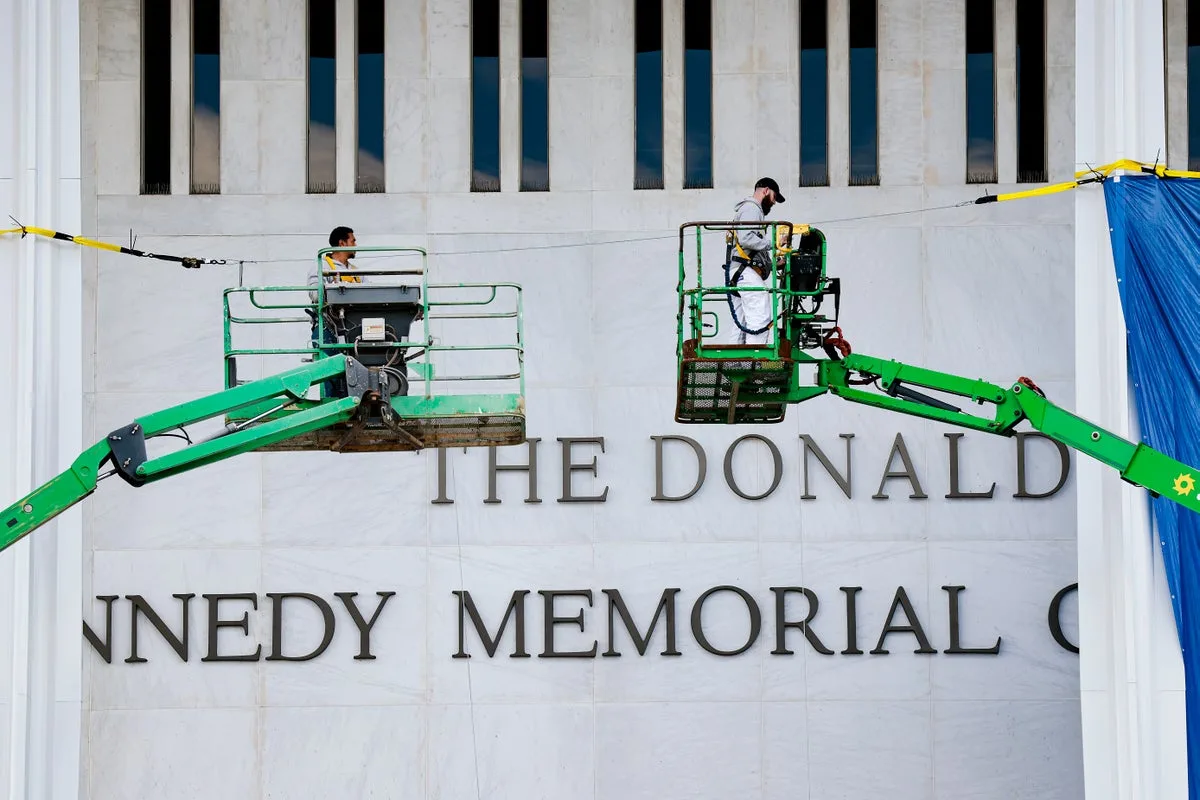
One of the most prominent changes came in December 2025, when Mr Trump's name was added to the exterior of the John F. Kennedy Memorial Center for the Performing Arts. The centre was established by an act of Congress signed by President Lyndon B. Johnson in January 1964 as a living memorial to Kennedy, two months after his assassination. The building's board of trustees, selected by Mr Trump, made the change, although the official name cannot be altered without congressional approval.
The Pew survey also indicates that Mr Trump's approval rating has fallen to 34 per cent. Confidence in his handling of key issues is also limited, with 41 per cent expressing confidence in his immigration policy decisions and 42 per cent in his economic policy.