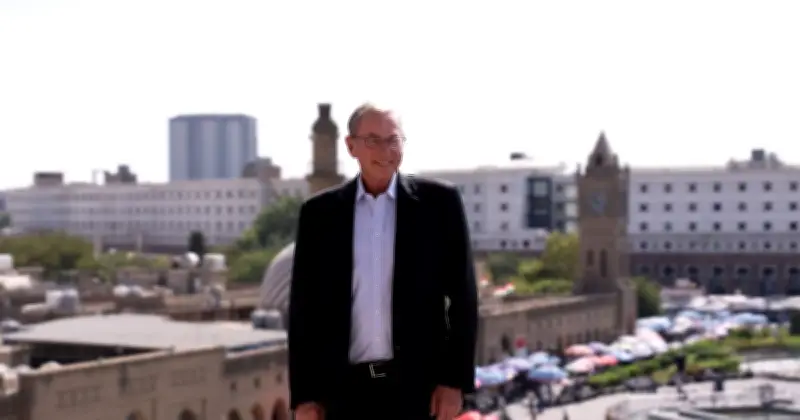
Lord Ashcroft has described Iraqi Kurdistan as a "peaceful oasis" and a model for how the Middle East could be, despite ongoing security challenges. In an article for the Daily Express, he recounts his recent visit to Erbil at the invitation of the ruling Kurdistan Democratic Party (KDP).
A region of contrasts
Ashcroft notes that within minutes of arriving, his perception of the region was transformed. He saw a mass of luxury residential and commercial buildings, most less than 20 years old, and indications of wealth and economic prosperity at every turn. He also discovered that Kurdistan is known for its tolerance of a wide range of political, ethnic, religious, and cultural groups.
The Kurds are an ethnic group of up to 45 million people, spread mainly across Iraq, Turkey, Iran, and Syria. They are one of the largest stateless groups in the world, with a long-term desire for their own independent nation. In 2017, a referendum saw 92% vote in favour of independence, but the result was met with a show of military power from Baghdad.
Security concerns and political fears
Despite its prosperity, Kurdistan faces significant threats. Last week, the US pulled out the last of its forces from Erbil as part of President Donald Trump's pledge to stop so-called "forever wars". The move ends a 23-year military presence in Iraq.
Since February this year, Kurdistan has endured more than 1,000 drone and missile attacks, mainly from Iranian-linked militia groups. More than 30 people have been killed and more than 150 injured. Masoud Barzani, the President of the KDP, voiced fears that Islamic militants could once again try to seize power following the US troop withdrawal. "I fear the scenario of 2014 [the ISIS arrival] may return," he told Ashcroft.
Leaders speak out
Ashcroft met with several leaders, including Nechirvan Barzani, President of the Kurdistan region, who joked about the fears of different groups. He also met Masrour Barzani, Prime Minister of the Kurdistan Regional Government, whose residence was targeted by drones in August. The Prime Minister said, "We are not after hand-outs or boots on the ground but we are powerless and defenceless against air attacks. We are on our own in a hostile environment."
Bayan Sami Abdul Rahman, a senior advisor to the Prime Minister, whose father and brother were killed in a 2004 terrorist attack, said: "Our neighbours cause us problems sometimes. Like other nations, we can't choose who our neighbours are so we strive to have good relations with them."
A hopeful future
Ashcroft visited the Citadel, the old section of Erbil, which claims to be the oldest continually inhabited city in the world, dating back more than 6,000 years. He also paid his respects at the Martyrs' Memorial.
He echoed the sentiments of his friend Stephen Harper, former Prime Minister of Canada, who called the Iraqi Kurds "an oasis in the turmoil." Ashcroft hopes that Kurdistan and its people, if and when the time is right, achieve the sovereign homeland that their courage, resilience, and patience deserve. He ends with a Kurdish proverb: "Little by little, the thread becomes a carpet."