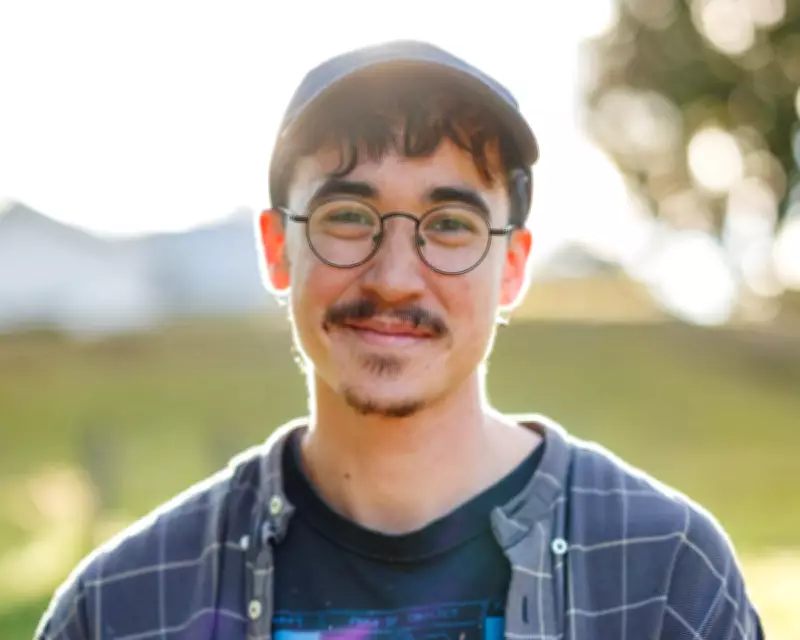
Lee Lai has made history by winning the 2026 Stella prize for her graphic novel Cannon, becoming the first non-binary person and the first graphic novelist to receive the $60,000 Australian literary award for women and non-binary writers.
A groundbreaking win for comics and non-binary representation
Lai, who was born in Melbourne and now resides in Montreal, was previously nominated for the Stella prize in 2023 for her debut graphic novel Stone Fruit, which earned multiple accolades including the Lambda Literary Award for LGBTQ comics and the Lynd Ward Graphic Novel Prize. Speaking to Guardian Australia before the announcement at a ceremony in Brisbane, Lai admitted it had been challenging to keep the win secret, especially from inquisitive friends.
Being the first graphic novelist to win the Stella prize is "pretty cool," Lai said, adding: "I hope that this is a win for the comics community as well, and that it makes some readers more interested in reading comics." The Stella prize was first opened to non-binary writers in 2021, making Lai's win a significant milestone for inclusivity in literature.

The impact of the $60,000 prize
When asked about the financial impact, Lai remarked: "Ultimately, money is time. None of us have a lot of that. This money will let me go for a very long time." She noted that the graphic novelist community often struggles financially, joking that they "endlessly do fundraisers and pass around the same $20 bill. In my world, this is a lot."
About 'Cannon': A study of repression and rage
Cannon follows the titular character, a queer Chinese woman living in Montreal in her late twenties. Born Lucy, she becomes Luce and then Cannon, a nickname she resents. By day, she cares for her aging grandfather, a former tyrant, without help from her emotionally distant mother; by night, she works in a fine-dining restaurant kitchen. Her best friend Trish uses Cannon as a sounding board and secretly mines her life for inspiration for her writing career.
The Stella judges praised Cannon as "a bruising examination of the lifelong weight that people – often women – carry, the profound toll it takes to be the 'responsible one', and what can happen when you are being taken advantage of repeatedly. (Bonus: it is also, somehow, very funny.)" They described Lai's artistry as elegant, evoking horror, poignancy, shock, and delight, and declared that Cannon is "absolutely one of the best graphic novels."
The creative process behind 'Cannon'
Lai began writing Cannon in 2019, working on it intermittently while taking on illustration jobs to pay the bills. The story evolved as the world changed around her. Initially, she aimed to depict the deterioration of a long-term friendship, but the pandemic shifted her perspective. "Then the pandemic happened and we couldn't see our friends and everyone's friendships were feeling a lot more fragile and it was no longer fun to do that. So I ended up writing a lot more optimistic outcome for Cannon and Trish than I originally planned," Lai explained.
The graphic novel is predominantly monochrome with impactful pops of color, and nearly every page is structured in a four-panel grid. Lai enjoys the constraints of this format, noting: "If you create expectation [in the reader], when you break it, it's impactful. You can control the reader's pacing – you can tell them when to halt, when to pause, when to speed up."
Characters and themes
Cannon, who is stoic to a fault, reflects exaggerated aspects of Lai's own personality. Trish embodies Lai's anxieties about neoliberal diversity discourse in the cultural sector. Trish writes a novel based on Cannon's life without her knowledge, worrying more about being a cliche than about the ethics of appropriating her friend's story. "These are the sort of things that you think about [as a writer]," Lai said. "I wanted the reader to feel as uncomfortable as I do around those questions."

Influences and the graphic novel debate
Lai cites graphic novelists such as Marjane Satrapi (Persepolis), Craig Thompson (Blankets), Daniel Clowes (Ghost World), Chris Ware (Jimmy Corrigan: The Smartest Kid on Earth), Chester Brown (Louis Riel), and cousins Mariko and Jillian Tamaki (Skim) as influences who helped establish graphic novels as a legitimate literary form. "Like everybody, my understanding of comics was once superheroes and Peanuts," Lai said. "And then I read Skim and Ghost World and saw that, actually, something else is possible here."
When asked about the term "graphic novel," which some dismiss as a pretentious marketing term, Lai laughed: "There is an irreverence around the term 'comic' that I like and there is something snooty about 'graphic novel' that I try to stay away from. There's a distancing from comics' heritage – I'm like, 'Our heritage is Peanuts! Accept it.'"