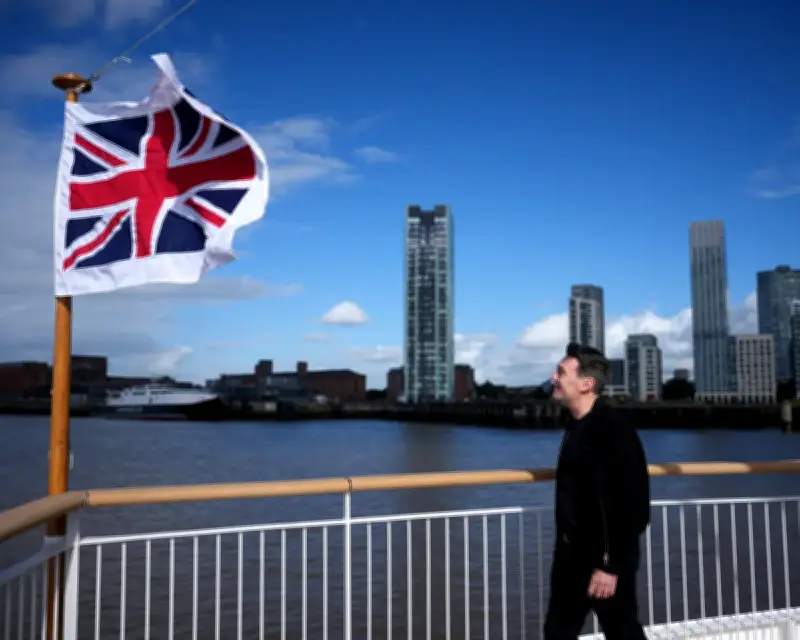
As the Labour party gathers in Liverpool for its annual conference, Guardian columnist John Harris argues that the UK's shift to a multiparty system is deeply rooted and will endure, warning that nostalgia for two-party politics is misguided.
Conference Slogan and Nostalgia
The conference slogan, “Hope Again,” contrasts with last year's “Renew Britain,” suggesting a belated grasp of pithy political storytelling. Harris notes the influence of modern classics like “Take back control” and “Make America Great Again,” and says the word “again” implies both a critique of Keir Starmer's reign and a longing for a better past, referencing New Labour, Harold Wilson, and the Attlee years.
Harris connects this to Andy Burnham's earlier pronouncements about voters in Makerfield responding positively to “the promised return of the Labour they once knew.” He argues Labour's ingrained nostalgia fuels the belief that it can regain a commanding vote share, citing 1951 when Labour won a record 48.8% despite losing, and Wilson's near-identical figure in 1966.
Fragmented Politics and Polling
Harris dismisses the notion of a return to simple two-party politics, citing Labour's loss of control in Wales to Plaid Cymru with just 11% of the vote, the SNP's intact dominance in Scotland, and Lib Dem gains in former Tory heartlands. A recent YouGov poll puts Labour on 23%, the Tories and Reform tied at 21%, the Greens on 14%, and the Lib Dems on 12%.
An MRP projection by the same polling group forecasts a hung parliament, with Labour dropping to 241 seats, underscoring the inevitability of cross-party cooperation. Harris notes this fragmented model will endure, and while it will be discussed at fringe meetings in Liverpool, it will not be addressed enough.
Burnham's Cooperation Stance
Before becoming leader, Burnham was the only senior Labour politician positively responding to these shifts, repeatedly backing proportional representation and advocating “a more honest and collaborative way of doing politics.” Harris notes Burnham's drive for English devolution will cede power to other parties and could substantially change national politics.
Holborn and St Pancras Byelection
Harris highlights the upcoming Holborn and St Pancras byelection, eleven days after conference starts, where Labour faces the Greens. Labour has attacked the Greens' fiscal plans and framed the contest as a chance to “get our revenge” for Green gains in May's local elections. Green leader Zack Polanski accuses Labour of lacking solidarity with Palestine, while an ally charges Labour with choosing candidate Sagal Abdi-Wali on the basis of opportunistic “identity politics.”
The left-leaning group Compass is convening a “council for the progressive majority” to unite progressive parties against Reform. A Compass statement warns: “There is a progressive majority in this country … yet our outdated political system divides us … splitting the vote and clearing a path for extremist voices to win with little public backing.”
Harris concludes that the age of monopolistic Labour hegemony is over, urging cooperation to defeat Farage and the far right, and to make the prospect of hope feel real again.