Kamala Harris is belatedly courting progressives and Arab American leaders as she mulls another presidential run, but questions remain over whether her outreach is too little, too late.
The former vice-president has not made an official announcement about 2028, telling voters in Detroit this week she is still deciding what to do. However, she appears to be testing the political waters through midterm campaigning.
Michigan roundtable and campaign stops
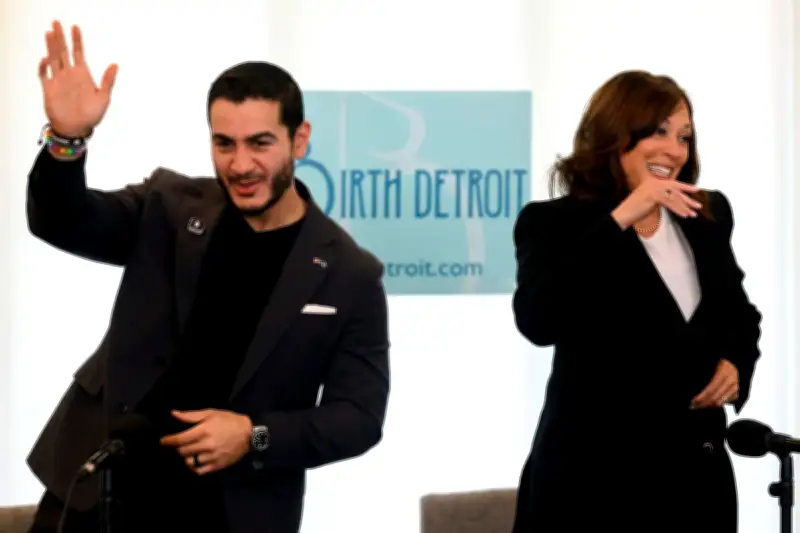
This week she flew to Michigan, one of the states she lost to Trump in 2024, to join Senate candidate Abdul El-Sayed at a roundtable focused on Black maternal health. Harris will also campaign with Senator Jon Ossoff in Georgia next month and attend an event in Las Vegas with Nevada attorney general Aaron Ford for his gubernatorial bid.
The appearance was not a spur-of-the-moment attempt to be helpful; it was a calculated move designed to put her back on the national political stage. The New York Times reported that Harris's aides had circulated a donor prospectus in July showing how she would try to maintain her influence atop the Democratic Party as she considered another run. The document, which solicited funds for campaign travel, explained how Harris could boost midterm candidates and asserted that the current moment is "uniquely suited to Vice President Harris and a broad coalition already in motion".
Building bridges with progressives
Not everyone agrees it is Harris's time to shine. Numerous Democratic candidates have publicly stated they do not want her "toxic brand" near their elections. El-Sayed, however, seems to have decided an alliance with Harris is mutually beneficial, giving him an inroad into the establishment and potentially more support from Black voters.
Harris, who alienated many progressives and Arab Americans by her stance on Gaza, clearly thinks associating with El-Sayed might improve her reputation among that cohort. El-Sayed has said he opposes military aid to Israel and termed the situation in Gaza a genocide, as have numerous human rights groups and genocide experts.
Harris also appears to be building bridges with other progressives. Last year, she offered only a lukewarm endorsement of Zohran Mamdani, stating: "He's the Democratic nominee, and he should be supported." Now that Mamdani embodies the political zeitgeist, she is keener. In early July, Axios reported that Harris called the New York mayor days after three leftwing candidates he endorsed won their primaries over establishment-backed candidates.
Harris has been working the phones. Axios noted she reached out to pro-Palestinian activists and Arab American leaders including James Zogby, founder and president of the Arab American Institute. He told Slate this week that the two had a "long talk", which he felt good about.
Learning from 2024 defeat
In 2024, the Democrats took progressives for granted, assuming young progressives would vote blue no matter who. Instead, many stayed home. The Democrats are still loath to admit Gaza was a factor in their defeat: a 2024 autopsy report by the Democratic National Committee did not mention the issue once.
However, Harris appears to be waking up to the realization that her near-unconditional support for Israel hurt her in the previous election and is something she must rectify if she wants to run again, particularly since polls show a record 60% of US adults now have an unfavourable view of Israel and most Democrats support an arms embargo.
Whether this is too little too late for the former nominee's brand is unclear, but it is certainly too late for the tens of thousands of Palestinians the Biden-Harris administration were complicit in killing.