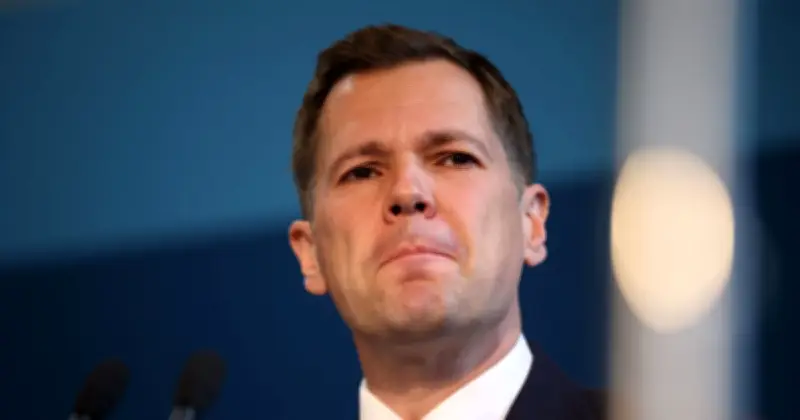
Robert Jenrick turned the tables on the BBC during a live Radio 4 interview, asking presenter Anna Foster whether she could guarantee that no BBC presenter would be exposed as a paedophile in the future. The exchange came as he faced questions about Reform UK's candidate vetting procedures following an ITV undercover investigation.
ITV investigation prompts vetting questions
The MP for Newark appeared on BBC Radio 4 days after ITV revealed it had conducted a year-long undercover investigation into the party, which led to the suspension of councillors accused of expressing racist, sexist or extremist views. The investigation recorded Alan Feeney, deputy mayor of Solihull, referring to Asian homeowners as "parasites".
It also revealed that an undercover reporter was advised by a local party chairman to delete social media posts supporting far-right activist Tommy Robinson. The chairman subsequently encouraged the reporter to apply to stand as a Reform councillor. Reform insisted it had "improved and prioritised its vetting procedures", while Jenrick argued that all parties have "bad apples".
Live clash over vetting guarantees
During the interview, Foster questioned Jenrick about the vetting process, including the councillor who allegedly encouraged the reporter to delete his posts about Robinson. "That goes against the idea that Reform's vetting is robust and is weeding these people out," the presenter said.
Jenrick described Reform's vetting processes as "strong", adding that it is "improving all the time". He compared his party to the Conservatives, claiming "absolutely no vetting" takes place when choosing their local councillors, and argued that while Conservative MPs undergo vetting, some have still ended up in prison.
BBC comparison and defence of Farage
Foster accused him of trying to deflect attention away from Reform, prompting Jenrick to plead with her to let him finish making his point. He went on to defend Nigel Farage's remarks that it was impossible to "vet people for what they say in the future", arguing that there are limits to how thoroughly a person can be vetted in advance. "You cannot do an absolutely full safe procedure," he argued.
Jenrick then made a controversial comparison to the BBC, asking Foster: "Look at the BBC for example. Can you now give a guarantee to your listeners this morning that no BBC presenter in the future will be exposed as a paedophile, as a number have been in the recent past? No, of course you can't. Because you can't know absolutely everything about every individual in your organisation."
BBC's history of child sex scandals
The BBC's reputation has been damaged by a string of child sex scandals stretching back over half a century. Jimmy Savile, who worked for the BBC for decades, was exposed as being one of the world's most prolific paedophiles after his death in 2011. Police recorded 199 crimes across 17 force areas, including 31 allegations of rape, with the presenter expected to have abused an estimated 450 young victims.
Children's presenter and entertainer Rolf Harris was jailed for five years and nine months in 2014 after he was convicted of 12 charges of indecent assault against four girls, including one aged seven. He worked for the BBC from 1952 until his career ended in 2013.
BBC News presenter Huw Edwards was convicted of three charges of making indecent images of children in 2024. The court heard that he received 41 illegal images, including seven category A pictures, via WhatsApp from a convicted sex offender. He received a six-month prison sentence, suspended for two years, and was placed on the sex offenders' register for seven years.