

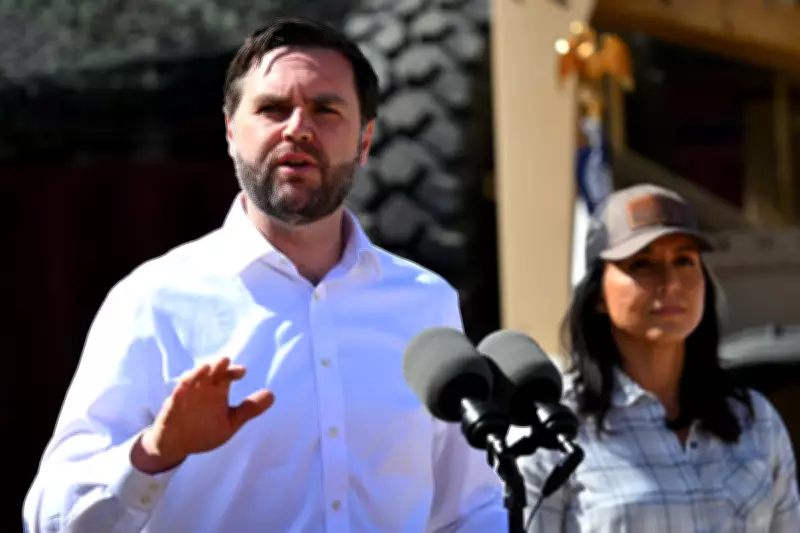
Vice President JD Vance has pushed back against a report suggesting he is increasingly isolated within the White House and may drop his anticipated 2028 presidential campaign. The report, which Vance described as 'flimsy,' emerged following the resignation of National Intelligence Director Tulsi Gabbard.
Gabbard's Departure and Its Impact
Tulsi Gabbard stepped down officially citing her husband's battle with bone cancer, but sources indicate she was sidelined due to disagreements over foreign policy. Gabbard, a former Democrat turned Republican, shared Vance's non-interventionist 'America First' stance, particularly regarding the ongoing conflict with Iran. Her exit is seen as a blow to Vance's faction within the administration.
Growing Influence of Marco Rubio
With Gabbard's departure, Secretary of State Marco Rubio, a hawkish Republican, has gained greater influence. Rubio advocates for a stronger military role abroad and has threatened confrontation with Cuba, contrasting sharply with Vance's more restrained approach. This shift has reportedly distanced Vance from the administration's inner circle, fueling speculation about his political future.

Despite these developments, Vance's team firmly denies that his 2028 ambitions are waning. 'The Vice President remains fully committed to serving the American people and is undeterred by baseless rumors,' a spokesperson stated. However, some political analysts suggest that the window for a viable bid is narrowing, especially if Vance continues to be marginalized on key foreign policy decisions.
As the 2028 election cycle approaches, the internal dynamics of the administration will be closely watched, with Vance's next moves likely to shape the Republican primary landscape.






