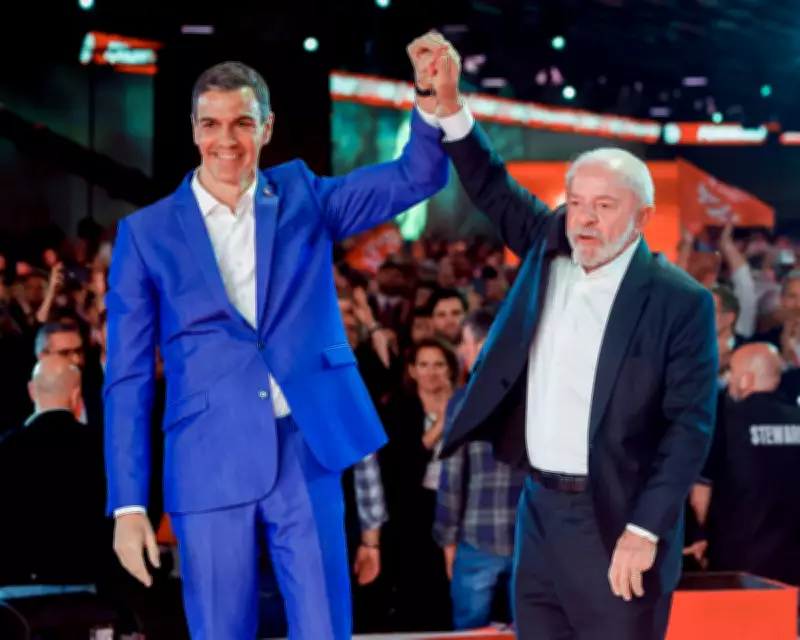
The international right has CPAC. Has the left finally found its answer? Spain's Prime Minister, Pedro Sánchez, hosted the inaugural meeting of the Global Progressive Mobilisation in Barcelona. Keir Starmer and other social democrats were notably absent.
Can Progressives Push Back Authoritarianism?
Thousands gathered in Barcelona this weekend seeking an answer. The inaugural Global Progressive Mobilisation, backed by Spanish PM Pedro Sánchez, drew an impressive cast: Brazil's Lula, Mexico's Claudia Sheinbaum, Colombia's Gustavo Petro, South Africa's Cyril Ramaphosa, alongside many activists and civil society organisations. Discussion panels and speeches targeted Donald Trump, fascism, war, corporate power, and Israel's genocide.
Notable Absences
Europe's leaders were largely absent, inevitable given Spain is the only major European country with a meaningfully progressive administration. Keir Starmer's failure to attend, despite his deputy David Lammy appearing, was unsurprising. The political distance between Starmer and Sánchez is striking. Once little known abroad, Sánchez's outspoken opposition to Israel's genocide in Gaza and condemnation of the Iran war have won him respect among European publics and global south governments.

Sánchez's Vision for Social Democracy
Whether Sánchez offers a route back for Europe's embattled social democratic tradition remains questionable. His speech echoed themes long abandoned by peers: denunciations of billionaires, speculators, and 'techno-oligarchs', and a blunt declaration that 'neoliberal orthodoxy' died in 2008. It is difficult to imagine Starmer proclaiming that 'when we progressives reach government, it is not to serve the elites – we put them in their place'.
The Crisis of the West
The west's crisis cannot be understood without considering social democracy's long self-destruction. In the 1990s, most centre-left parties embraced neoliberalism – privatisation, deregulation, low taxes on the wealthy. After the financial crash, many imposed or enabled austerity, hollowing out their own foundations. One consequence was the far right's rise; in some cases, the radical left surged instead.
Spain's Progressive Coalition
After 2008, Spain's Socialist party, now headed by Sánchez, seemed destined for decline after committing to freezing pensions, cutting public sector pay, slashing investment, and other unpopular measures. Rather than being displaced by insurgent leftwing party Podemos, they joined forces. Since 2018, Sánchez has led a progressive coalition government with the radical left as junior partners.
Achievements and Challenges
The government's achievements include strengthened labour rights, expanded protections for women and LGBTQ people, sharp minimum wage increases, and more interventionist housing policies. Podemos and its successor Sumar have pulled the administration leftwards, while Spain's economy grows among the fastest in Europe. Yet the Socialists reap most credit, while radical voters grow disillusioned with compromise. Angela Merkel once boasted: 'The little party always gets smashed!'
Sánchez's government lacks a parliamentary majority, limiting policy implementation, and faces corruption allegations it dismisses as politically motivated. A society scarred by austerity remains unsettled. With an election due next year, polling suggests a possible rightwing coalition led by the increasingly hardline People's party. Much of the Socialist establishment once resisted alliance with the new left; now it risks losing power as disillusioned left-wing voters may stay home.
International Solidarity
Given domestic pressures, investment in international organising might seem misplaced. But the Global Progressive Mobilisation reflects recognition that the far right is transnational and must be confronted through international solidarity. Despite nationalist rhetoric, rightwing movements cooperate across borders; their opponents must do the same. The Mobilisation casts itself as a counterweight to CPAC, associated with figures like Hungary's Viktor Orbán.

Renewed Left Energy
The initiative comes amid flickers of renewed radical left energy from figures like New York's Zohran Mamdani and the UK Greens' Zack Polanski. The question is whether social democrats will break decisively with a failed economic model and make common cause with those pushing beyond it. Some hope Europe's far right may weaken through association with an unpopular US president, but its leaders are already adapting, distancing themselves from Washington.
A left capable of uniting around economic justice – redirecting anger towards entrenched wealth and power rather than migrants – remains the most plausible alternative in an era of economic strain and geopolitical instability. It would be overly optimistic to declare Barcelona heralded its rebirth. But it offered a glimpse of what it might look like, and a reminder that the slide into rightwing authoritarianism is not inevitable.