Three years of Israel's war in Gaza, triggered by Hamas's attacks on 7 October 2023, have killed more than 74,000 Palestinians and reduced much of the territory to rubble. The conflict has shifted global views of Israel, boosted support for Palestine, and raised questions about US power. Yet for Europe, the consequences may be even more profound, as the war exposes cracks in the continent's democratic foundations.
Europe's double standards on Gaza
European governments have taken no collective action to stop the violence, with no sanctions, trade restrictions, or arms sales bans on Israel. In contrast, the EU has sanctioned Russia over its war in Ukraine, highlighting a stark inconsistency in foreign policy. This selective approach undermines Europe's global credibility and its claimed commitment to universal human rights.
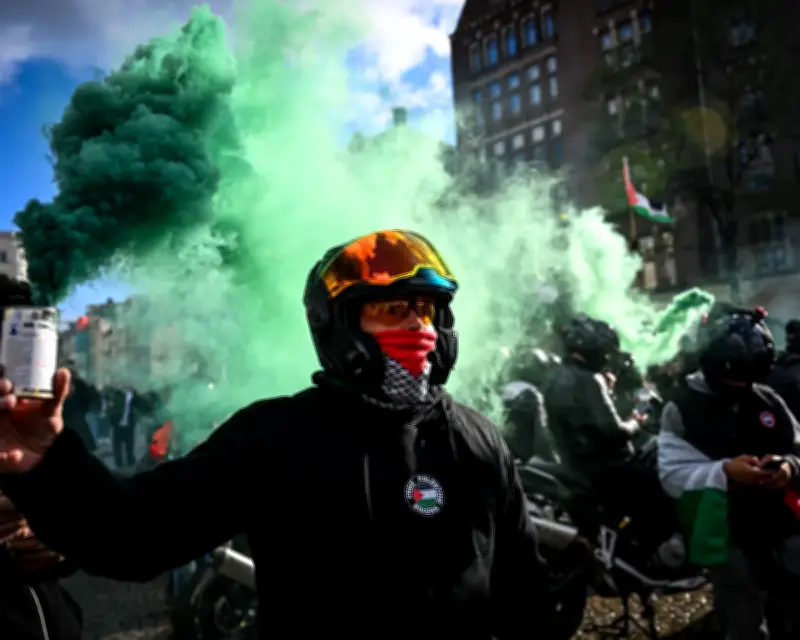
The EU's response has been conditional, recognising some suffering while ignoring others, and celebrating certain struggles while criminalising dissent at home. Police violence at pro-Palestinian demonstrations has become common, and peaceful advocates for Palestinian rights face increasing suspicion and legal consequences.
Rising Islamophobia in EU politics
The European People's Party (EPP), the EU's largest political group, has advanced resolutions targeting "political Islam" without evidence, echoing conspiracy theories about "Islamist entryism" and Muslim Brotherhood networks. A June resolution condemned alleged interference in democratic processes, while an October resolution cast suspicion on Muslim civil society groups' loyalty and participation.
Hiba Latreche, president of Femyso, a network of young Muslim organisations named in the EPP's attack, highlighted the double bind: "When we are not active we are accused of communitarianism, separatism and lack of integration. When we engage and exercise active citizenship we are accused of having a hidden agenda."
Erosion of democratic trust
These developments erode public trust in democratic institutions, as Rabin Baldewsingh, the Netherlands' national coordinator against discrimination and racism, noted: "Governments and public institutions have a responsibility not to reinforce polarisation when society is deeply divided." The EU's Fundamental Rights Agency has long warned of both anti-Muslim racism and antisemitism, but the political framing now treats antisemitism as a threat to democracy while viewing Islamophobia through a security lens.
Meanwhile, the European Network Against Racism (ENAR) has lost European Commission funding and launched a legal challenge to continue operations. Inside EU institutions, officials report "quite blatant" Islamophobia, with micro-aggressions and dismissive remarks about Muslims' behaviour.
Solidarity persists despite divisions
Despite these challenges, pro-Palestinian solidarity has grown across Europe, involving trade unions, faith groups, students, and politicians. EU Staff for Peace holds weekly vigils outside EU institutions, and former officials urge stronger action against Israel. While Gaza has stripped away assumptions about Europe's democratic resilience, the erosion of freedoms often begins quietly, with some voices silenced and some rights treated as less equal.