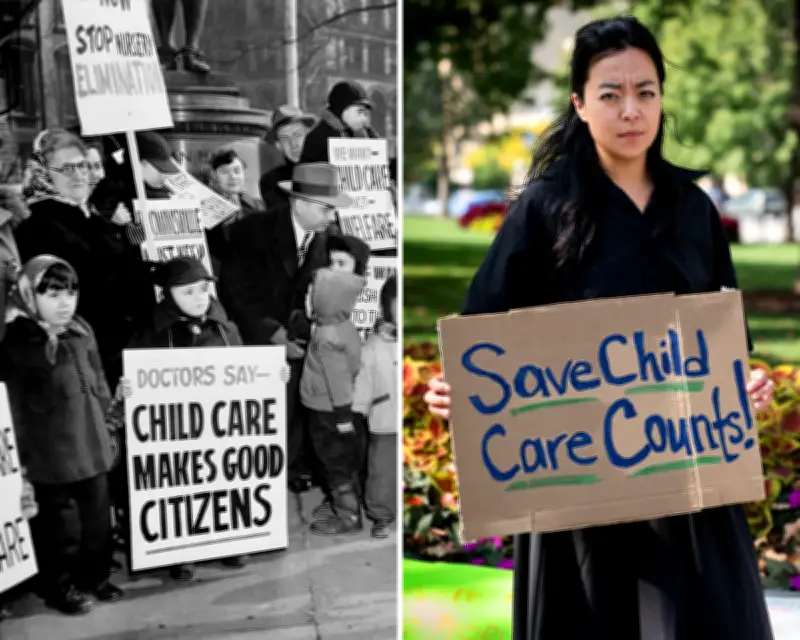
Francesca Hong, a democratic socialist candidate for Wisconsin governor, is running on a platform of universal childcare in the state's Democratic primary on 11 August. She joins a wave of candidates across the country who have found traction with an issue that was once considered politically radioactive.
A Shift in Political Winds
For decades, US childcare policy was largely limited to programs like Head Start for low-income families. Broader proposals were often blocked by conservatives arguing for personal choice over government-run care. But as childcare costs surpassed college tuition and the pandemic strained families, the issue became a middle-class concern that candidates could no longer ignore.
In recent months, Zohran Mamdani made universal childcare central to his successful New York mayoral campaign, and centrists Abigail Spanberger and Mikie Sherriff won governorships in Virginia and New Jersey on the same plank. New Mexico became the first state to offer free childcare for all in March, and Janeese Lewis-George won the DC mayoral primary with universal childcare as a top priority.

“We’re in an era of real affordability issues,” said Deb Haaland, former interior secretary and current New Mexico governor candidate. “Universal childcare is good for our economy – it creates jobs, it helps parents go to work without worrying about their children.”
Decades of Organizing Pay Off
Georgetown professor Joan Lombardi attributed the shift to three factors: more parents facing childcare as an everyday reality, rising affordability pressures, and state-level innovations informing policy. The US nearly had federal childcare over 50 years ago when Congress passed the Comprehensive Child Development Act, but President Richard Nixon vetoed it.
Senator Patty Murray of Washington, a former preschool teacher, has introduced childcare legislation since 2017. The 2021 American Rescue Plan infused $39bn into childcare, the first time the federal government paid providers directly. “Childcare facilities shut down, so our nurses couldn’t work, our essential employees couldn’t work,” Murray said. “And almost overnight, people realized how essential it was.”
Political action committee Campaign for a Family Friendly Economy is spending $50m on childcare messaging this midterm cycle, and Senate Democratic leadership has made it a pillar of their affordability agenda. “It’s not something people plan for the way they plan for buying a first home,” said executive director Sondra Goldschein. “This appeals to people who are older and younger, Democrats and Republicans.”
Wisconsin and Beyond
In Wisconsin, Hong’s plan would provide free childcare up to 400% of the federal poverty level, cap childcare spending at 7% of income for all families, and create loan forgiveness for early educators. The message resonates after $110m in pandemic-era childcare funding expired last month. “We cannot have a sustainable workforce without affordable childcare for working families,” Hong said.
In Washington DC, activists protested after outgoing mayor Muriel Bowser cut early educator pay and froze enrollment in the childcare subsidy program. “We coordinated the largest-ever day of early learning program closures in March – ‘a day without childcare’,” said Travis Ballie, executive director of Under 3 DC. Lewis George, who won the Democratic primary for DC mayor, has promised “childcare for all” building on universal pre-K.
How New Mexico Achieved Universal Childcare
New Mexico’s success came after over a decade of organizing. State House speaker Javier Martinez, then a community organizer, saw immigrant families struggling to find childcare. Advocacy groups pushed for a state-funded system using oil and gas revenue from a land grant. After three fiscally conservative Democratic senators blocked the plan, organizers targeted their re-election in 2020. “Once those three people were out of the equation, this thing flew right by,” Martinez said.

In 2022, voters passed a constitutional amendment establishing a right to early childhood education funded by the land grant, and a state law enacted universal childcare earlier this year. Martinez dismissed criticism that the model only works in oil-rich states. “No, but everybody has poor people. You [need to] organize poor people in genuine ways.”
Not all pro-childcare candidates have won. In Colorado and California, progressive candidates lost primaries. In New York, Lieutenant Governor Antonio Delgado laid out a universal childcare vision but lost to incumbent Kathy Hochul, who adopted parts of his plan. Organizers see the current moment as a foundation, not an end. “Childcare is having a moment,” said Helene Stebbins of Alliance for Early Success. “Let’s build it. Let’s solidify it.”