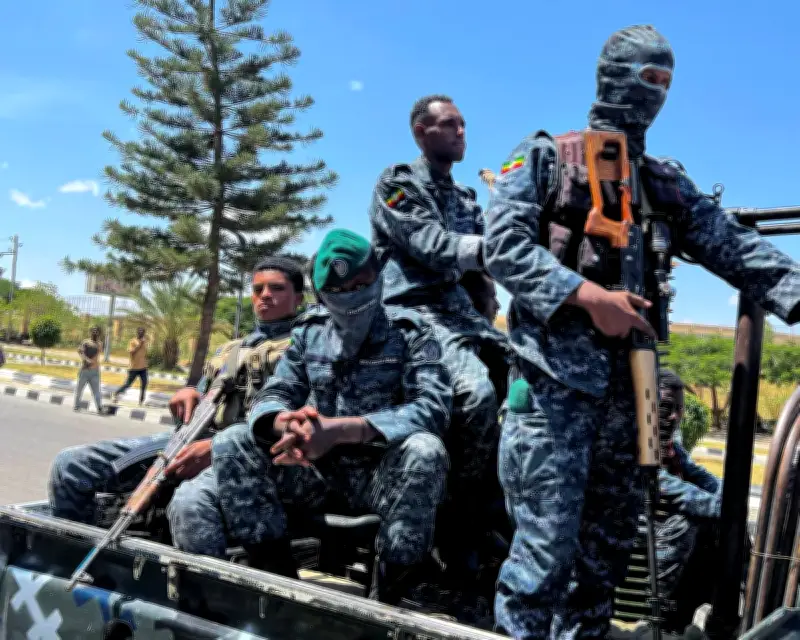
Violence has resurged in northern Ethiopia, raising fears of full-scale war within the country or between Ethiopia and Eritrea, while a spiralling regional polycrisis hits already beleaguered communities, according to a Guardian editorial.
New alliances and old rivalries
Last month, seven Ethiopian regional groups announced an “Alliance for Survival” to remove the federal government. Prime Minister Abiy Ahmed’s coalition is held together by his patronage, but so far may be faring better than his rivals, united solely by shared loathing of him and riven by deep disputes.
The Tigray People’s Liberation Front (TPLF), which controls Tigray, has previously battled the Fano militia of Amhara, and their territorial dispute endures. Ethiopia accuses Eritrea – previously accused of atrocities against Tigrayan civilians – of backing the rebel alliance. Despite Asmara’s denials, there are multiple reports of Eritrean troops in Tigray.
Geopolitical entanglements
Abiy demands his landlocked country should gain access to the Red Sea, to Eritrea’s concern and anger. The Eritrean president’s control of the coastline, opposite Houthi-held stretches of Yemen, means that Washington is now keen to engage with his regime and unlikely to challenge him.
Addis Ababa also accuses Egypt and Sudan of backing the TPLF. They deny it, but Cairo is furious over the Grand Ethiopian Renaissance dam on the Nile. Khartoum too fears losing water, and says Ethiopia is supporting the RSF rebels in the civil war (Addis Ababa denies it). The UAE, having lost a foothold in Yemen, has increased support for Ethiopia.
Humanitarian crisis and path forward
Agricultural production has not recovered from the last war. Now the fertiliser and fuel crisis born of the Iran war, the evisceration of aid budgets and the impact of El Niño are intensifying the crisis. The UK and others must urgently provide humanitarian support.
Though the escalating violence is alarming, with hundreds reportedly killed, this conflict has not yet fully ignited. In 2020, Tigrayans believed they had to unify for collective survival. This time the TPLF itself is deeply split, with veteran commanders reportedly arrested for questioning the new war, and soldiers and civilians showing little appetite for a conflict fuelled by factionalised, self-serving and corrupt leaders.
A truce is not impossible and must be a priority. Ethiopia needs relief, reconstruction and a political reconfiguration. But its conflict cannot be separated from the broader picture, as wars in Sudan, Somalia, Yemen, Iran and beyond enmesh to devastating effect.