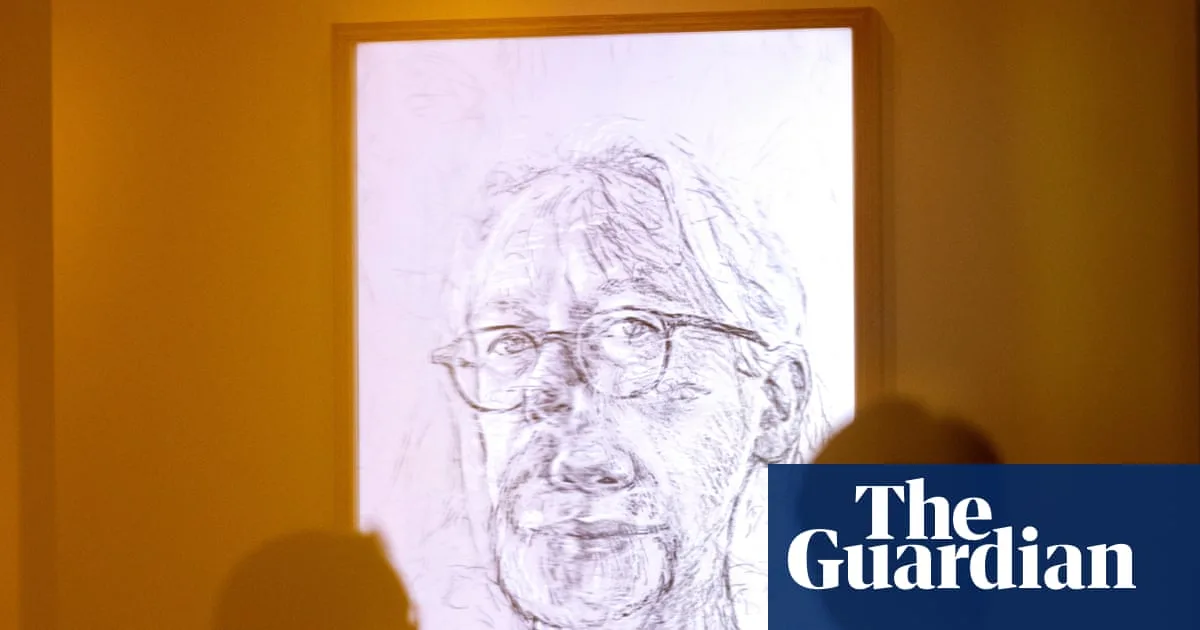
Artist Es Devlin has unveiled a new installation at the National Portrait Gallery that aims to unite the UK through a collective portrait made from thousands of selfies. Titled 'A National Portrait for the National Portrait Gallery', the work invites people across the country to upload selfies, which are transformed into charcoal-and-chalk style portraits and projected onto a framed screen in a constantly evolving carousel.
Devlin, known for her work with Beyoncé, Adele and the London 2012 Olympics closing ceremony, said the project comes at a time when Britain feels increasingly atomised by political fury and loneliness. 'I am in no way trying to erase the differences between us,' she said. 'But I'm hoping that if we can take the time to exist together in a non-verbal moment, perhaps we can accept that we can all coexist.'
The installation deliberately shows imperfect merges, with faces snagging and jarring before separating. Devlin described this as truthful, reflecting 'the impossibility of crossing the boundaries between us'. The project took three years to build, using an image-generation model trained on Devlin's hand-drawn portraits, developed with Google Arts & Culture Lab.

Devlin acknowledged the contradiction of using AI technology at a time when many artists oppose its use, but framed the project as an act of reclamation. 'I want to take the technologies and do what Wendy did for Peter Pan: I want to dance with my own shadow in an act of resistance,' she said. The work also includes free portrait-drawing workshops at the gallery and online, with plans to extend to town halls and libraries across the UK.