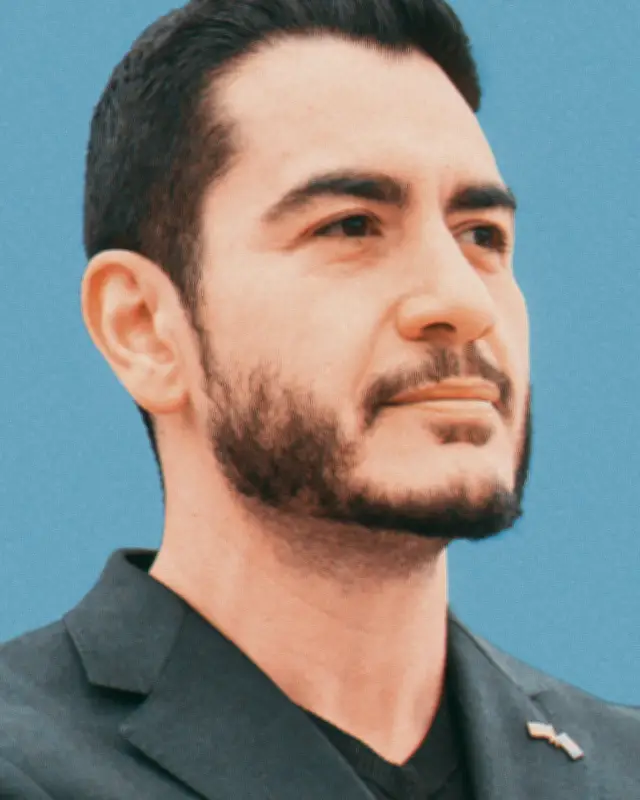
Abdul El-Sayed, a doctor and former public health official, is running in Michigan’s Democratic primary for US Senate, challenging moderate Representative Haley Stevens. The race is tight, with polls showing the two candidates neck-and-neck ahead of the 4 August vote.
A progressive with a playful side
El-Sayed balances policy expertise with a lighthearted public persona, joking about his haircut and dancing on camera. But when asked about healthcare, the epidemiologist takes over. He backs Medicare for All and criticizes corporate power, saying “we don’t live in capitalism, we live in oligopoly.”
He rejects the socialist label, calling himself a scientist who wants to solve problems. “I think people are sick and tired of the establishments on both sides,” he said.
The primary battle
Stevens, a four-term representative with support from Senate minority leader Chuck Schumer and retiring senator Gary Peters, has the backing of the Democratic establishment. She highlights her work on the 2008 auto rescue. Meanwhile, El-Sayed has endorsements from progressive figures like Alexandria Ocasio-Cortez and Bernie Sanders.
Outside groups, led by the pro-Israel lobbying network Aipac, have spent roughly $30 million supporting Stevens, making this one of the most expensive Democratic primaries in the country.
A coalition of the anti-establishment
El-Sayed’s support comes from younger voters skeptical of party institutions. He ties US foreign policy, particularly the Israel-Gaza war—which he calls a genocide—to domestic affordability. “Every time you want to put glasses on kids, people ask you: ‘Doctor, how are you going to pay for that?’” he said. “Nobody asks the general how he’s going to pay for the next war.”
His worldview is shaped by family roots in Egypt, where he spent summers. He credits his grandmother for teaching him that talent is widely distributed but opportunity is not.
From public health to politics
El-Sayed was a Rhodes scholar and led Detroit’s health department after its bankruptcy, then Wayne County’s, where he helped cancel roughly $700 million in medical debt for 300,000 Michiganders. He sees government service as a pathway to helping people.
Matt Grossman of Michigan State University notes a broader realignment: “In the previous campaign, El-Sayed was more the Bernie candidate… Now, he’s more representative of a broader group of voters on the left side of the Democratic primary, who are anti-institutional or newly grassroots.”
Uncertain outcome
Polls are mixed: a mid-July Detroit News/WDIV poll showed Stevens ahead by seven points; another tracking poll 10 days later put El-Sayed ahead by the same margin. Winning over Detroit’s Black voters is a key challenge.
Some Democrats fear El-Sayed would be too radical to beat Republican Mike Rogers in November. Former Michigan Democratic chair Lon Johnson said, “There is real concern that Abdul would not be able to beat Rogers and then potentially lose us a majority possibility in the Senate.”
El-Sayed remains unfazed, saying he would rather lose than compromise his values. “The paradox here is that the way to win is to actually have values, because people at least know what you’re for,” he said.