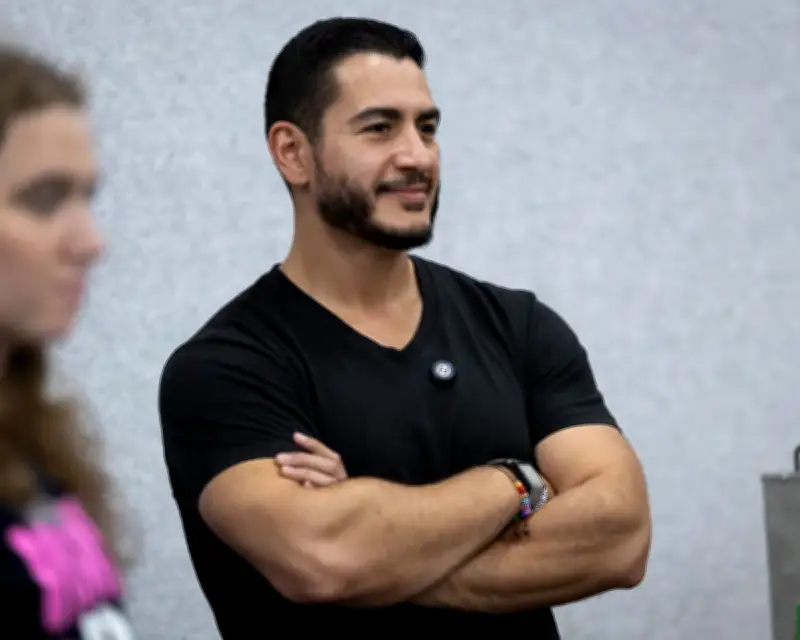
Democratic candidates are increasingly using sex appeal to win votes, a strategy highlighted by Michigan senate nominee Abdul El-Sayed's prominent biceps and tight black T-shirts. The progressive candidate incorporates fitness content into his campaign, part of a broader effort to rebrand the Democratic party, which has faced an image problem.
Rebranding through attractiveness
El-Sayed's muscles have received significant coverage, seen as part of an attempt to make the party appear less like out-of-touch technocrats. News website Axios recently declared, "Democrats enter their thirst trap era," noting the party's main TikTok page has given the "thirst trap treatment" to figures including El-Sayed, Zohran Mamdani, and senator Jon Ossoff, nicknamed "Senator My Boo" by internet fans.
Axios quotes a political analyst who says the TikTok page made a "very intentional choice to feature the most attractive male members." Fox News host Ainsley Earhardt discussed the trend, saying, "El-Sayed is out in these tight T-shirts," and added, "even with a tight T-shirt, it's still socialism and it fails."

Learning from Trump
On CNN, strategist Yemisi Egbewole expressed enthusiasm: "Dems are hot again. They're coming out of the closet as hot people and I'm so excited." Egbewole added, "I think they're learning from Trump. Entertainment really sells."
Research supports the effectiveness of attractiveness in politics. A 2016 study found rightwing politicians in Europe, the US, and Australia tended to be more attractive than their progressive counterparts, partly because "low-information" conservative voters are prone to choosing attractive candidates. The Washington Post noted that a beauty increase of one standard deviation attracts about 20% more votes for the average candidate on the right and about 8% for the left.
Historical precedent
The most famous example of looks swaying an election is nearly 70 years old. In September 1960, 70 million Americans watched Richard Nixon debate John F Kennedy in the first nationally televised debate. Nixon had been in hospital and looked unwell, while Kennedy appeared tanned and rested. Nixon later wrote in his memoir, "What hurt me the most in the first debate was not the substance of the encounter between Kennedy and me, but the disadvantageous contrast in our appearances."
If thirst traps are what it takes to get the US on a better path, then so be it. Jacked candidates in tight T-shirts may seem like a cheap trick, but even Nixon's mother would agree it's a sound political strategy.