As governments face community backlash for fast-tracking datacentre developments, big tech's financial contributions to political parties are under renewed scrutiny. Payments from Amazon Web Services to Australian political parties have coincided with major government announcements, and well-connected lobbyists, including a former premier, have been hired to represent datacentre companies.
Amazon's payments and the $20bn plan
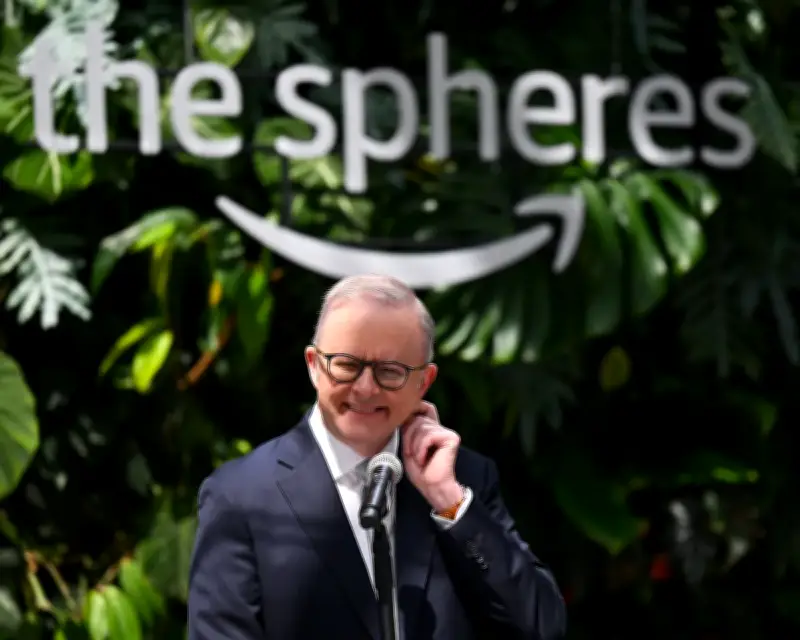
On 14 June 2025, Prime Minister Anthony Albanese visited Amazon Web Services' Seattle headquarters, where CEO Matt Garman outlined a $20bn plan to build datacentres in Melbourne and Sydney. Garman said Australia was “incredibly important and a great market” for the company.
Days after Albanese returned home, Amazon reported its largest payment to an Australian political party on record: a $46,500 payment to the Labor party's federal branch on 28 June. This was one of 34 payments, totalling $538,000, that Amazon made to Labor and Liberal branches over six years.
While the money did not influence government decision-making, it continued a trend of Amazon disclosing payments shortly before or after multibillion-dollar announcements. Payments such as this are legal, but they are facing renewed scrutiny as communities push back against fast-tracked datacentre projects.
Access to ministers and fundraising events
In 2024, the Albanese government announced a $2bn deal with Amazon Web Services to build three top-secret datacentres for intelligence agencies. Eight days before that announcement, Amazon disclosed a $33,000 payment to Labor, followed by another $33,000 less than six weeks later. These were membership fees for the Labor Business Forum, which facilitates access to ministers and MPs. Amazon has paid more than $200,000 in membership fees to the forum since mid-2021.
Under Australian electoral law, such fees are not classed as donations but as “other receipts”. Amazon also attended state fundraising events, paying $38,100 to NSW Labor and $37,400 to the NSW Liberals between mid-2021 and mid-2025, while pursuing new datacentres on Sydney's outskirts. An Amazon spokesperson said its payments to fundraising forums were not related to public investments.
Macquarie's donations and planning overlaps
In his final weeks as prime minister in 2022, Scott Morrison toured a five-storey datacentre in Sydney's north-west. Three days before his 25 March speech, Macquarie Technology Group disclosed a $3,000 donation to the NSW Liberal party, following two $15,000 payments in January 2022. The company made six payments to the state Liberals worth $10,700 between November 2020 and June 2021, and paid $1,500 to attend a boardroom lunch with then Liberal treasurer Dominic Perrottet on 15 June 2021.
These payments overlapped with milestones for Macquarie's IC3 East and IC3 Super West datacentres, which could be fast-tracked under rules deeming datacentres “state significant developments” approved by a minister. On 23 October, the company paid $1,980 for a lunch with Ryde's Labor mayor Jerome Laxale and then Labor leader Chris Minns. Laxale had no role in assessing the application, and a spokesperson said “all donations were reported in accordance with requirements”.
Macquarie has paid $2.2m to state and federal branches of the Liberal and Labor parties since 2000. A company spokesperson said “any suggestion that these activities influence planning outcomes is incorrect”, adding that the group complies with all disclosure requirements and does not provide political support in exchange for planning approvals.
Lobbying and former premier hired
Datacentre companies are increasingly hiring well-connected lobbyists. Viridis Green datacentres has paid former Queensland National premier Rob Borbidge to lobby LNP ministers and senior public servants. In late August, Borbidge gave two senior planning officials a tour of a Brisbane datacentre, following four meetings with public servants since March. Viridis made a $20,000 donation to the Queensland LNP on 20 October 2025, which sources say funded an event at the LNP party conference in November.
Abigail Boyd, the Greens MP leading a NSW parliamentary inquiry into datacentres, said companies donate to acquire “access, influence and good favour”. ACT senator David Pocock said he was concerned about big tech bankrolling election campaigns, noting similar patterns in the US. Catherine Williams, executive director of the Centre for Public Integrity, said a lack of transparency about federal lobbying “heightens community concern” and raises “a legitimate question to be answered about the purpose of any entity paying for party forum membership” if not to obtain access beyond ordinary Australians.