
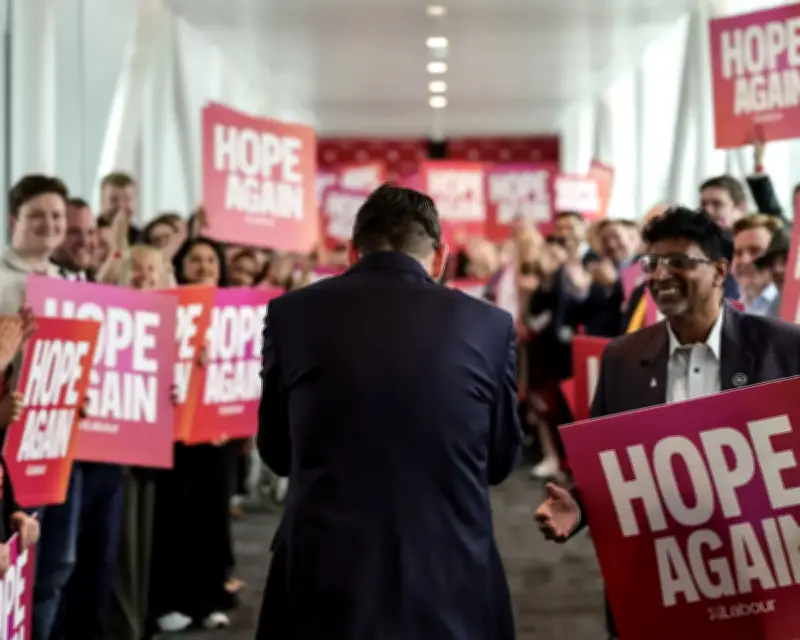
At Labour conference in Liverpool, the party faithful are basking in the glow of the “Burnham bounce” after Andy Burnham ousted Keir Starmer in July in what has been delicately referred to as a “soft coup”. The theme of this conference is “Hope again.”
Yesterday, in an engaging and emotional speech that staked out bold positions on social care, NEETs, electoral reform and the EU, Burnham added substance to the slogan that graces the banners hanging from the lofty ceilings of the exhibition hall. The party’s politics team has outlined the key takeaways.
Members' mood and polling
According to the latest polling for LabourList, 92% of members surveyed in recent weeks believe Burnham is governing well, while 80% believe the party is heading in the right direction – compared with 48% under Starmer last summer.
It’s the same Burnham bounce that Labour is enjoying in polls across the country. Campaigners talk about a new openness around No 10, and a sense that he recognises the easy wins, a break from the party’s previous sclerosis.
But as LabourList editor Emma Burnell cautioned at the fringe event launching the polling data: “it’s a double-edged sword because it does come with expectation and a more precipitous drop.” More granular data shows members’ focus is now all on delivery. As one respondent fretted: “Is this just Starmer with better comms?”
Protests and criticism
Burnham has caught some criticism this conference, with plenty of people with something to say outside the secure zone. Amira Campbell, an activist with Green New Deal Rising, was outside the conference centre early on Sunday morning with 50 jobless young people, arguing that the current employment crisis affecting one in eight of 16- to 24-year-olds can be helped along by green jobs creation.
At 24, Campbell says the current Labour leader is “definitely the most progressive” she’s known, though she questions whether his framing of reforming welfare benefits to incentivise employment grasps the complexity. “Young people have record levels of anxiety and depression and instead of accepting life has got a lot harder, we’re often dismissed as snowflakes. But we know poor mental health correlates with poverty.”
There’s also the question of the continued proscription of Palestine Action. There were 82 terrorism arrests outside the conference hall this weekend, for supporters holding signs reading “I oppose genocide. I support Palestine Action” – including Massive Attack’s Robert Del Naja. After Ed Miliband told delegates “you were right” on Gaza, campaigners say these arrests call into question Labour’s “Palestine reset”. Yesterday morning, Miliband admitted it was never anyone’s intent to criminalise “elderly people, vicars and grannies”, while adding vaguely that it’s something the government will “keep looking at”.
The speech and its reception
Back in the conference hall on Tuesday, Burnham’s address felt like the speech the party had been waiting for. The ideas were substantial – like the “21st-century deal for pensioners”, ditching the triple lock to fund a national care service – but easy to explain to voters.
He told delegates that hope requires honesty – and then led by example. Burnham admitted he’d “love to go quicker” on measures to ease the cost of living, “but we have to be honest about what our country can afford”; he set out positions on pensions and Europe that he knows will attract angry opposition; and then he showed genuine emotion, choking up about his father, Roy, who died only two weeks ago.
At a post-speech analysis event yesterday evening, Luke Tryl of research agency More in Common said the speech had hit home on every metric. Burnham was “very control focused”, at a moment when people believe the social contract is broken. Tom Baldwin, Starmer’s biographer, observed that Burnham had included familiar policies which the government was already working on, but he succeeded in “telling a bigger story” about them than his predecessor.
One risk, Baldwin suggested, was that – by outlining the care service, Europe and electoral reform as key issues for the next election campaign – Burnham leaves a gap. Voters will want immediate action on living standards, and yet, with the government constrained by factors well beyond their control – like the global bond sell-off driving up the cost of government borrowing, international conflicts curtailing growth, and another energy price shock – that might be hard to deliver.
Whatever the challenges for next month’s budget, Burnham is on top for now. He returns successfully from conference, with a largely jubilant membership and a list of policy proposals that they are properly excited about. He’s offered the hope, now we’ll see what the public makes of his honesty.




