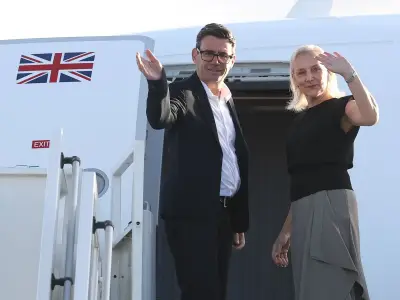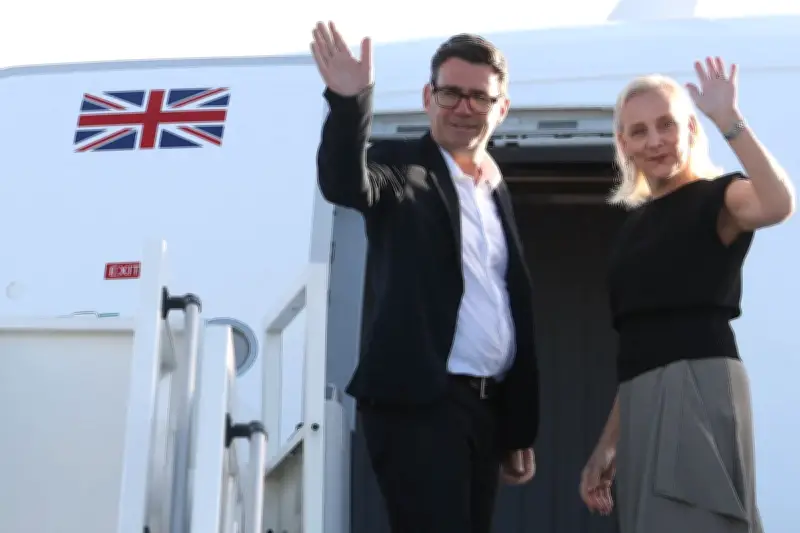
Prime Minister Andy Burnham will tell the United Nations that the UK is not “on the slide” and attempt to draw a line under a decade of post-Brexit turbulence as he makes his UN debut. He will address the UN General Assembly in New York on Tuesday after his first face-to-face talks with US President Donald Trump.
Mr Burnham said he has a “really upbeat message” about the UK, while acknowledging there were long-term issues to be addressed to improve living standards. The trip comes ahead of the Labour Party conference later this month, the first Budget of his premiership in October and the unveiling of his 10-year plan for the country.
‘Fastest growing in the G7’
Mr Burnham told reporters accompanying him on the visit: “The plan for Britain is about ‘what is our direction over the next 10 years and how do we make life more affordable for people’. That is my main priority, that’s what people are looking for.”
“I hear people saying the country is on the slide – we’re the fastest growing in the G7, there’s lots to be proud of, there’s a lot right with the country and I’m going to give a really upbeat message when I speak.”
He said “we can be hopeful about where we’re going, we can draw a line under the last decade and say this next one’s going to be different”. Mr Burnham described the cost-of-living crisis as “the biggest issue of our times”, noting that while some things could “realistically be done to provide short-term help”, there were also “long-term structural changes” needed to make life more affordable.
Meeting with President Trump
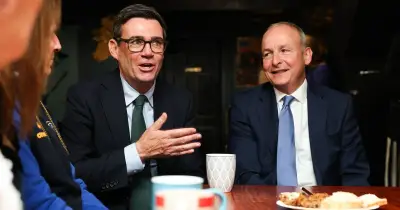
The Prime Minister’s first face-to-face meeting with Mr Trump will take place on the margins of the UN gathering, as the Ministry of Defence stepped up co-operation with American counterparts on next-generation drones and artificial intelligence (AI) systems. Mr Burnham’s past criticism of the president, Mr Trump’s unpredictability, recent comments about Irish unification and hostility to UK immigration and clean energy policies make it a diplomatically awkward challenge.
Mr Burnham said he could “trust” the US president and that the special relationship was as strong as ever. He said: “When you come into this job, you realise how deep this relationship is. We trust our allies. Of course, we do.” Asked if he trusted Mr Trump personally, the Prime Minister replied: “Yes.”
Mr Burnham had previously been critical of the president, including saying – as rioters stormed the US Capitol in 2021 – that “any UK politician who gave Trump the time of day should be ashamed right now”. Before their first conversation, Mr Trump had suggested he knew little about Mr Burnham beyond that he was “very liberal” and the mayor of a “town”.
Mr Burnham told journalists: “Politicians say things throughout their career, but now the important thing is to focus on the moment you are in, and I did say to the president in our first phone call, I said Mr President, Manchester isn’t ‘some town’. I said ‘this is Manchester’. And so yes, the right thing to do is to have a laugh about it, isn’t it, and move beyond it.”
Middle East and AI focus
Mr Burnham, who has authorised a British military operation for the first time by deploying defensive air-to-air refuelling for Saudi Arabian planes responding to Houthi missile attacks, said he would discuss the Middle East crisis triggered by US strikes in Iran with Mr Trump. He said: “The message is that we want to see an end to the conflict as quickly as possible and we stand ready to play our part.”
Accompanied by his wife Marie-France van Heel, Mr Burnham will also use his first UN General Assembly speech to focus on AI’s risks and opportunities. The development of frontier models is dominated by firms in the US and China, with experts raising concerns that the breakneck pace of progress is coming at the expense of safety.
Mr Burnham is seeking to position the UK as an “honest broker” in bringing countries together on the issue, comparing his role to that played by Gordon Brown after the 2008 financial crisis. He said recent warnings from AI experts about risks to humanity “made me pause” but “I had already decided, though, to make a step change on AI when I came into the role”. “I will be focusing on AI as a force for good, because it can be and it’s really important to keep that,” he said.