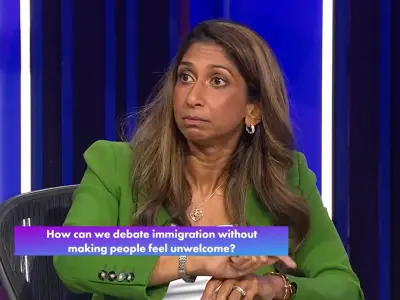
Kemi Badenoch is one of the three Britons most likely to live in Number 10 after the next election, and she will assure Conservative activists from the conference stage in Birmingham that their party has a real chance of returning to power.
Party conferences are traditionally dangerous times for leaders. Activists and MPs are thrown together in a febrile, confined environment with free-flowing wine, and few settings are more conducive to plotting coups. But Mrs Badenoch has no snarling rival. She is the unquestioned master of the shadow cabinet; there is no campaign to bring Boris Johnson back; and figures such as Robert Jenrick and Suella Braverman have long since joined Reform UK.
Poll ratings double in a year
She can point to Ipsos polling as clear evidence of progress. In September last year, only 14% of Britons were satisfied with her performance. In 12 months that figure has doubled to 28%. That may not sound impressive, but Britons hold politicians in low regard.
Despite talk of a “Burnham bounce”, the new Prime Minister last month had a net satisfaction rating of -13, only slightly better than Mrs Badenoch’s -18. The Greens’ Zack Polanski had a far worse -32, with Reform UK leader Nigel Farage far back on -37. All this gives her reason to look to the year ahead with renewed ambition.
Mr Burnham will not look like a fresh face for long. Seven out of 10 Britons said they were dissatisfied with the Government, and the more he looks like a creature of Westminster Labour, the more he will be tarred with its unpopularity.
Right-wing policies and voter loyalty
Mrs Badenoch has adopted Right-wing policies – such as pledging to leave the European Convention on Human Rights and deport foreign criminals – but only one in four Britons consider the Tories “extreme”, compared with the 58% who say this about Reform. This suggests efforts to hold onto the Tory Right without utterly alienating moderates are working.
Shoring up the base is vital for a party that suffered such a devastating rejection by voters. Back in September 2025, the Conservatives had a grave problem: of the people who voted Tory in the last general election, less than half (47%) planned to back Mrs Badenoch’s party again, with 39% intending to support Reform.
This September, 63% of the Tory-voting cohort from 2024 said they would vote Conservative again, with the slice planning to back Mr Farage’s party shrinking to 22%. There is no sign that centrist Tories are abandoning the party: just 4% of those who backed Rishi Sunak's Conservatives would vote Labour now, with a mere 3% backing the Liberal Democrats.
The road to 2029
An epic journey awaits before the next general election, due no later than August 2029. Only one in five people think the Conservatives are ready to form the next Government – two points less than those who say Reform is ready for power. Voters are more likely to see the Conservatives as out of date (54%) than any other party, and the Tory party is the least likely to be thought of as concerned about people in real need in Britain (21%).
David Cameron and his fellow Tory modernisers responded to a similar challenge before the 2010 election by wrapping themselves in the environmental agenda, talking up the value of the “big society” and travelling to icy terrains to frolic before photographers with a husky. But Mr Cameron did not face a formidable challenger on the Right who is a vehement critic of the net zero agenda.
Mrs Badenoch may well hope that when the next election comes, voters will be so weary of Labour’s tax rises that they will rush to support a Tory party which promises to make bold cuts to public expenditure and pass the savings onto them. There is little incentive for her to soften her image when immigration is a top issue for people who backed the Conservatives (73%) or Reform (85%) the last time the country went to the polls.
In the coming months, she will hearten the Tory infantry if the party surpasses 2024 levels of support and regularly beats Reform in the polls. The great uncertainty is what happens if the Right-wing vote is still divided when Mr Burnham decides it is time for an election, but she is clear she has no interest in pacts with Reform. Her challenge is immense but her lieutenants admire her straight-talking and her refusal to be rushed into prematurely unveiling policies on difficult issues. Mrs Badenoch has seen off one Labour leader and is pursuing power with a new vigour; she is in this contest to win it and she wants to do it her way.