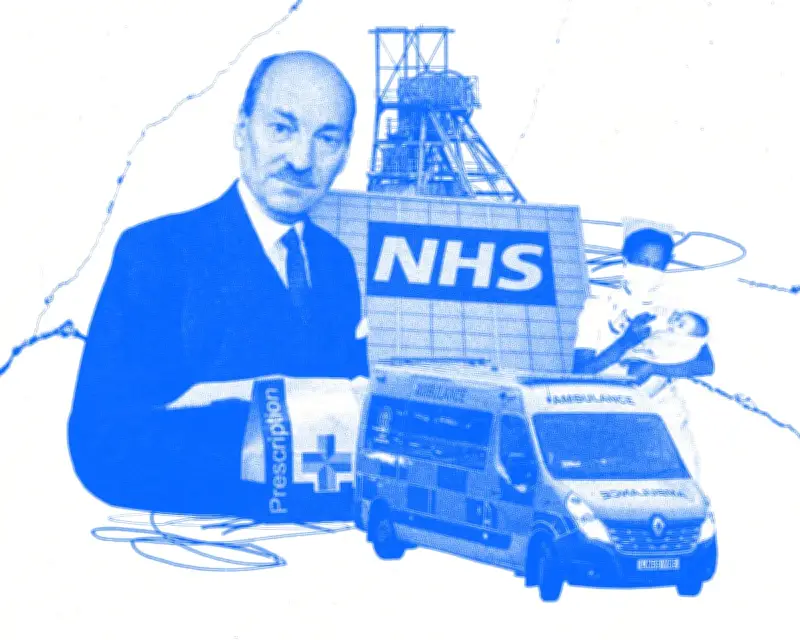
Andy Burnham, widely expected to succeed Sir Keir Starmer as Labour leader, is drawing inspiration from Clement Attlee's postwar government, which nationalised 20% of the economy by 1951. Attlee's administration, facing onerous debts and a war-ravaged nation, took over the 'commanding heights of the economy'—a blueprint Burnham now eyes for addressing Britain's economic woes.
Attlee's Nationalisation Programme: A Historic Precedent
By 1951, Attlee's government had nationalised key industries including coal, rail, electricity, gas, and iron and steel, alongside creating the National Health Service (NHS). This represented a transformative plan to restructure the economy, unlike the emergency rescues of the 1970s. The Labour Party's Clause IV, dating to 1918, called for 'common ownership of the means of production, distribution, and exchange,' but it took decades to implement fully.
Postwar Context and Public Support
The Great Depression and the Soviet Union's apparent success with command economies had eroded faith in free-market capitalism. However, the decisive factor was World War II, during which the government directed industrial production. As George Orwell noted in 1941, 'The fact that we are at war has turned socialism from a textbook word into a realisable policy.' Wartime production booms made the public receptive to greater state intervention in peacetime.

Implementation and Compensation
The Bank of England was nationalised in 1946, followed by civil aviation, coal, Cable and Wireless (1947), British Rail, road haulage, electricity (1948), gas (1949), and iron and steel (1951). Despite strained public finances, the government issued bonds to compensate owners, avoiding appropriation. This generous compensation, according to historians, made the process relatively trouble-free.
Opposition and the NHS
The stiffest resistance came against the NHS, the only nationalisation to survive 1980s and 1990s privatisations. Doctors fiercely opposed Nye Bevan's plans, fearing loss of autonomy and income. Bevan famously noted he had to 'fill their mouths with gold' to secure their support.
Performance of Nationalised Industries
Contrary to later myths, nationalised industries in the 1950s and 1960s shrank significantly, with pit closures and job losses. Between the 1973 and 1979 oil shocks, productivity growth in nationalised sectors compared favourably with private manufacturing. Gas, telecoms, and airways recorded especially strong performances, according to economic analyses.
Image and Legacy
Herbert Morrison's model of public corporations with arm's length control from Whitehall made state-run companies seem bureaucratic and remote. By the 1970s, nationalisation became associated with bailing out 'lame ducks' like British Leyland, and enthusiasm for further state ownership waned except among the Labour left, such as Tony Benn. Burnham, unlike recent Labour leaders, appears to view state ownership as more than a last resort, potentially signalling a shift toward Attlee-style intervention.