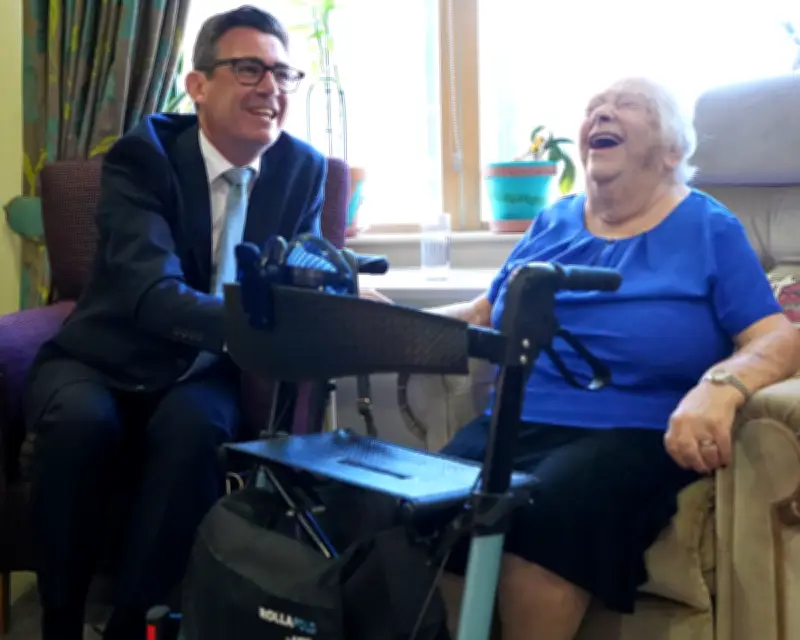
Andy Burnham, the new health and social care secretary, has promised to accelerate Louise Casey's review of social care, bringing its recommendations forward to within 12 months. Speaking at a Jewish care home in north London on Wednesday, he acknowledged that previous reform efforts had failed, blaming his generation of politicians for ducking the challenge.
A history of failed reforms
Burnham recalled his own attempt in 2010 as health and social care secretary to overhaul the system, which collapsed amid rightwing media hostility and rows over so-called death taxes. The King’s Fund thinktank has counted 22 official reviews in the past 30 years, all of which came to nothing, a pattern Burnham called the Westminster graveyard of good intentions.
Key proposals and direction
While providing little policy detail, Burnham outlined a clear direction: a National Care Service based on Casey's recommendations, with funding options to be determined. He stressed the need to improve care quality, integrate with the NHS, and focus on care users' needs. He promised investment in the social care workforce, including better pay and training, and opposed profiteering by private providers, who currently deliver most care in England. He also pledged more support for unpaid carers, often overwhelmed by their sacrifices.

On funding, Burnham hinted at a contributory model similar to the NHS principle, asking whether people would support a small contribution to protect most of what they had worked for. He acknowledged that right-leaning media might oppose this, but questioned whether the public would back it.
Political will and reaction
Burnham framed the inequity of social care in England by comparing it to the privatised US healthcare system, saying the vulnerable pay with everything and can be left with nothing. He called for a change in political culture, moving away from point-scoring and risk aversion.
Observers noted a sense of excitement and rare optimism. One veteran campaigner described it as an impressive start: He had every opportunity to downplay expectations but he didn’t. For the first time in years, there appeared to be clear political will from the top to break the consensus that fixing social care is impossible.